







Introduction:Caturra is a widely cultivated variety within the Arabica family, originating from a natural mutation of Bourbon. It boasts advantages such as compact plant size, ease of harvesting, and high yield. This article delves into its origins, growing conditions, and flavor characteristics, while also comparing it with other well-known varieties like Typica, Bourbon, and Geisha. It provides practical background knowledge on cultivation and tasting, helping you fully understand the diverse world of specialty coffee varieties.
Many beginners in the world of specialty coffee, as they explore this realm, begin to pay attention to origin, processing methods, and most importantly, variety information. Coffee varieties can generally be divided into two major categories: Arabica and Robusta, which differ significantly in terms of flavor, yield, and environmental adaptability. Among these, Arabica is regarded as the primary source of specialty coffee due to its delicate flavors and aromas, and Caturra is one of the most representative varieties under the Arabica umbrella.
Caturra was first discovered in Brazil in 1937 as a natural mutation of the Bourbon variety. Compared to its parent, it has noticeably shorter plants, making harvesting easier, and it also offers higher yields per unit area. Additionally, while Caturra’s resistance to certain diseases may not match that of some other varieties, it is overall better than the original Bourbon and can exhibit excellent flavors under suitable altitude and climate conditions.
Although Caturra originated in Brazil, it did not become widely planted there. Instead, it became mainstream in Central and South American countries such as Colombia, Costa Rica, and Nicaragua. The high altitudes and abundant rainfall in these regions perfectly match Caturra’s ideal growing conditions: altitudes between 1,200 and 2,000 meters, with annual precipitation of about 2,500 to 3,500 millimeters. At higher altitudes, its flavor complexity becomes even richer, though yields may decline slightly.
In terms of flavor profile, Caturra typically exhibits bright acidity, with refreshing notes of citrus and berries, along with moderate sweetness and body. It is well-suited for consumers who prefer a crisp and vibrant flavor profile. These characteristics have made it a classic choice for many specialty coffee farms in Central and South America.
When discussing Arabica varieties, it’s impossible not to mention its two “foundational” original types: Typica and Bourbon. Typica is one of the oldest Arabica varieties, characterized by tall plants with bronze-tipped leaves. It offers delicate flavors but has low yields and weak disease resistance. Well-known coffees such as Jamaican Blue Mountain, Sumatra Mandheling, and Hawaiian Kona all belong to the Typica lineage. Bourbon, on the other hand, evolved from Typica. Its beans are rounder, with intense aromas and prominent sweetness, commonly seen in Brazilian Yellow Bourbon and Red Bourbon varieties.

Another variety that has garnered significant attention in recent years is Geisha, originally from Ethiopia and later achieving great success in Panama. Geisha is renowned for its unique floral notes, tropical fruit characteristics, and rich sweetness. Its dry aroma often carries distinctive scents reminiscent of peach, jasmine, and oolong tea, making it a star variety in the specialty coffee world, albeit at a relatively high price point.
Looking back at Caturra, this Bourbon mutation, aside from its shorter plant height that facilitates harvesting and management, also features noticeably wavy leaf edges — a common trait among Bourbon-type varieties. Moreover, Caturra coffee cherries are relatively firm and less prone to dropping under wind and rain, which means more stable yields for farmers.
However, Caturra is not without its drawbacks. Since it inherited some of Bourbon’s weaker disease resistance traits, careful management is still required in regions prone to pests and diseases. Furthermore, Caturra is not particularly low-maintenance in terms of growing conditions. Although it can adapt to altitudes ranging from 700 to 1,700 meters, achieving optimal flavor expression is still best accomplished at higher altitudes above 1,200 meters.
It’s worth noting that among Caturra’s variants is “Yellow Caturra,” which produces yellow-colored fruits, but it is generally rated slightly lower than Yellow Bourbon. Additionally, similar mutation phenomena have appeared in other regions, such as Pacas in El Salvador and Villa Sarchi in Costa Rica. These also originate from Bourbon, share close genetic structures, and belong to the same evolutionary branch.
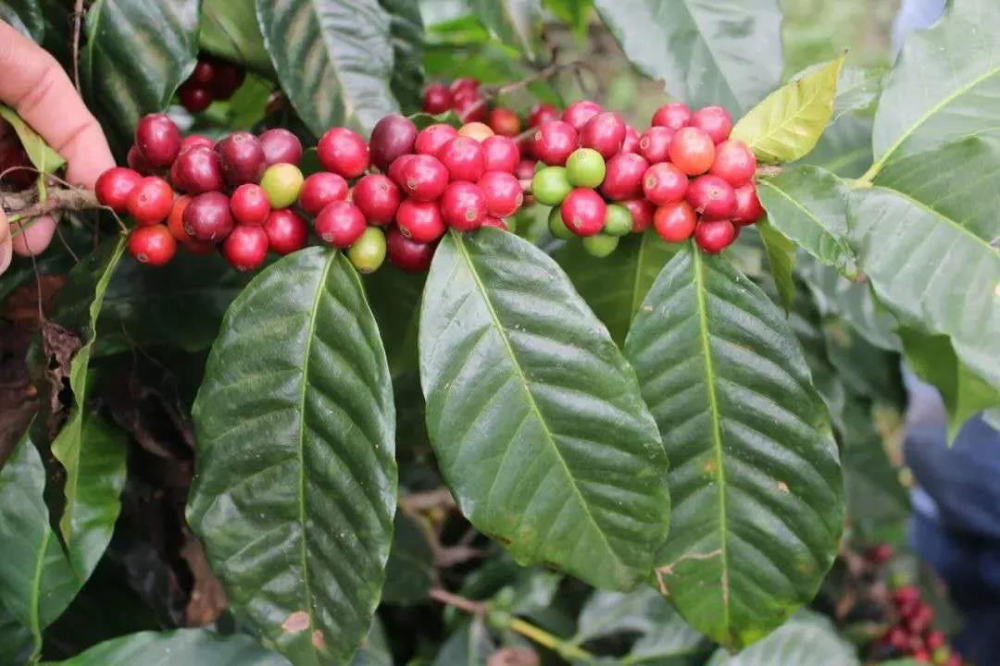
In summary, Caturra is indeed part of the Arabica family and a natural mutation of Bourbon. It excels with its compact plants, high yields, and ease of management, making it suitable for medium-sized farms aiming for efficiency and stable output. Although its flavor intricacies may not be as refined as some high-altitude, carefully selected varieties, under the right conditions, it can still showcase a clear, bright, and fruit-forward premium quality.
If you wish to gain a deeper understanding of how coffee varieties influence flavor, it is recommended to try beans from different regions and altitudes, experiencing the unique characteristics of each variety through actual tasting. Whether you’re selecting beans for pour over or studying brewing parameters, understanding variety backgrounds allows you to more accurately grasp the potential and charm of a cup of coffee.
The above content is compiled by CoffeeHunters, a coffee news website.


