








Introduction:This article delves into Bolivia, a high-altitude yet low-yield coffee origin, exploring its history, regional distribution, and local cultivation challenges to reveal how specialty coffee thrives against adversity. Special focus is given to how the Rodríguez family promotes the development of unique varieties such as Geisha and Java through innovative processing methods and smallholder programs. It also details a cocoa natural-processed Java bean from Finca Vallecito—from processing and roasting to pour over parameters and flavor profile—offering practical insights.
Bolivia is hailed as having great potential for coffee cultivation, yet its actual output has long remained low, with an annual production of only about 223,000 sacks (each sack 60 kg). Even so, the country’s coffee is well-regarded for its pronounced sweetness and mild acidity. In the 2017 World Barista Championship, Japanese competitor Miki Suzuki claimed second place with a Bolivian Geisha coffee, showcasing its deep and layered flavor characteristics. The Java variety, which shares familial ties with Geisha, is also cherished by many coffee enthusiasts for its elegant aroma and buttery-smooth mouthfeel—a hidden gem in the coffee world.
Located inland in South America and bordering Brazil, Bolivia features diverse terrain, encompassing the towering Andes Mountains and vast salt flat plains, with an average altitude exceeding 3,000 meters across the nation. While Sucre is the constitutional capital, the actual administrative center, La Paz, sits even higher at over 3,600 meters above sea level, making it the highest capital city in the world. High altitude should be conducive to growing high-quality coffee, yet Bolivia’s coffee industry has long faced multiple challenges.
The foremost issue is extremely poor transportation. Many coffee-growing regions are located in remote mountainous areas with treacherous roads; among them, the North Yungas Road is dubbed the “Death Road,” not only featuring perilous curves and lack of guardrails but also frequent fog, resulting in numerous traffic accidents each year that severely hinder coffee transport. Furthermore, Bolivia has a total population of only about 10.5 million, with many residents living in poverty. Growing coca leaves (used for making drugs) is often a more “stable” choice due to higher profits, leading many farmers to abandon coffee cultivation or let their farmland lie fallow. To make matters worse, coca cultivation requires heavy use of pesticides and fertilizers, causing serious damage to the soil.
The 2013 leaf rust epidemic further exacerbated the situation. Within just one year, Bolivia’s coffee production plummeted by 50%. Coupled with longstanding policy and market constraints, the country has gradually shifted from once being a significant producer to an marginalized player in the global coffee scene.
Looking back at history, Bolivia had a sizable coffee industry in the 1880s, primarily concentrated on large farms north of La Paz. In 1991, the government launched a program to encourage indigenous coffee farming, but quality was not emphasized, and at the time, coca cultivation was far more profitable than coffee, prompting many farmers to switch. In the early 2000s, the United States intended to support Bolivian agriculture, but relations soured due to the Bolivian government’s backing of coca cultivation, forcing many coffee-related projects to be suspended. It wasn’t until 2004, when the Cup of Excellence (COE) was held locally, that hopes for specialty coffee were rekindled. That year, several coffees scored over 84 points, with the champion reaching 90.44 points, driving up green bean prices. However, due to political factors, Bolivia has not participated in COE since 2009, and industry development stagnated once again.
Currently, most of Bolivia’s coffee comes from small family farms. The country has approximately 23,000 coffee growers, with each farm ranging from 1.2 to 8 hectares in size. The main producing region is Yungas, accounting for 95% of national output, at elevations between 800 and 2,300 meters, with a harvest season from July to November. Located on the eastern side of the Andes, this area boasts rich biodiversity and the advantage of high altitude, making it the oldest coffee-growing region in Bolivia. La Paz is situated in the western part of this zone. Other regions such as Santa Cruz and Beni also have small-scale cultivation, but due to insufficient altitude, the proportion of high-quality coffee is relatively low.
In advancing specialty coffee, the Rodríguez family plays a pivotal role. Since 1986, the family has been dedicated to coffee cultivation. Facing policy restrictions and natural disasters, they chose to acquire land and establish new estates, focusing on high-quality specialty coffees such as Bolivian Geisha. They now own a total of 12 estates, 4 in Santa Cruz and 8 in Caranavi near La Paz, and have achieved integrated operations from harvesting to export.
In 2016, the Rodríguez family launched the “El Sol de Mañana (Tomorrow’s Sun) Program,” aiming to improve smallholder farming standards through vocational training, premium seed subsidies, technical consulting, and fair trade practices, while establishing incentive mechanisms to reward farmers achieving high cupping scores—forming a positive cycle of quality and income. A coffee brand once cupped a washed Java Typica under this program, revealing soft strawberry acidity, caramel sweetness, and subtle cocoa and almond aftertastes, with a richly layered flavor profile.
Traditionally, Bolivian coffee plantings mainly featured Typica, Catuai, and Red & Yellow Caturra. But with the rise of the specialty wave, many estates began introducing varieties such as Geisha, Pacamara, and SL28. Among them, the Rodríguez family’s Geisha variety originates from the renowned El Injerto Estate. Java (Java Nica), on the other hand, is an ancient variety from the Ethiopian Abyssinian lineage, sharing heritage with Geisha and likewise exhibiting excellent floral and fruity notes, hence often referred to as Geisha’s “cousin.” It should be noted that this “Java” is a coffee variety, unrelated to Indonesia’s Java region—which is a geographical name—and whose coffee genetics have evolved historically, belonging to different lineages.
The Java variety was first brought from Indonesia to the Timor Islands, then entered Cameroon in East Africa, and was released for farmer cultivation in Cameroon in the 1980s. In 1991, the International Center for Agricultural Research and Development (CIRAD), seeking a low-fertilizer variety suitable for Central America, introduced Java to Costa Rica, from where it spread across Central and South America. It was found to perform exceptionally well in high-altitude environments. Nicaragua’s Mierisch family was the first to promote this variety in the specialty market, naming its Central American lineage JAVA NICA (meaning Java from Nicaragua). The Rodríguez family introduced it to Bolivia and carefully cultivated it at their Finca Vallecito.
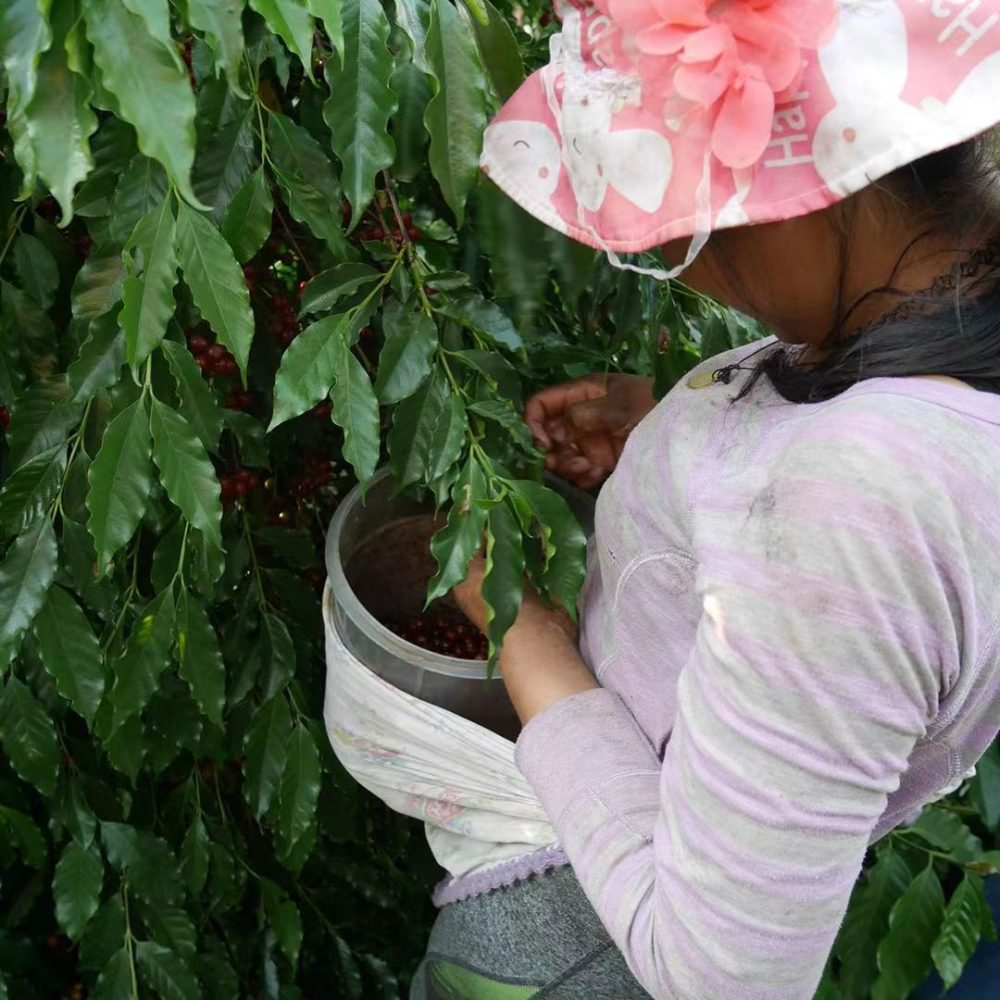
The star of this year’s cupping—a cocoa natural-processed Java coffee bean from Finca Vallecito—was grown in the Bolinda community at over 1,600 meters altitude, located in a steep valley about 10 kilometers outside the town of Caranavi in La Paz. The climate is cold, the growth cycle is long, and these conditions help accumulate flavor. Below are the processing and flavor details of this bean.
The Rodríguez family continuously innovates in processing methods. In addition to traditional washed, natural, and honey processes, they also experiment with special techniques such as anaerobic and yeast fermentation. This cocoa natural-processed Java is one of their representative offerings. The processing steps include: after selection and weighing, the coffee cherries are washed and placed on African-style raised beds for sun drying, turned hourly, and after about a week moved to a cocoa dryer. This dryer is typically used for cocoa beans, but the Rodríguez family found that in a low-temperature environment (not exceeding 40°C), it can dry coffee beans steadily and slowly, greatly reducing weather impact. The beans rest in a large steel tank for about 35 hours, stirred every 30 minutes, then sent to La Paz for resting and hulling, and finally undergo meticulous sorting and classification manually and mechanically.
Finca Vallecito, Bolivia – Cocoa Natural Java
Region:La Paz
Growing Altitude:1600 meters
Variety:Java
Processing Method:Cocoa Natural
Roast Recommendation
To highlight the unique aromatic qualities and rich juice-like character of the Java variety, a light roast is recommended to preserve more of its innate flavors and layered acidity.
Cupping Flavor
Dry Aroma:Fermented notes, grape
Wet Aroma:Honey, floral
Flavor:Grape, citrus, honey, nuts, cream
Pour Over Recommendation & Flavor Profile
Given that this coffee is lightly roasted, its flavor compounds are released more slowly. It is recommended to use a slightly higher water temperature (around 92–94°C) and a finer grind size to fully extract its delicate fruit acids and floral-fruity aromas. The brew presents mild fermentation notes, clear grape character, refined nuttiness and floral tones, with medium acidity. The overall mouthfeel is juicy, vibrant, and distinctly layered, reminiscent of fruit juice.
The above content is compiled by CoffeeHunters, a coffee news website.


