








Introduction:When pulling an espresso shot, if you notice a sudden increase in flow rate, lighter-colored crema, and a thin-tasting shot, it’s likely due to "channeling"—where water pierces through the coffee puck, creating holes. This article delves into how to identify this issue, its primary causes such as uneven distribution, insufficient coffee dose, and clogged shower screens, and offers practical adjustments like improving distribution and tamping techniques, adjusting coffee dose, cleaning the shower screen, and selecting suitable espresso beans. These tips help baristas stabilize extraction quality and reduce bitterness and splattering.
When crafting a high-quality espresso, if you observe inconsistent flow rates during extraction—especially speeding up toward the end—along with lighter crema and a thinner taste, it’s very likely that the coffee puck has been punctured by the water flow, commonly known as "channeling." This not only affects the overall balance of the coffee but can also lead to over-extraction and burnt, bitter flavors.

The so-called "puncture" refers to the formation of small holes in the coffee puck during high-pressure extraction, caused by uneven internal density that allows water to find paths of least resistance and bore through the coffee bed. When you finish extraction and remove the portafilter, you may see an uneven puck surface with several noticeable holes. In severe cases, these holes allow water to bypass most of the coffee grounds and flow out quickly through the channels, resulting in uneven extraction.
So, how can you tell if a puncture has occurred? The most straightforward method is to use a bottomless portafilter for observation. Normally, the coffee flow should be steady during extraction, and the crema color should transition gradually from dark to light. When channeling occurs, you’ll notice coffee shooting out at high speed from specific spots—sometimes even in two distinct spurts—indicating where the puck has been punctured. The flow rate near these holes is noticeably faster, and the crema is lighter in color.
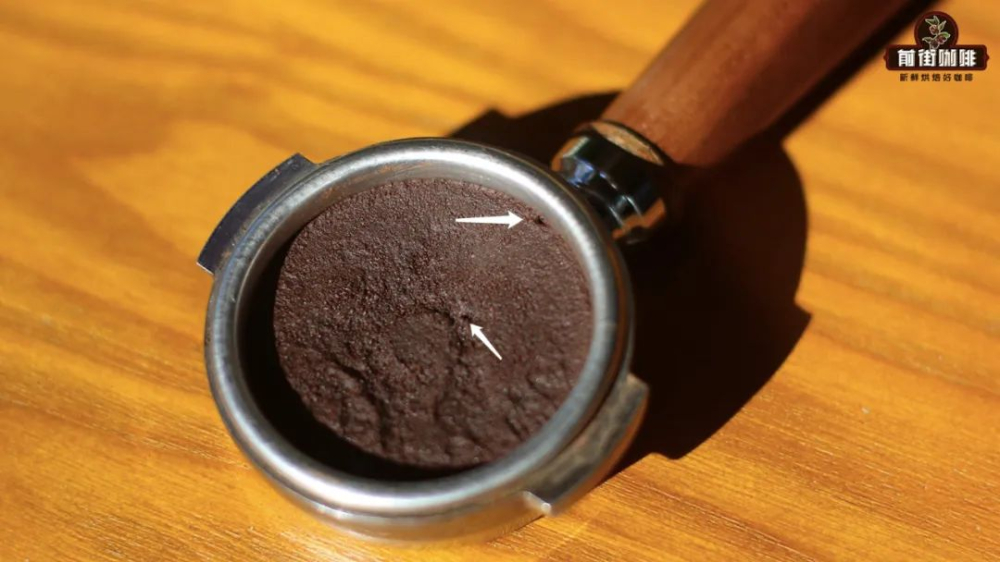
The main causes of channeling can generally be grouped into three categories: uneven distribution, insufficient coffee dose, and uneven water dispersion from the shower screen. Among these, uneven distribution is one of the most common culprits. When coffee grounds are unevenly spread in the portafilter basket—some areas loose, others compact—water naturally takes the path of least resistance, leading to punctures.
To minimize this, the distribution and tamping steps are crucial. Distribution aims to spread the coffee grounds as evenly as possible in the basket, while tamping compresses the puck to maintain structural stability under high pressure. However, many people still experience punctures even after distributing and tamping, often due to issues in the dosing and distribution technique. For example, unevenly catching the coffee when transferring it to the portafilter, or tapping the basket to level the grounds, can actually make the distribution worse. A more effective method is to let the coffee naturally pile up in a small mound with a slightly higher center, then place the distributor vertically above the basket and gently rotate it a few times to achieve a more even spread. After that, a light tamp to ensure flatness is all that’s needed.
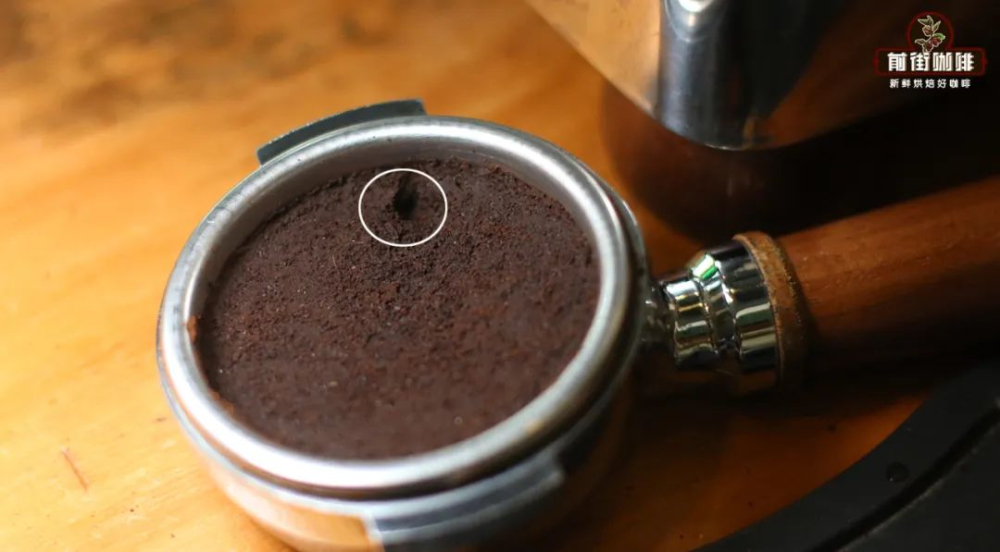
Another common cause is insufficient coffee dose. When there’s too little coffee in the basket, the distance between the shower screen and the puck increases, making it easier for the coffee grounds on top to shift under the impact of water flow. This leads to inconsistent resistance across the puck and can trigger channeling. To address this, increasing the coffee dose or switching to a smaller-capacity basket are both viable adjustments.
Additionally, the condition of the shower screen directly impacts how water is dispersed. The shower screen breaks up the high-pressure water stream into an even shower, but if it becomes clogged with leftover coffee grounds, the water distribution becomes uneven, leading to excessive localized pressure that can pierce the puck. Normally, the shower screen divides the water into 4 to 5 even streams; if you notice the water converging into a single stream, it’s likely that the shower screen is clogged and needs to be removed and cleaned.
If you’ve executed all the above steps correctly but still frequently encounter channeling, it might be time to take a closer look at the coffee beans you’re using. Generally speaking, darker roasted beans are more porous, absorb water more easily, and release flavors faster. In contrast, lighter roasted beans are denser and harder, making it more difficult for hot water to penetrate. As a result, water tends to find paths of least resistance, which can worsen channeling.
To achieve more stable extraction results, it’s recommended to start with an espresso blend similar to what your favorite café uses. If you prefer rich and consistent crema, you can try a medium-dark roast blend—such as one combining Brazilian and Colombian beans with a touch of Robusta to enhance crema formation. This type of bean not only delivers a full-bodied golden crema but also provides a bold, layered flavor profile when used for Americanos or milk-based drinks.
The above content is compiled by CoffeeHunters, a coffee news website.


