








Introduction:Did you know that so-called 'cat poop coffee' isn’t actually as disgusting as the term suggests? This article will take you through the real production process of civet coffee, the principle of in-body fermentation, and its unique flavor characteristics. We’ve also compiled actual roasting and pour over parameters from Indonesia’s Aceh region to help you better understand this controversial specialty coffee.
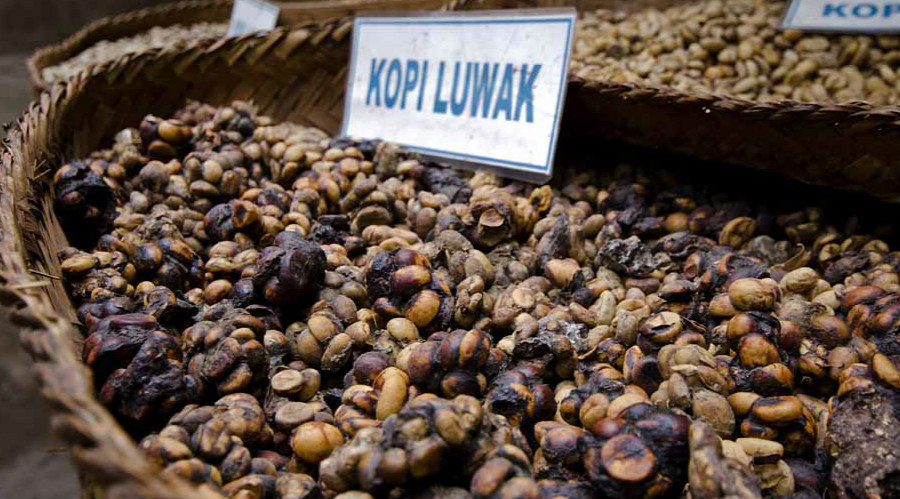
The so-called 'cat poop coffee,' formally known as civet coffee (Kopi Luwak), originated in Indonesia. Many people, upon hearing the name, can’t help but wonder: is this really coffee made from 'cat feces'? In fact, civets consume whole coffee cherries, not just the beans. These cherries undergo a period of fermentation and digestion in the civet’s digestive tract before the beans are eventually excreted and then cleaned and processed by humans into what we know as civet coffee.

Civets are omnivorous animals and do not primarily feed on coffee cherries, but occasionally consume them. However, because the sugars and some acidic substances in the coffee cherries seep into the hard coffee beans during digestion, combined with the action of specific enzymes in the digestive fluids, these beans develop a special and intense flavor after being expelled.
But why can civet coffee command such high prices? The key lies in 'rarity' and 'captive rearing costs.' Wild civets only occasionally eat coffee cherries, so the resulting beans are naturally scarce. Later, to meet market demand, many businesses began caging civets and restricting their diet solely to coffee cherries. However, this practice not only affects the health of the civets but also leads to high costs due to the need for meticulous management and processing. Additionally, this unnatural feeding method may also alter the final flavor profile of the coffee.
So, does the 'fermentation' that coffee beans undergo in the civet’s gut really improve the flavor? In most cases, it does not. Civets mainly inhabit low-altitude regions of Indonesia, where the environment is not conducive to growing high-quality Arabica coffee. As a result, the cherries they consume are often Robusta or lower-grade Arabica. These beans inherently possess strong characteristics such as earthy or herbal notes, which even after in-body fermentation, are difficult to fully transform into elegant flavors. Moreover, because the expulsion time is usually only about two hours, the level of fermentation is limited, making the overall profile more thick, heavy-bodied, and often described as earthy, fermented, and syrupy in mouthfeel.
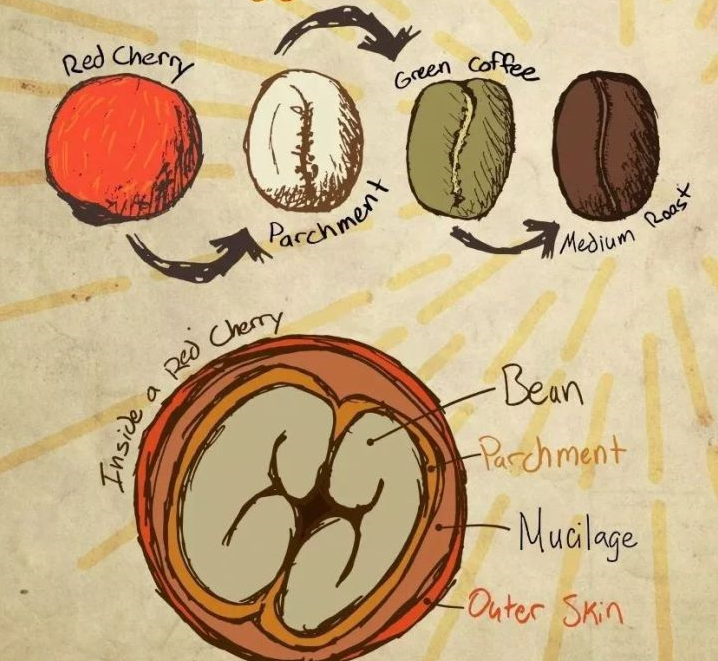
It’s worth noting that the term 'in-body fermentation' may sound mysterious, but there is some scientific basis behind it. In the civet’s digestive tract, strong acids and special enzymes (such as proteases) act on the surface of the coffee beans, breaking down some protein chains into shorter peptides and amino acids. These compounds may have a certain influence on the formation of the final flavor — for example, increasing body and richness — but they may also amplify certain undesirable off-flavors.
Next, let’s take a look at how this controversial coffee is roasted and brewed. Take the civet coffee from Indonesia’s Aceh region as an example: the producing area is at an altitude of about 1200 meters, the variety is Tim Tim, and the processing method is the special in-body fermentation. When roasting this type of coffee, it’s important to pay special attention to development time and temperature control to fully bring out its unique dense texture and fermented aromas.
The actual roasting record is as follows: using a Yangjia 800N machine, the roaster was preheated to 200°C, the bean inlet temperature was adjusted to 160°C, the damper was set to 3, and the heat was set to 130. The turnaround point occurred at approximately 1 minute and 28 seconds. The heat was then maintained until 5 minutes and 40 seconds, when the bean surface turned yellow and the grassy aroma faded, entering the main drying stage. The heat was then increased to 140, and the damper opened to 4, observing the appearance of wrinkles on the bean surface and the aroma shifting to a toasted bread character. The heat was then reduced to 100, and the damper opened to 5, closely monitoring for first crack signs. Around 9 minutes and 15 seconds, first crack began, the damper was fully opened, and development continued for 4 minutes and 25 seconds, finally dropping the beans at 203°C.
As for pour over, it’s recommended to use a Kono filter, with water temperature controlled at 86°C, 15 grams of coffee, and a 1:15 coffee-to-water ratio. The grind size is medium-fine, approximately 70% passing through a Chinese standard No. 20 sieve. A segmented extraction method is used: first, perform a 30-second bloom with 30 grams of water, then pour in a small circular motion until reaching 125 grams for the first pour; when the water level is about to expose the coffee bed, pour again up to 225 grams, then stop and wait for the water level to drop before removing the filter. The total extraction time is approximately 2 minutes and 1 second.
After pour over, this civet coffee commonly presents flavor notes such as herbal tones, nutty aromas, the richness of dark chocolate, and a distinct fermented presence. The overall mouthfeel is extremely thick and smooth, with high body, making it suitable for coffee enthusiasts who enjoy bold flavors and unique flavor profiles to explore and evaluate.
The above content is compiled by CoffeeHunters, a coffee news website.


