







Introduction:The Moka pot is a classic alternative when a professional coffee machine is not available at home. Although it cannot fully replicate the delicate crema of espresso, it delivers a rich and bold flavor. This article delves into the working principles, extraction characteristics, and common limitations of the Moka pot, and carefully selects five coffee beans from well-known brands with distinct flavors that are well-suited for Moka pot brewing — ranging from Indonesian Golden Mandheling to Colombian Huila — offering practical purchasing advice and brewing references.
For coffee enthusiasts without a professional espresso machine at home, the Moka pot is undoubtedly the most affordable and easy-to-use option. With just a few simple steps — adding water, loading coffee grounds, and heating — you can make a cup of coffee that resembles espresso at home. However, there are still noticeable differences between the Moka pot and a traditional espresso machine in terms of extraction pressure, crema texture, and coffee concentration, which directly influence the types of coffee beans that work best.
Gaining an in-depth understanding of the history and operating principles of the Moka pot can help users better grasp the characteristics of this tool, thereby selecting the most compatible coffee beans and enhancing the home coffee experience. This article will take you from the origins of the Moka pot, analyze its extraction pros and cons, and recommend five classic beans from renowned coffee brands that are ideal for Moka pot use — including Indonesian Golden Mandheling, Brazilian Queen Estate, Classic Italian Blend, Strawberry Candy Italian Blend, and Colombian Huila — helping you find your perfect match.
The charm of espresso is undeniable, but not every coffee lover has the means or budget to invest in a professional espresso machine. For this reason, the Moka pot has become a "budget-friendly alternative" in many households — with low barriers to use, simply add hot water and coffee grounds, connect to a heat source, wait a short while, and a strong cup of coffee is ready to serve.
However, coffee brewed with a Moka pot struggles to compare with modern espresso machines in terms of crema texture and extraction pressure. In fact, the espresso we are familiar with today relies on high pressure (typically around 9 Bar) to push near-boiling water through a compacted puck of coffee grounds, extracting a wealth of aromatic compounds and crema. This technique was only made possible through years of evolution in espresso machine engineering.
To understand the origins of the Moka pot, we must revisit the evolution of the espresso machine. As early as the late 19th century, the first espresso machine appeared in Turin, Italy. By 1905, La Pavoni introduced the first commercial model, enabling baristas to serve espresso quickly to multiple customers. These devices gradually gained popularity across Italy.
However, these early large commercial machines had to be heated over a flame, using steam pressure to push hot water through the coffee grounds. They were not only bulky but also expensive, making them inaccessible for ordinary households.
It wasn’t until the 1930s that Alfonso Bialetti from Italy’s Piedmont region, inspired by his wife’s laundry process, had a sudden flash of inspiration and created the Moka pot as we know it today. The laundry equipment at the time consisted of two layers: the lower part heated soapy water to produce steam, which was then transported through a tube to wash clothes in the upper part. Bialetti collaborated with engineer Luigi De Ponti to transform this concept into a coffee appliance, laying the foundation for the basic structure of the Moka pot.
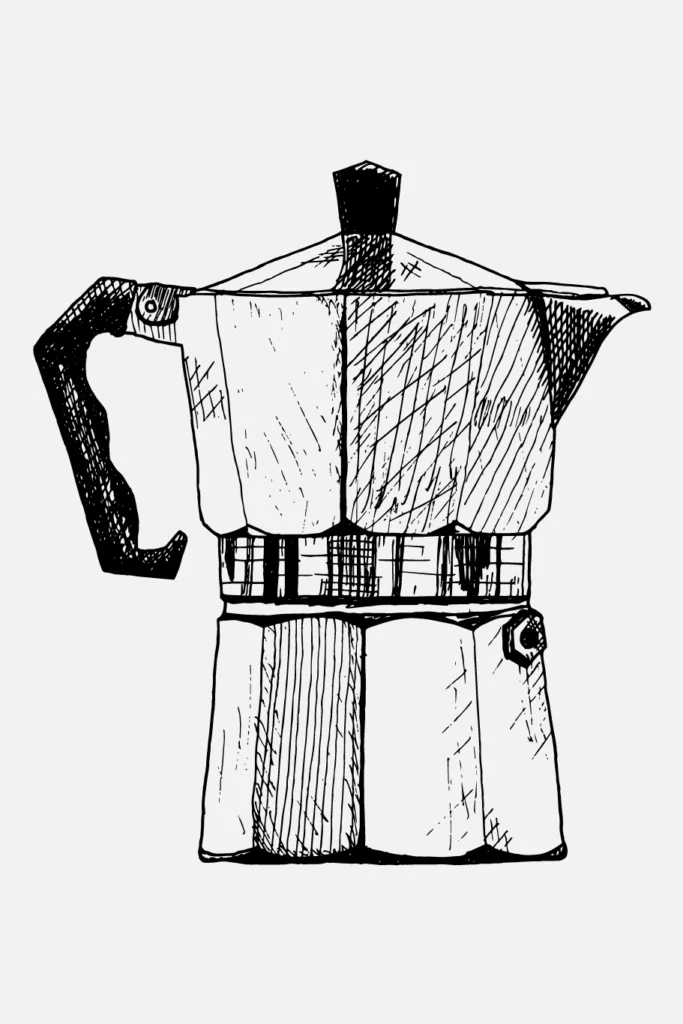
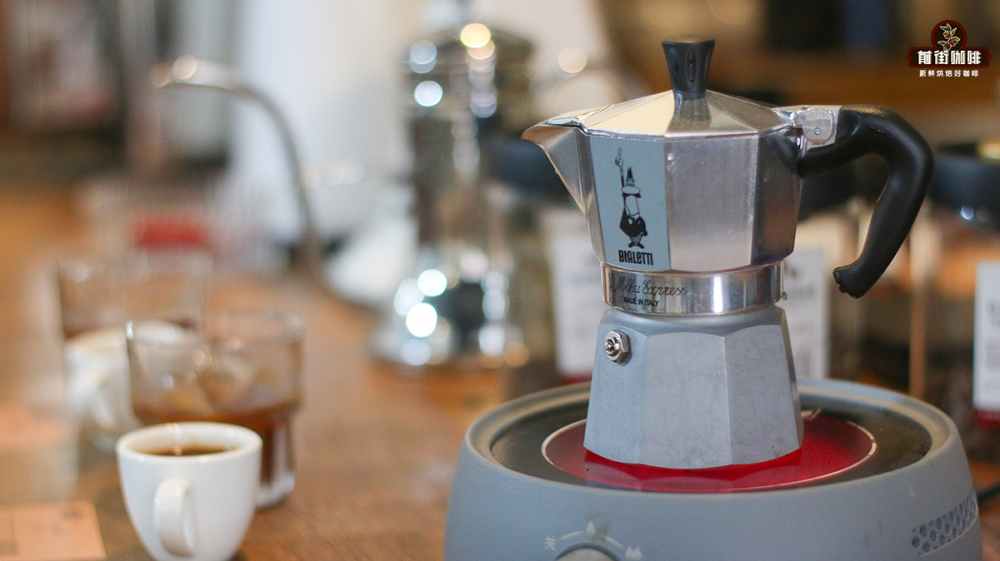
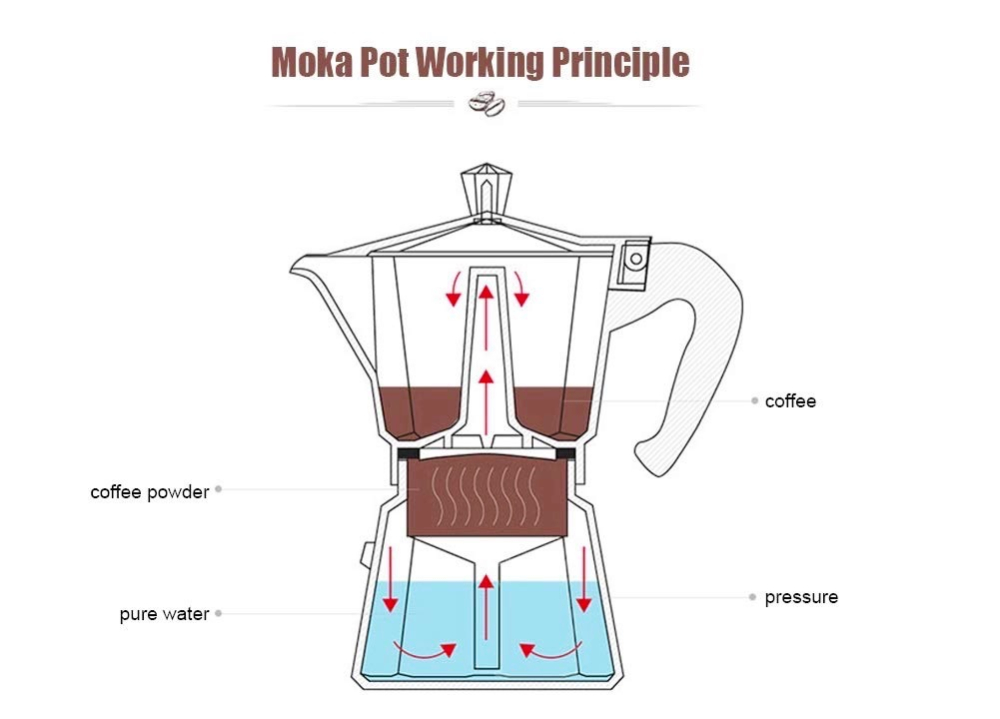
The Bialetti Moka pot mainly consists of three parts: a bottom water chamber, a middle metal filter basket that holds the coffee grounds, and a top chamber that collects the brewed coffee. The whole design is an octagonal aluminum construction with an anti-slip insulated handle on the exterior. To use, first pour hot water into the bottom chamber, then add an appropriate amount of ground coffee into the middle filter basket, assemble the filter and top chamber, and secure them tightly before placing the pot on a stove or heating plate.
As the water in the bottom chamber heats up and reaches boiling point, the resulting steam increases the internal pressure, pushing the hot water upward through the coffee grounds in the middle section, and finally through the holes in the filter basket into the top chamber, completing the extraction. This steam-pressure-based extraction method is the key to how the Moka pot can replicate the flavor of espresso at home.
However, the extraction pressure of a Moka pot is typically only about 1–2 Bar, far below the 9 Bar standard of modern espresso machines. Coupled with its reliance on high-temperature steam, the water temperature tends to be higher, resulting in coffee that clearly lacks the crema texture and flavor intensity of professional machines.
Another key difference lies in the grind size of the coffee. Since the metal filter of the Moka pot is relatively coarse, using too fine a grind can easily lead to channeling or over-extraction. Therefore, a coarser grind is recommended, which further affects extraction efficiency and the final flavor expression.
Since the Moka pot cannot fully replicate the delicate crema and high-pressure extraction of espresso, how should one choose the right coffee beans to fully bring out its unique qualities? Since the Moka pot was originally designed as an alternative to early espresso machines, selecting beans with rich, bold flavors and a certain body often yields more satisfying results. Generally, medium-dark to dark roast coffee beans are better matched to the extraction characteristics of the Moka pot.
Below are five recommended coffee beans from well-known brands that are suitable for Moka pot brewing. Each offers unique flavor profiles and suitable scenarios:
1. PWN Golden Mandheling Coffee Beans
Origin: Gayo Highlands, Sumatra, Indonesia
Elevation: 1400–1600 meters
Variety: Ateng
Processing Method: Wet-hulled
Indonesian Mandheling is known for its intense spice notes and bold mouthfeel. The unique wet-hulling process used locally enhances the concentration and body of the flavors. Dark-roasted Golden Mandheling often features herbal, smoky, and nutty aromas, making it a classic choice for Moka pot users.
2. Brazilian Queen Estate Coffee Beans
Origin: Mogiana, São Paulo, Brazil
Elevation: 1400–1950 meters
Variety: Yellow Bourbon
Processing Method: Natural (Sun-dried)
Yellow Bourbon naturally has a rich mucilage layer, and sun-drying maximizes sugar conversion, resulting in prominent sweetness and fruit notes. Queen Estate is renowned for its high-quality natural beans, and this particular bean has a noticeable sweetness, suitable for users who prefer low acidity and full-bodied flavors.
3. Classic Italian Blend Coffee Beans
Composition: Brazilian Red Bourbon + Indonesian Mandheling + Vietnamese Robusta
Flavor: Caramel, dark chocolate, malt, nuts
This blend is specially designed for the Moka pot, combining characteristics of beans from multiple countries. It performs well in terms of crema, making it suitable for milk-based coffee like lattes, providing a full body and balanced base.
4. Strawberry Candy Italian Blend
Features: Honey processed + multi-region blend
Flavor: Rose, strawberry soft candy, blueberry, citrus, almond
Blending the sweetness of Costa Rica honey-processed beans, the acidity of Ethiopian beans, and the chocolate notes of Colombian beans, this blend achieves a balanced sweet-and-sour profile with vibrant aromas, perfect for those who enjoy fruity profiles.
5. Colombian Huila Coffee Beans
Origin: Huila Region, Colombia
Flavor: Balanced sweet and sour, rich aroma, great value
This bean is popular for its consistent performance and affordable price, making it suitable for daily drinking. It offers clear and layered flavors, and is a go-to staple bean for many Moka pot users.
Additionally, some readers may wonder:Can a French press make espresso?Although a French press cannot produce high-pressure extraction or form golden crema, it can still extract oils and aromas from coffee through immersion, delivering another type of bold flavor. It’s suitable for users who prefer low-pressure extraction and heavier body.
The above content is compiled by CoffeeHunters, a coffee news website.


