







Introduction:Sumatra Mandheling comes in many varieties, with Lintong, Golden, Tiger, and aged Mandheling each having their own unique characteristics—often making it difficult for coffee enthusiasts to tell them apart. This article breaks down the key differences among these four classic Mandheling types by analyzing factors such as growing regions, variety backgrounds, processing methods, and flavor profiles, while also introducing you to their distinct charms to help you find the one that best suits your taste preferences.
Mandheling coffee has long been a representative offering from Sumatra, but the commonly seen Lintong, Golden, Tiger, and aged Mandheling come with diverse and often confusing names. Where exactly are they produced? What processing methods are used? And how do their flavors differ? This article will systematically dissect the essential information about these classic Sumatran Mandhelings, covering not only regional distribution, variety origins, and processing techniques, but also detailing the flavor profiles of each Mandheling type—giving you a complete understanding of the differences between them.
In the coffee community, the term "Mandheling" is often used as a synonym for Sumatran coffee, but in reality, the northern Sumatran producing regions are predominantly known for Gayo coffee, with Ateng being the commonly grown variety; the area around Lake Tawar in the north belongs to Aceh coffee, or sometimes referred to as Lake Tawar coffee; whereas the regions truly eligible to be named "Mandheling" are mainly Lintong in South Sumatra and the areas surrounding Lake Toba. Among them,the Lintong area is considered the core and most typical producing region for Mandheling, located north of Medan, the capital of North Sumatra, surrounding Lake Toba—an alpine freshwater lake with an average elevation of about 900 meters. Most of the planted varieties here are Typica or its variants.
It’s worth noting that Mandheling from the Lintong region has recently been further subdivided into smaller regional names, such as Sidikalang (abbreviated as SDK Mandheling). Currently, the use of the term "Lintong" is also becoming more limited, often referring specifically to certain blocks near Lintongnihuta.
Golden Mandheling is one of the representatives from the Lintong area in northern Sumatra, and its most distinctive feature is its extremely rigorous selection process.During harvest, all ripe cherries are handpicked one by oneto ensure initial quality, followed by semi-washed (SEMI-WASHED) processing, natural sun drying, then hulling and secondary drying refinement,which is further followed by two rounds of green bean cleaning and four rounds of manual selection, hence it is hailed as a top-tier, premium-selected Mandheling.
Tiger Mandheling, on the other hand, comes from the Aceh region. Aceh is another important coffee-producing area in Sumatra, where coffee is the second-largest export cash crop, cultivated by approximately 60,000 smallholder farmers, each managing about 1 to 2 hectares of plantation. However, Indonesia's traditional coffee trade model mostly involves multiple layers of middlemen for consolidation,so direct exports from farmers are relatively rare, whereas Tiger Mandheling is produced through a relatively centralized and stable supply chain, showcasing the potential of Aceh coffee.
As for aged Mandheling, it’s not simply about leaving the green beans to sit for a long time.If green beans are stored for extended periods without proper handling, they can easily deteriorate, lose color, lose flavor, and even become infested with pests. True aged beans (Aged Bean) require long-term storage (typically 2–3 years), slowly maturing in a suitable cool and ventilated environment, which reduces acidity, thickens the bean texture, and develops complex aged aromas such as leather and burlap. The transformation of this kind of coffee is similar to that of aged liquors—it requires time and careful control to achieve its unique taste.
Observing the appearance of the green beans of these Mandheling types also reveals noticeable differences. Due to Mandheling beans often being hulled at a stage when moisture content is still high and the beans are relatively soft,a higher proportion of elephant ear beans (i.e., broken or defective beans) is commonly found. Specifically:
- A certain brand's Golden Mandheling: Screen size is 18+, the beans are noticeably larger, with high moisture content, and the green beans appear dark green;
- A certain brand's Tiger Mandheling: The beans are round, with a slightly yellowish-green hue, overall good uniformity;
- A certain brand's Lintong Mandheling: Appears gray-green, with inconsistent bean sizes and lower uniformity;
- A certain brand's Aged Mandheling: Due to special processing and prolonged aging, the green beans have an orange-black color, with pronounced surface wrinkles, but relatively consistent size.
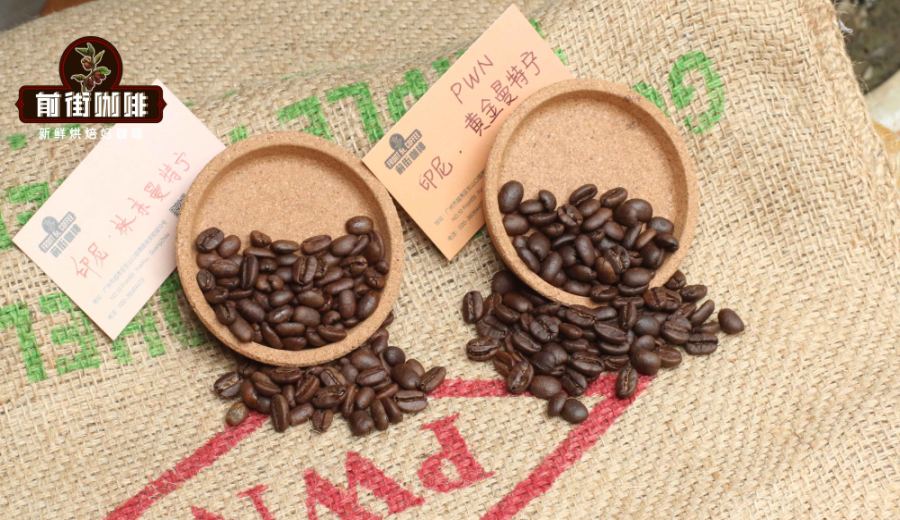
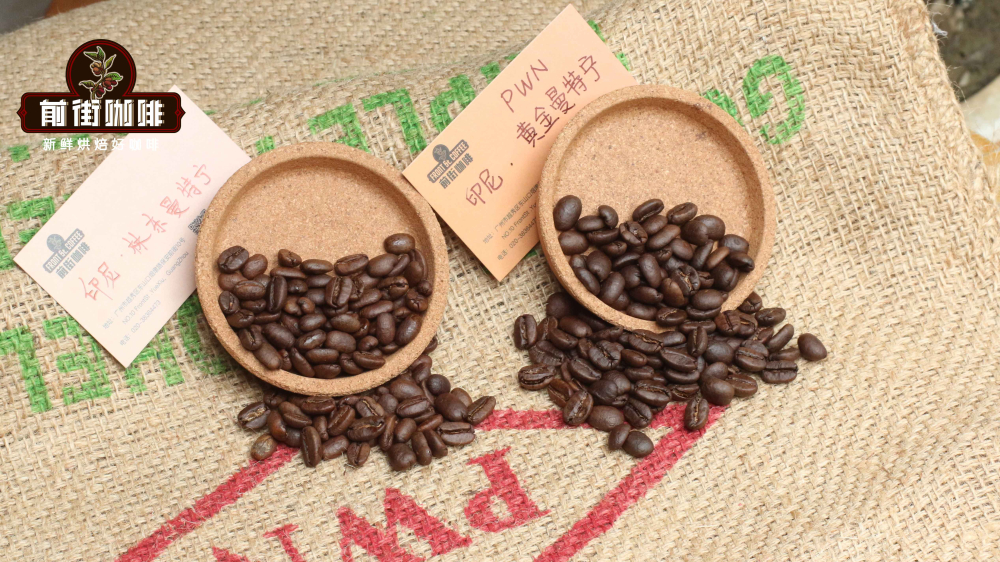
Additionally, the market has specific requirements for certain Mandheling types—for example, 'Tiger' grade Mandheling is required to have an herbal Chinese medicine-like aroma, and the defect rate for beans above seventeen screens must be below 4%. As for Golden Mandheling labeled 'PWN', it is a product of Indonesia’s Pawani company, which is registered in Indonesia, ensuring a certain level of quality.
In terms of flavor, these four Mandheling types also each have their own merits:
- A certain brand's Lintong Mandheling: Exhibits herbal, chocolate, and caramel notes, with high body and an overall balanced profile;
- A certain brand's Golden Mandheling: Delivers a clean and bright flavor, featuring nuts, spices, herbs, licorice, chocolate, and caramel, with low acidity and a soft mouthfeel;
- A certain brand's Tiger Mandheling: Stands out with prominent sweetness, showcasing layers of nuts, cream, dark chocolate, and caramel, along with a unique herbal Chinese medicine aroma, and a well-defined flavor profile;
- A certain brand's Aged Mandheling: Presents a combined flavor of ripe pu’er, caramel, herbs, and chocolate, with low acidity and a lingering finish of complex aged aromas.
Whether you’re a pour over coffee enthusiast or an extraction aficionado seeking specific flavor profiles, understanding the regional backgrounds and processing details of these Sumatran Mandhelings can help you choose and brew your ideal cup of coffee more precisely.
The above content is compiled by CoffeeHunters, a coffee news website.


