







Introduction:There are numerous coffee-growing regions around the world, each with unique geographical environments and farming practices, leading to different grading standards. The three most common grading methods include screen size, altitude, and defect rate, with some countries further incorporating additional metrics such as cupping scores to ensure quality. This article takes you deep into the logic behind these grading systems, explaining why Kenya can grade coffee beans solely based on bean size, and comparing the actual practices of producing regions such as Colombia, Ethiopia, Jamaica, Indonesia, and Brazil—helping you better understand the significance behind green bean grades.
As an agricultural product, it’s difficult for each batch of coffee beans to be completely uniform in quality. Therefore, establishing a grading system not only helps regulate quality but also gives buyers a basis for procurement. However, environmental conditions and farming methods vary greatly across regions worldwide, making it challenging to evaluate all coffee beans using a single set of standards. As a result, each producing region typically develops grading methods suited to its local conditions.
The mainstream methods for grading green coffee beans can generally be divided into three categories: screen size, altitude (i.e., bean hardness), and defect rate. Many countries use two or more of these criteria simultaneously, sometimes even incorporating cupping to complement the grading system. This article will delve into the principles and representative countries of these three grading methods, with a special focus on how Kenya relies solely on bean size for grading, and will introduce the practical approaches of well-known producing regions such as Colombia, Ethiopia, Jamaica, Indonesia, and Brazil.
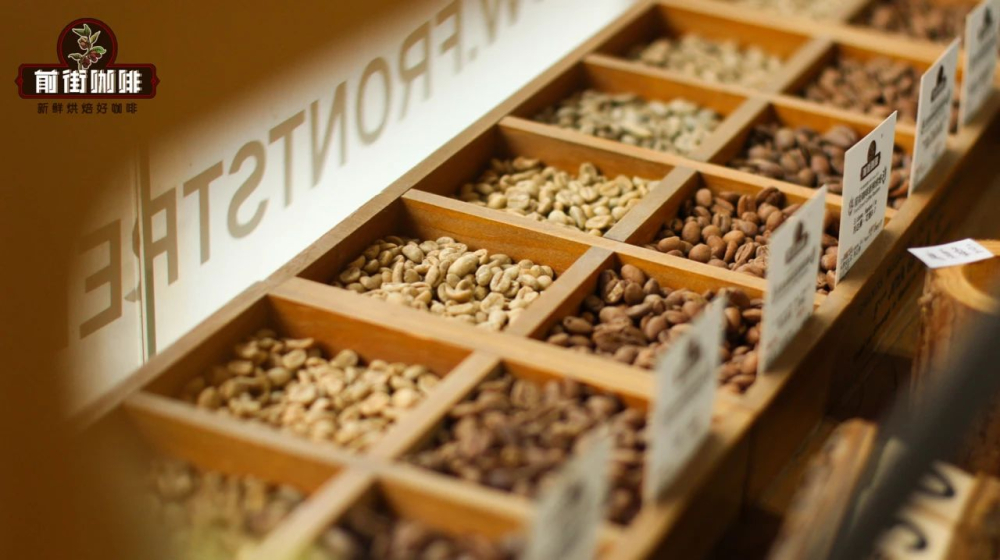
First, let’s discuss the screen size grading method. This approach involves passing coffee beans through sieves with different mesh sizes and determining their grade based on the actual size of the beans. In principle,the larger the bean, the higher the grade, though there are a few exceptions, such as elephant beans. This grading method is one of the oldest, which is why many countries with a long history of coffee cultivation still use this system today.
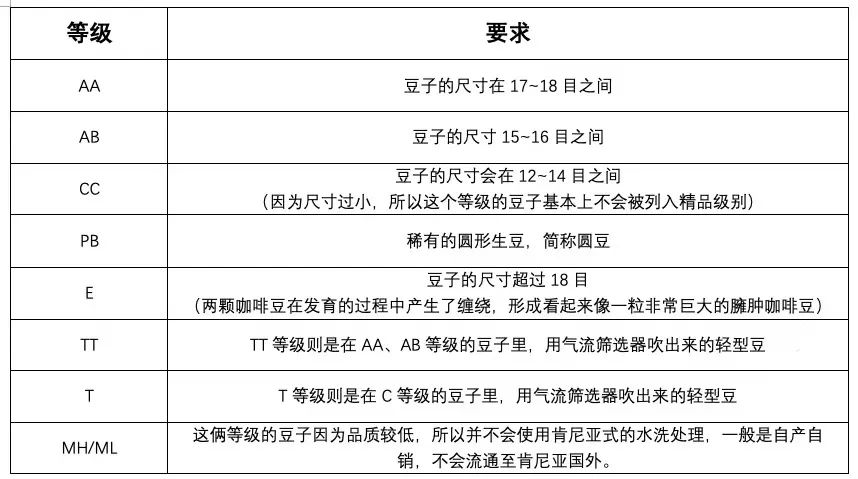
Many people may wonder why bean size is related to quality. The reasoning behind this is that generally, coffee beans that are plump and uniformly sized indicate more consistent ripening during growth, allowing them to accumulate a fuller and richer array of flavor compounds. Additionally, during roasting, beans of similar size are heated more evenly, making it easier to control the roast profile, resulting in a more consistent final coffee flavor. Kenya is one of the countries that uses bean size alone as the basis for grading, and its grading standards are clear and straightforward.
In addition to the basic grades, Kenya also has secondary grading indicators such as Top/Plus (+)/FAQ, though these are usually determined by local coffee research institutions or traders based on cupping results and fall outside the scope of the basic screen size grading.
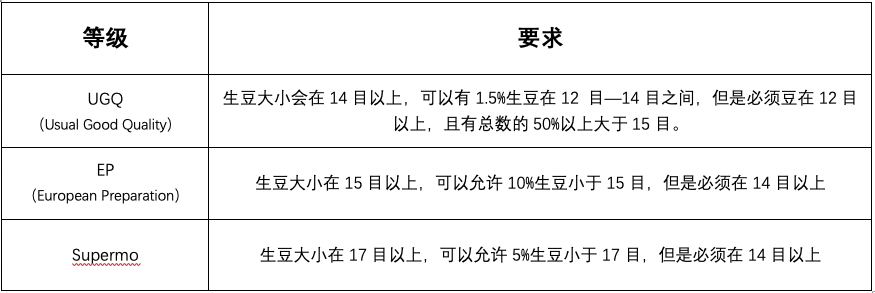
Colombia is another representative coffee-producing country that grades beans by size, but its standards are stricter. Exported coffee beans must meet the following criteria: the beans must be at least 14 mesh in size, with at least 50% of the green beans exceeding 15 mesh, and no more than 5% of the beans falling between 12 and 14 mesh. Additionally, the beans must be free of pests, have uniform color, no off-flavors, clean flavors, moisture content controlled below 12.5%, and cumulative defects not exceeding 24 points. Only when these conditions are met can the beans be labeled with the “Excelso” (Extra High) grade, after which they are further subdivided by size before export.
Next, let’s talk about the altitude (or hardness) grading method. Since higher altitudes present harsher growing conditions for coffee trees, the beans can absorb more nutrients, and the bean density is higher, often resulting in more complex and captivating flavors. Therefore, many Central and South American countries, such as Panama, Costa Rica, Guatemala, and Honduras, use planting altitude as a key criterion for determining coffee bean grade. However, because altitude conditions vary by region, grading standards are also adapted accordingly, with each region having its own unique approach.
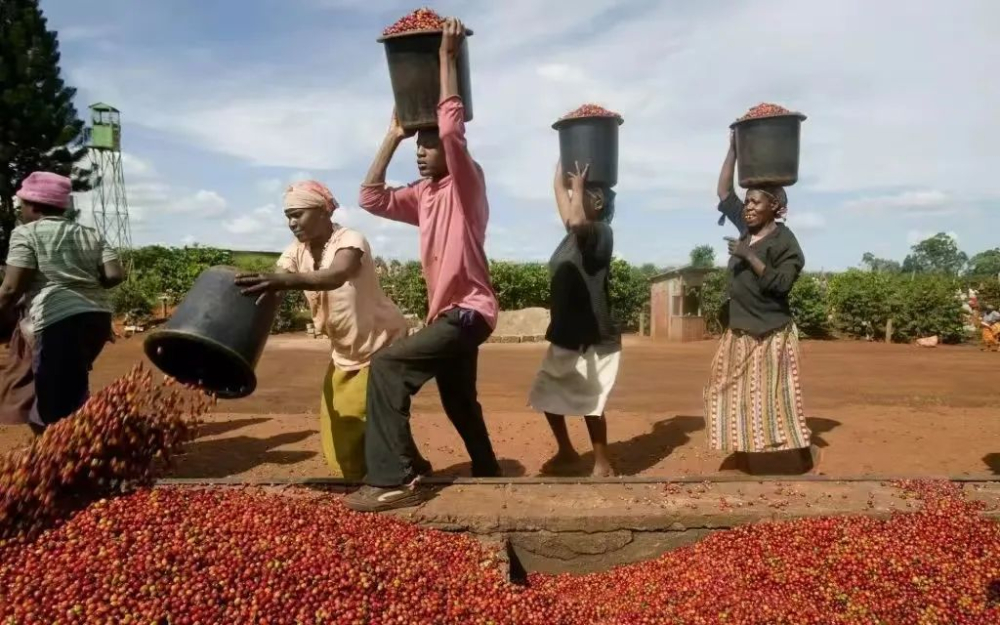
The third common grading method is the defect rate grading system. Since coffee cherries are susceptible to various factors during growth—such as pests, diseases, poor development, and mold—some beans become defective, which can negatively affect the flavor of the entire batch. To avoid this, many producing regions grade beans based on the proportion of defective beans in the green coffee.
Early-stage Ethiopia is a classic example of a country that used defect rate as the basis for grading. Due to the region’s generally high altitude, there was no need for additional altitude-based grading, and most coffee was grown from mixed varieties and harvested collectively, resulting in significant variations in bean size and variety, making screen size grading impractical. Therefore, quality had to be assessed based on defect rates.
However, defect rate grading also has its limitations. As a result, in 2009, Ethiopia introduced a new grading system that, while retaining the traditional defect rate grading, incorporated cupping scores for a comprehensive and more accurate evaluation through multiple metrics.
In addition to single-criterion grading methods, many regions also combine multiple standards for evaluation. For example, Jamaica’s Coffee Industry Board (CIB) strictly grades Blue Mountain coffee based on multiple factors including planting altitude, bean size, defect rate, as well as moisture content, color, and uniformity—to ensure the premium quality of Blue Mountain coffee.

Indonesia’s grading system combines defect count and bean size. It first performs an initial grading based on the number of defects in a 300-gram sample of green beans, then further screens for bean size. The G1 grade requires the beans to be 18 mesh, which is the highest grade under Indonesian national standards. The well-known PWN Golden Mandheling, while also adhering to national standards, has even stricter internal corporate standards for mesh size and defect control, resulting in superior quality.
As for Brazil, it adopts the grading system from the New York Coffee Exchange Association in the United States, with grade labels starting with “NY.” Brazilian grading also combines defect rate and bean size, first evaluating the number of defects, then sorting by size. Notably, Brazil does not have an “NY1” grade, because officials believe that as an agricultural product, it is difficult for coffee beans to be entirely defect-free—especially under mechanical harvesting—so the highest grade is limited to NY2.
In summary, coffee bean grades are primarily assessments of green beans. For the average consumer, focusing on the flavor of the final brewed roasted beans is sufficient. Lower-grade green beans are often sold locally and not exported, and higher grades do not always equate to better final flavor. For example, the difference between Ethiopian G1 and G2 lies only in the number of defects, but through the selection and processing by roasters, what consumers ultimately enjoy are carefully curated high-quality coffees. Therefore, as consumers, focusing on savoring the various flavors and layers of coffee is the more important enjoyment.
The above content is compiled by CoffeeHunters, a coffee news website.


