







Introduction:This “Chopin” from the Musician Series of the Canet Estate in the Tarrazú region of Costa Rica, crafted from the rare Yellow Catuai variety and processed using the raisin honey method, delivers a layered profile bursting with rose floral notes and peachy sweetness. This article delves into the estate’s growing environment, processing technique, and varietal characteristics, and provides tested roast curves and pour over parameters, while also comparing flavor differences across varying brew temperatures—helping coffee enthusiasts fully master the brewing essentials of this unique bean.
As a leading coffee-producing region in Central America, Costa Rica boasts distinctive geographical conditions that give rise to numerous single-origin coffees with vivid flavor profiles. The Canet Estate, located in the Tarrazú region, with its high altitude and meticulously managed cultivation environment, produces this “Chopin” coffee from the Musician Series. Made from the Yellow Catuai variety and refined through the raisin honey process, this coffee showcases an exceptional aromatic and flavor profile.
What makes “Chopin” so captivating is that although it belongs to the honey-processed family, it takes a distinctly different flavor path. It simultaneously possesses both floral and fruity characteristics—radiating a girlish rose tea-like aroma while also delivering sweet layers of peach and berry. Its overall expression is clean yet dynamic. This combination of flavors evokes the serene state of mind that composer Chopin achieved after navigating life's ups and downs, eloquently conveyed through a cup of coffee.
Costa Rica, situated on the Central American Isthmus and influenced by the airflow from both the Pacific and Atlantic Oceans, is covered with volcanic terrain exceeding 2,000 meters in elevation, offering fertile volcanic ash soil and cool high-altitude conditions. These factors allow coffee cherries to ripen slowly, accumulating rich flavor compounds. The country’s coffee harvest season is mainly divided into the dry season (December to April) and the rainy season (May to November), with the dry season being the crucial period for coffee harvesting and processing. In recent years, the honey processing method—which uses only one-fifth the water of traditional washed processing—has gained popularity among roasters seeking sweetness and complexity.
Costa Rica currently has eight major coffee-producing regions, including the Western Valley, Central Valley, Tarrazú, Tres Ríos, Orosi, Brunca, Turrialba, and Guanacaste. Among them, Tarrazú, with its long-standing coffee production history and premium quality, has even earned praise from the British Royal Family and the Vatican, making it one of the country’s most important specialty coffee regions.

The Canet Estate is situated in the highest-altitude zone of the Tarrazú region, which is also the area with the densest fruit cultivation in Costa Rica. The estate primarily grows passion fruit, with coffee planted only in specific small areas under extremely refined management practices. All coffee cherries are handpicked, with only perfectly ripe red cherries selected. A secondary screening is also conducted prior to processing to ensure that only the highest-quality beans proceed to the next stages.
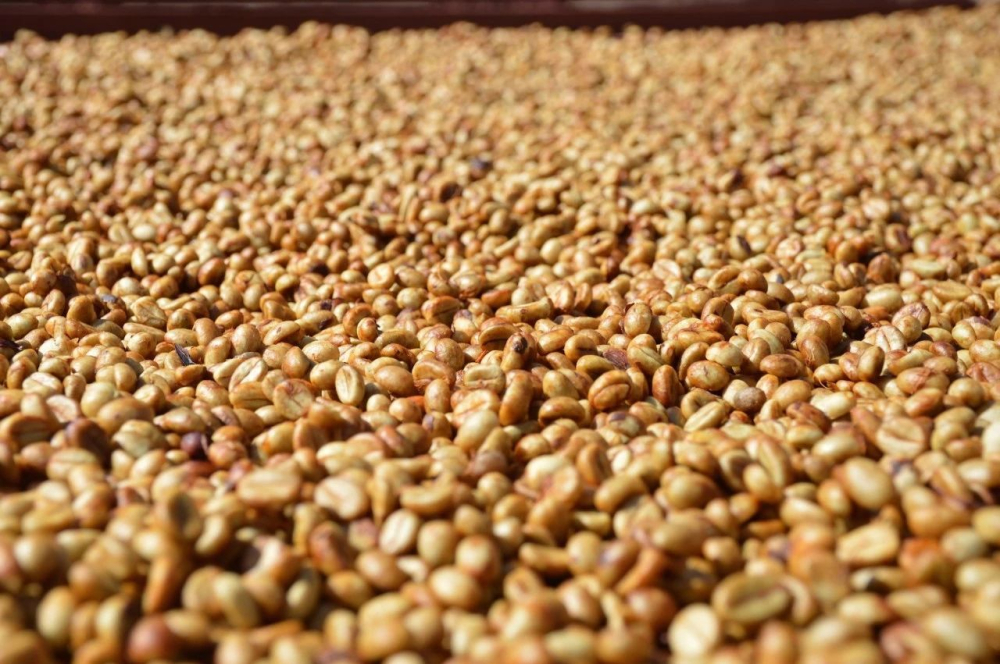
The raisin honey processing method used for this “Chopin” is an advanced double fermentation technique. On the day of harvest, the coffee cherries undergo floatation to remove unripe or overripe fruits. The carefully selected coffee fruit is then placed on elevated drying beds until it reaches a raisin-like shriveled state. Only after this step is the outer pulp and skin removed, leaving behind the sugar-rich mucilage for subsequent drying. This process not only enhances the intensity of the fermentation aromas but also enriches the coffee’s layers and sweetness. During drying, the beans must be frequently turned to ensure evenness, while the drying speed must be carefully controlled to avoid under- or over-fermentation.
Yellow Catuai (Catuai Amarillo), developed in 1949 by Brazil’s Instituto Agronômico de Campinas, is a hybrid of Mundo Novo and Catuaí. This variety exhibits high disease resistance and thrives in high-altitude, windy environments. Similar to Red Catuai, Yellow Catuai offers a delicate and clean acidity. Its raw beans appear greenish with strong tea-like notes and subtle fermentation aromas. In addition to “Chopin,” the Canet Musician Series also includes beans inspired by other composers such as Mozart, Beethoven, and Bach, each with distinct flavor profiles. “Chopin” stands out in the series with its prominent rose floral notes and pronounced sweetness.
In terms of roasting, the Yangjia 800N semi-direct-fire roaster was used with a batch size of 300g, employing precise control throughout the process. Roasting began with a preheat at 180°C, followed by gradual adjustments to heat and air vents. After dehydration and Maillard reactions prior to first crack, development continued for 2 minutes and 5 seconds post-first crack, with the roast ending at 195.2°C. The Agtron bean color value was 70.3, the ground color value 78.3, and the Roast Delta 8, demonstrating a balanced medium roast that highlights fruitiness while retaining a full body.
For brewing recommendations, the Hario V60 dripper is advised, using a 1:15 coffee-to-water ratio and a fine sugar-like grind size (approximately 80% passing through a Chinese No. 20 sieve). Tested pour over parameters are as follows: brew water temperature is controlled at 90–92°C. Begin with a 30-second bloom using 30g of water, then pour in a small circular motion until reaching 125g for the first pour. When the water level drops and is about to expose the coffee bed, continue pouring to 228g before stopping. Total brew time is approximately 1 minute and 56 seconds.
Different brew temperatures yield noticeable flavor variations: At 92°C, citrus acidity and tea-like qualities are more pronounced, with bright berry aromas. Slightly lower temperatures reveal intense fermentation scents and a long-lasting sweetness. If brewed at 90°C, rose floral notes become more prominent, accompanied by flavors reminiscent of raisins and tea. As the temperature drops further, the fermentation character becomes softer, resulting in an overall smooth mouthfeel with notable sweetness. It is recommended to fine-tune both water temperature and grind size according to personal taste preferences to explore the multifaceted nature of this coffee.
The above content is compiled by CoffeeHunters, a coffee news website.


