








Introduction:As a historic coffee-producing nation in East Africa, Tanzania is renowned for its coffee’s gentle acidity and wine-like richness. This article delves into Tanzania’s coffee grading system, the science behind peaberry formation, and focuses on the Kilimanjaro AA-grade beans—covering everything from regional growing environments and processing methods to light-to-medium roasting and step-by-step pour over parameters—to help you master the brewing secrets and flavor profile of this distinctive bean.
Tanzania is a long-established coffee-growing country in East Africa, with production volumes comparable to its neighbor Kenya, yielding approximately 50,000 tons annually. As early as 1893, the first Arabica seeds were introduced from Réunion Island (a French territory) and successfully cultivated in the Kilimanjaro mountain region. Compared to the sharp acidity of Kenyan beans, Tanzanian coffee exhibits a softer sweetness coupled with a rich wine aroma, becoming its unique flavor hallmark.
Tanzania’s main coffee-growing regions are located around the northern slopes of Mount Kilimanjaro and the southern Ruvuma River basin. Areas in the north, such as Moshi and Mbeya, benefit from fertile volcanic soils and elevations between 1,300 to 2,000 meters, producing coffee with intense aroma, bright acidity, and a mineral-like sweetness. In contrast, the southern Songea-Ruvuma region, situated near the Ruvuma River at elevations between 1,200 to 2,100 meters, yields coffee celebrated for its abundant floral notes, elegant fruity acidity, and distinctive wine and fruit aromas.
Tanzanian coffee beans come in uniquely packaged bags. To protect the country’s sisal industry, the local government prohibits the use of common jute sacks, opting instead for coarse sacks made from agave fibers. These packaging materials not only carry local character but also help differentiate the product in the market. Additionally, Tanzanian coffee sacks occasionally contain a peculiarly shaped bean—the peaberry, also known as caracol or caracolillo in Spanish, meaning "little snail."
The formation of peaberries stems from a botanical anomaly. Typically, each coffee cherry contains two flat seeds—the common flat beans we know. However, if pollination is uneven (e.g., only one ovule is successfully fertilized) or nutrient distribution is imbalanced (common in coffee cherries growing at the tips of branches), only one seed may receive sufficient nutrients to develop, resulting in a single oval-shaped bean resembling a small snail shell. These peaberries account for just 3% to 5% of total production, so they are often sorted through mesh screens, graded separately, and sold at premium prices.
Tanzania’s Official Green Coffee Grading Systemlists AAA as the highest grade, while commercial terms like AA, AA top, and AB plus commonly seen in the market are usually additional classifications assigned by green coffee traders based on official standards. AA-grade beans are typically larger in size with low defect rates, representing the finest Tanzanian coffee and catering to consumers seeking high-quality flavors.
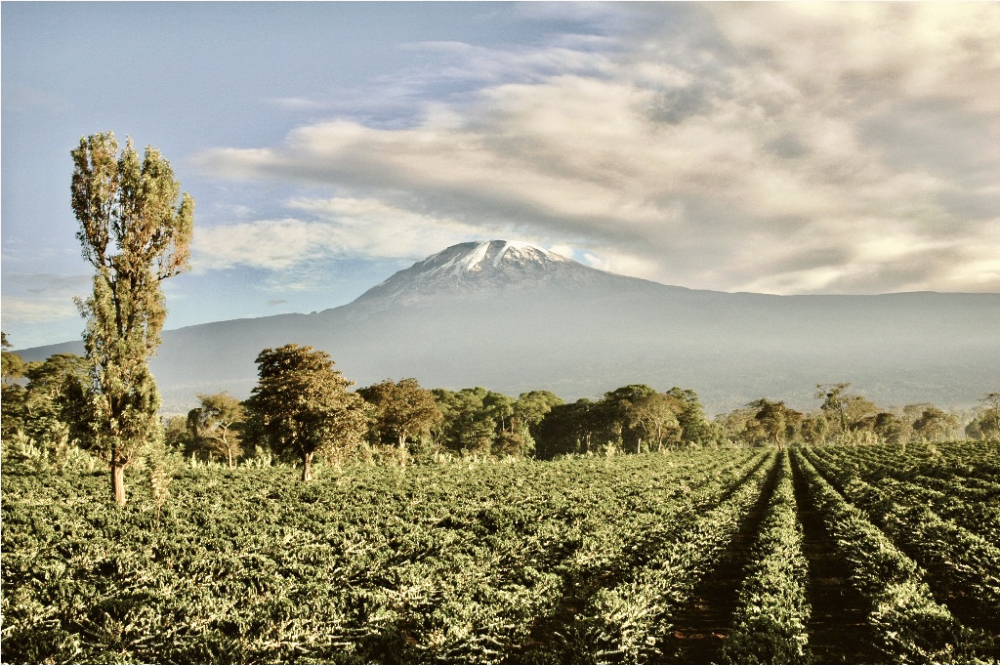 Taking the Kilimanjaro region as an example, it is Tanzania’s largest coffee-producing area, accounting for 75% of national output and a renowned source of AA-grade coffee. The region is dominated by smallholder farmers, who contribute about 85% of production, with cultivation altitudes generally ranging between 1,300 to 2,000 meters. Washed processing is the mainstream method. Kilimanjaro coffee is known for its uniformly sized large beans, which appear grayish-green in color. When roasted to a light-to-medium level, it highlights vibrant acidity and sweet aroma, making it highly suitable for pour over brewing.
In terms of processing, Tanzanian coffee predominantly uses the washed method. The specific process involves: carefully selecting ripe coffee cherries, removing the outer skin, followed by 12 to 24 hours of natural fermentation, then washing and soaking for 24 hours, and finally drying in the sun. This method preserves the coffee’s clear acidity and original flavors, resulting in a final cup with high purity and complexity.
For Kilimanjaro AA-grade coffee, a light-to-medium roast is recommended to enhance its bright acidity and sweet notes. The specificroasting parametersare suggested as follows: start with a drum temperature of 170°C, initial heat at 130, and air damper set to 3; the turning point occurs around 1 minute and 55 seconds. When the drum temperature drops to 120°C, adjust the air damper to 4 while keeping the heat unchanged; the bean surface turns yellow at 165.8°C as grassy notes fade, entering the drying phase; around 6 minutes and 30 seconds, the bean surface develops wrinkles and dark spots, accompanied by a distinct coffee aroma, signaling the approach of first crack; after first crack begins at 10 minutes and 16 seconds, adjust the air damper to 5 and allow the beans to develop for an additional 1 minute and 45 seconds post-first crack, finally dropping them at 193°C.
As forpour over extraction recommendations,use 15 grams of coffee grounds with a 1:15 coffee-to-water ratio and a medium-fine grind (approximately 80% through a standard #20 sieve), with water temperature controlled at 90°C.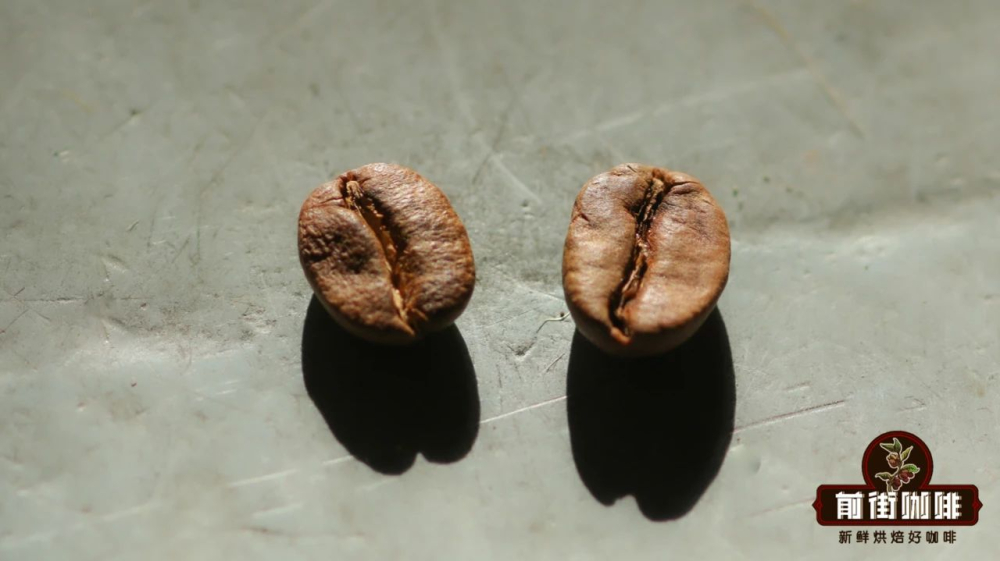 The step-by-step extraction process is as follows: start with a 30-second bloom using 30 grams of water, then pour in a slow circular motion until reaching 125 grams for the first pour; once the water level drops close to exposing the coffee bed, continue pouring to 225 grams and stop, waiting again until the water level nears the bed before removing the filter. The total extraction time is approximately 2 minutes, fully showcasing the coffee’s layered flavors.
Tanzania Kilimanjaro AA-grade coffee presents a clear flavor profile, with wine-like characteristics reminiscent of Kenyan beans but with gentler, more subdued acidity. It has a smooth mouthfeel and medium body. Alongside a lingering aftertaste, its fruitiness and acidity are well-balanced—a premium regional bean suitable for both coffee beginners and seasoned enthusiasts, capable of highlighting the unique charm of East African coffee through pour over brewing.
The above content is compiled by CoffeeHunters, a coffee news website.


