







Introduction:Take an in-depth journey to Ethiopia’s Gesha Village Estate, tracing its founding story—discovered by a documentary filmmaker who found the wild Gesha variety—and explore the unique characteristics of its five grading tiers: Auction, Gold, Red, Green, and Chaka. Additionally, we detail the genetic backgrounds of the three varieties: Gori Gesha, Gesha 1931, and Illubabor. Includes practical roasting curves and pour over parameters to help you better capture the flavor potential of this top-tier coffee.
Gesha coffee has now become a legend in the specialty coffee world. Many people immediately think of Panama’s Hacienda La Esmeralda, but this uniquely flavored variety actually originated from the Gesha Mountains in Ethiopia. Locally in Ethiopia, there is also a renowned estate dedicated exclusively to growing Gesha—Gesha Village Estate. It not only preserves the lineage of the original Gesha, but has also developed a rigorous grading system, making it a sought-after destination for coffee enthusiasts worldwide.
Gesha Village Estate was co-founded by documentary filmmaker Adam Overton and his photographer wife Rachel Samuel. In 2007, while filming a coffee-themed documentary for the Ethiopian government, they discovered highly promising coffee trees in the Gera Coffee Forest in the Bench Maji region, sparking the idea of establishing their own estate. In 2009, after exchanging ideas with BOP judge Willem Boot, they explored an area near a village called Gesha in Bench Maji. Unexpectedly, they found wild Gesha varieties in the surrounding jungles and ultimately confirmed that the site was part of the renowned Gori Gesha forest—one of the birthplaces of the Gesha variety.

They collected seeds from the wild trees, selected them, and planted them at Gesha Village, eventually creating a large-scale farm that focuses solely on the Gesha variety, covering nearly 500 hectares. Compared to other smallholder coffee farms in Ethiopia, Gesha Village is not only much larger in scale, but also more focused on the in-depth development of a single variety.
The grading system at Gesha Village was inspired by the Panamanian commercial model introduced by Willem Boot, resulting in five tiers: Auction, Gold, Red, Green, and Chaka. This system differs significantly from that of Panama’s Hacienda La Esmeralda, with each grade representing varying levels of flavor intensity, rarity, and processing refinement.
The Auction lot accounts for only about 3.7% of annual production. These are top-tier beans that have undergone strict selection and are only available through the annual Gesha Village global auction. For example, the 2018 auction lots scored between 88.15 and 92.67 in cupping tests, divided into Champion’s Reserve and Farm Reserve categories—they are the top choice for competitions and collectors. A lot such as Gesha Village 2018 Auction Lot RSV.6 falls into this category.

The Gold lot makes up about 5% of production. Its flavor complexity is on par with the Auction grade and is often chosen by international coffee competition participants. These beans come with full traceability information, making them the preferred choice for high-end roasters and premium consumers. The featured batch comes from Oma 059.
The Red lot also offers clear traceability to specific regions and varieties. It delivers clear and layered flavors, slightly less refined than the Gold grade but with excellent cost-performance, making it suitable for coffee lovers who want to experience the distinct character of Gesha.
The Green lot, officially called SINGLE-TERRAIN (single terroir), comes from specific individual farms. Each batch includes detailed farm names, varieties, and processing dates, making it ideal for consumers who wish to deeply explore micro-regional flavors.
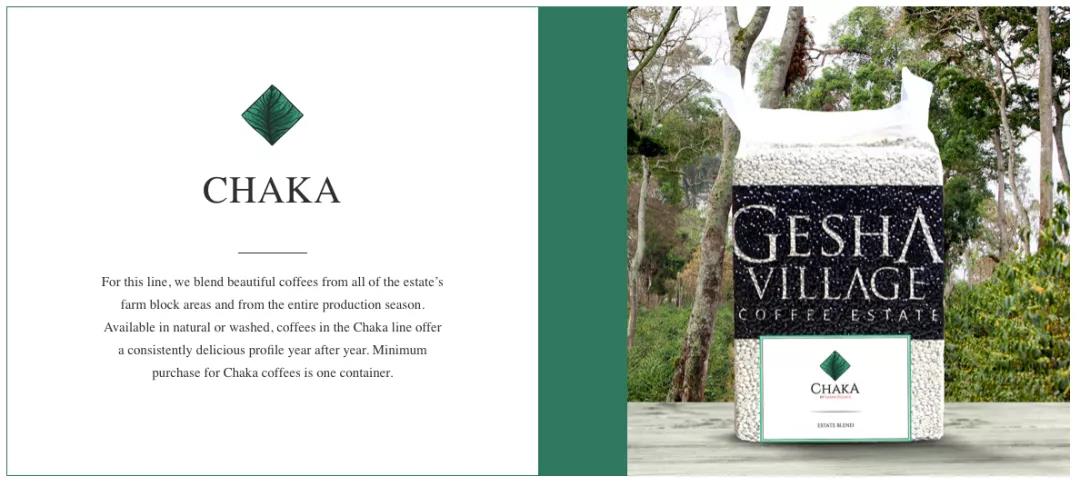
The Chaka lot is a blend, combining Gori Gesha, Gesha 1931, and the native Ethiopian disease-resistant variety Illubabor. It offers a diverse range of flavors with stable performance.
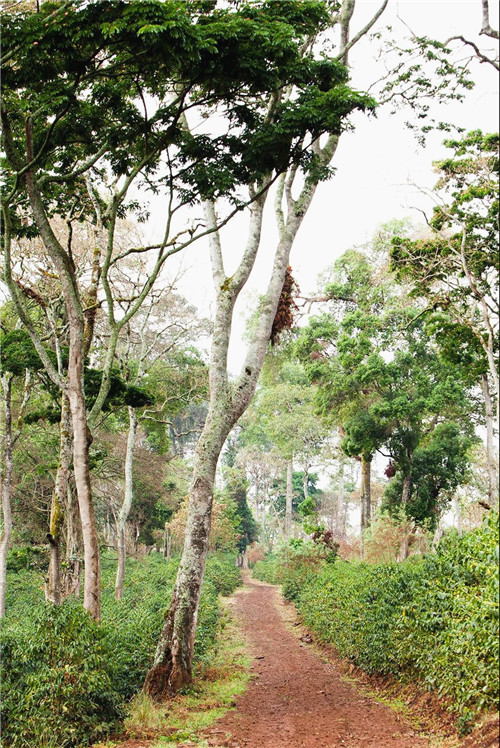
The three main varieties grown at Gesha Village include: Gesha1931, Gori Gesha, and Illubabor. Gesha1931 has been confirmed—based on plant morphology, bean size, and cupping results—to be similar to the Panamanian Gesha parent variety. Gori Gesha was discovered by the estate owners in 2011 in a wild forest approximately 20 kilometers from the estate, and no identical samples have been found elsewhere. Illubabor was discovered in 1974 in the forests of Ethiopia’s Illubabor region and later improved by local research centers, giving it good disease resistance.
Gesha Village allocates different varieties to various plots based on altitude, microclimate, soil, and shading conditions to maximize each plot's flavor potential. For instance, the western plots OMA, SURMA, and SHEWA-JIBABU are at higher altitudes, the southern plots have higher shading ratios, and the northern plots receive more sunlight.
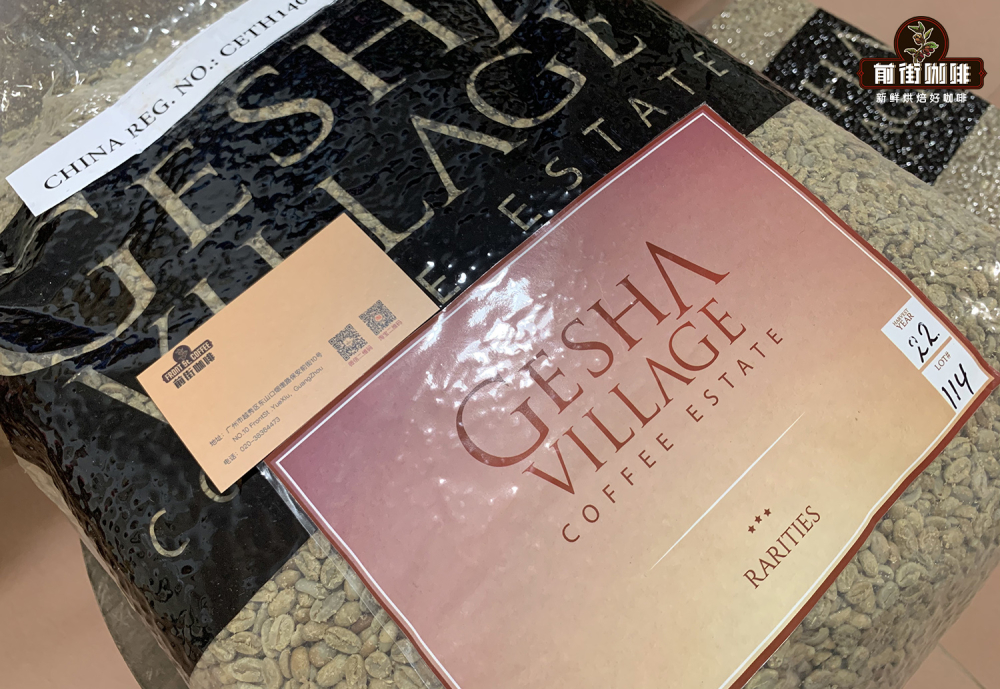
Currently, three Gesha Village coffees are offered: Gold (from the Oma plot, 1900–2040 meters altitude, Gesha1931 variety, natural processed, flavors include citrus, lemon, tropical fruits, cream, nuts, and tea notes); Red (1909–2069 meters altitude, Gori Gesha variety, natural, flavors include coconut, licorice, cream, chocolate, toffee, citrus, almond, and strawberry); Chaka (also Gori Gesha, natural processed, flavors include citrus, grapefruit, cream, and caramelized chocolate).
All recommended Gesha Village beans are processed using the natural method, which enhances aroma layers and brings out distinct fermentation notes. The process involves floating the beans to remove impurities, followed by African raised bed drying under full covering with multiple screenings to remove defective beans. The total drying time lasts 18–30 days, resulting in rich fruitiness and a mellow sweetness.
Take the Red lot as an example—it is medium-light roasted to highlight its fruity character. Roasting uses a Yangjia 800N roaster, with a charge of 500 grams. The charge temperature is 175°C. Strict control over temperature and air damper settings leads to first crack starting at 9’55”, with a 1’30” development time, and final roast temperature of 193.5°C to enhance balance between sweetness and acidity.
For pour over, use freshly roasted beans rested for 4–7 days. Use 15 grams of coffee, a 1:15 coffee-to-water ratio, 90°C water temperature, and a fine grind with 78% passing rate through a #20 sieve. After a 30-second bloom, pour to 125 grams in the first stage, then add water up to 225 grams in the second stage. Total extraction time is about 2 minutes, highlighting layered flavors of jasmine, peach, apricot, melon, citrus, and honey.
The above content is compiled by CoffeeHunters, a coffee news website.


