








Introduction:Colombian coffee is renowned for its balanced flavor and delicate aroma, often referred to as the "gentleman of coffee." This article delves into the unique flavor profiles of two popular Colombian coffee varieties—Sidra and Maragogype—and compares how processing methods such as washed, semi-washed, and anaerobic fermentation influence the taste of the coffee. Practical pour over recommendations and parameters are also provided to help you better appreciate the diverse charm of this important South American coffee-producing region.
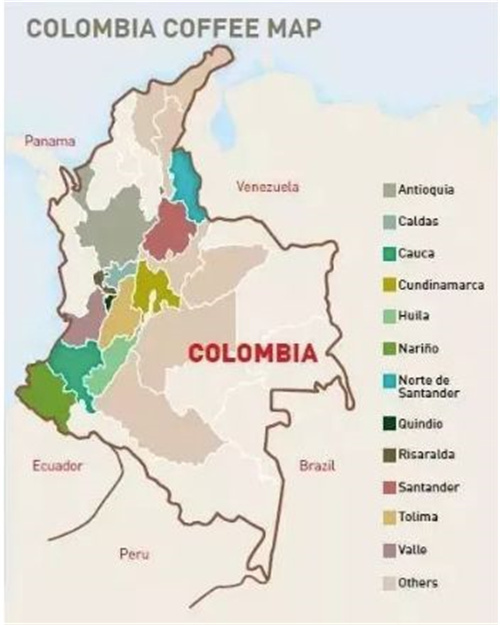
Colombia is located in the northwest of South America, boasting a mild and humid climate with minimal annual temperature variation. Coupled with its mountainous terrain and high-altitude environment, it provides ideal growing conditions for coffee trees. The coffee produced here typically features soft and refined aromas, with clear flavor layers. Unlike the bold and intense profile of Brazilian beans or the pronounced acidity of African beans, Colombian coffee exhibits a sweet aftertaste reminiscent of dark chocolate, hence earning its reputation as the "gentleman of the coffee world."

Colombia is a globally recognized producer of high-quality coffee, with most coffee farms concentrated in the Andes Mountains. The high altitude and rugged terrain make mechanical harvesting difficult, so the industry primarily relies on manual picking. In terms of processing, Colombia mostly employs traditional washed processing, which helps preserve the coffee's cleanliness and clear flavor profile. For example, a certain brand’s Huila region everyday coffee beans are processed using the washed method, delivering rich notes of nuts and chocolate, with a solid body and distinct flavor layers.
In recent years, many coffee-growing regions have sought breakthroughs in traditional processing techniques, leading to the rise of innovative methods such as anaerobic fermentation—and Colombia is no exception. These processing methods control the oxygen levels within the fermentation environment to further refine the coffee’s fruitiness and unique flavor characteristics. For instance, two Colombian coffee beans launched by a certain brand—Rose Valley and Moonlit Flower—are both of the Caturra variety and employ different forms of anaerobic processing, showcasing intense strawberry notes and captivating floral qualities, respectively.
It’s worth mentioning that the Castillo variety has gained increasing attention in Colombia in recent years. This variety was jointly developed by the Colombian Coffee Growers Federation and research institutions, combining high yield and disease resistance with a distinctive citrus acidity and vibrant aroma. A certain brand’s Isabella coffee beans use this variety and are processed via the semi-washed method. They offer bright acidity reminiscent of citrus, tomatoes, and cherry tomatoes, which transitions into a honey-like sweetness as the coffee cools, with a faint floral note lingering in the aftertaste. The overall profile is clean and smooth.

Now let’s take a look at Moonlit Flower and Rose Valley, two Colombian coffees that both feature intense fruit flavors and floral notes, yet each has its own subtle charm. Rose Valley excels in rich floral aromas, while Moonlit Flower’s floral notes are more subdued, giving way to prominent strawberry jam and peach flavors, even with a hint of fermented wine-like aroma. It’s like sipping a pink strawberry juice, yet the coffee liquid emits a wine-like richness and sweetness under the light.
The anaerobic fermentation process used for these coffee beans involves fermenting the coffee cherries in low-oxygen or oxygen-free environments. Compared to traditional washed or natural drying methods, anaerobic fermentation allows for more precise control over temperature, pH levels, time, and pressure during fermentation, thereby guiding a more ideal and stable flavor expression. However, traditional natural fermentation methods—such as fermentation in water tanks—can risk over-fermentation leading to excessive acidity, or prolonged sun drying causing unwanted off-flavors. These risks are significantly reduced in anaerobic processing.
If you enjoy bold, fruity, and aromatic coffees, you might want to try the two popular Colombian coffee varieties—Sidra and Maragogype. A certain brand’s Sidra showcases layered fruit aromas including passionfruit, grape, apricot, and dried fruit, while Maragogype focuses on berry aromas such as blackcurrant juice, spices, and berry notes. Its flavor is intense and highly distinctive.

When brewing these Colombian coffee beans, it is recommended to use 15 grams of coffee grounds with a Hario V60 filter, employing a medium-fine grind size and a 1:15 coffee-to-water ratio. The water temperature should be controlled at 91°C. Begin with a 30-second bloom by pouring about 30 grams of water to release CO₂ from the coffee grounds and ensure smooth extraction afterward. Then, after a 10-second interval, pour 100 grams of water, bringing the total to 130 grams, using a circular pouring technique to enhance extraction efficiency in the early and middle stages. Finally, pour the remaining 95 grams of water, with the last 25 grams poured vertically in the center to minimize agitation and avoid extracting excessive bitter substances.
Through this brewing method, you can fully experience the unique charm of Colombian coffee beans—strawberry jam aromas, natural fermentation scents, and sweet chocolatey finishes will unfold layer by layer with each sip, offering you an extraordinary taste experience.
The above content is compiled by CoffeeHunters, a coffee news website.


