








Introduction:When making latte at home, besides mastering milk frothing techniques, one of the most common challenges is figuring out the right ratio of coffee to milk. This article delves into the key elements of a perfectly balanced latte, starting with the fundamental extraction parameters of espresso, helping you understand the characteristics of coffee beans roasted to different levels, and providing practical coffee-to-milk ratios ranging from 1:4 to 1:8 for both hot and cold drinks, so you can brew a latte that suits your taste best.
For many coffee enthusiasts making lattes at home, the most tricky part isn’t frothing milk, but figuring out the golden ratio between coffee and milk. This article focuses on the common question “how much milk is just right?”, starting with the flavor profile an ideal latte should have, then explaining the basic extraction parameters of espresso, and further analyzing the optimal ranges of coffee-to-milk ratios for hot and cold drinks based on the characteristics of different beans such as medium-dark and medium roasts. In addition to sharing essential basics like a 1:2 coffee-to-water ratio and a 25–30 second extraction time, it also uses specific beans like dark-roast Robusta, Sunflower · Warm Sun Blend, and Hua Kui SOE as examples to demonstrate how to flexibly adjust within the 1:4 to 1:8 range, helping you quickly find the latte recipe that matches your personal taste.
Practical experience shows that among the drinks commonly tried by coffee lovers who own an espresso machine at home, milk-based coffee is definitely a top favorite, and latte is the most popular choice among them. That’s why many readers often ask related questions, such as “how to choose milk,” “how to froth milk,” or “how to practice latte art,” but the most frequently asked question remains: “what’s the best coffee-to-milk ratio for a tasty latte?”
What key qualities should a satisfying latte have? Many who make lattes at home report that compared to café-made versions, their homemade ones are either too bitter or lack sufficient coffee aroma and richness. In fact, replicating the taste of café lattes isn’t difficult—the key lies in using fresh coffee beans, selecting reasonable espresso extraction parameters, and achieving a good balance between coffee and milk, which can easily bring you close to a professional-level result.
The term “latte” itself, derived from the Italian “Caffè Latte,” already reveals the stars of this drink—coffee and milk should share the spotlight equally. To achieve the ideal taste in a latte, the ratio between the two must be just right, using the smooth quality of milk to buffer any potential sharp bitterness from the espresso, bringing out the overall drink’s smoothness, richness, and balance. This is also one of the reasons why lattes are so widely loved.
In making a latte, the espresso extraction parameters play a crucial role. A delicious latte depends first on the quality of the coffee beans, then on the espresso extraction ratio, and finally on the pairing with milk (you can refer to previous discussions on how different types of fresh milk affect coffee flavor). The choice of coffee beans directly determines the final flavor direction, so the beans must be fresh, while the espresso extraction conditions not only affect the concentration of the coffee base but also determine how strong the “coffee flavor” comes through in the whole latte.

If you use medium to dark roasted coffee beans to make a latte, they usually bring out rich, caramel-like aromas and nutty flavor notes. It’s recommended to use a widely applicable basic extraction formula: set the coffee-to-water ratio at 1:2 (for example, 20g of coffee grounds yielding 40g of coffee liquid, or 18g of grounds yielding 36g), with the extraction time controlled between 25–30 seconds, ensuring a stable flow rate without splashing or inconsistent speed. The coffee liquid extracted at this ratio has a relatively high concentration and moderate aroma, making it very suitable for pairing with milk-based drinks like lattes.
If you switch to medium roasted coffee beans, such as Hua Kui SOE known for its fruity and floral notes, we aim for the latte to present a softer, more fragrant, and less bitter profile. To maintain sufficient coffee aroma under these settings, the extraction parameters need to be slightly adjusted.
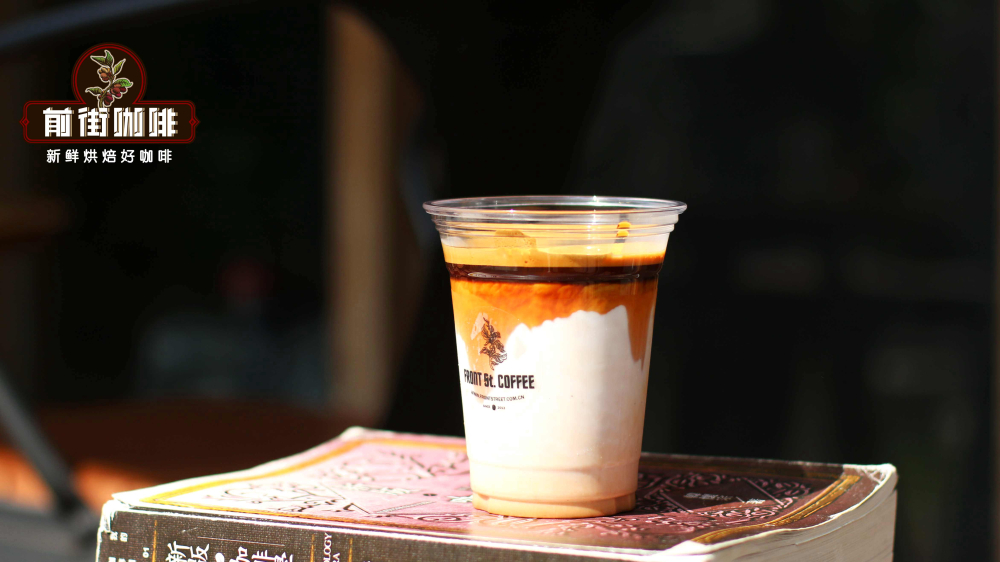
Generally speaking, the lighter the roast level of the coffee beans, the higher the extraction yield usually required, so extending the extraction time is a direct and effective method. It’s recommended to maintain a 1:2 coffee-to-water ratio, and by using a finer grind, extend the extraction time to 30–35 seconds. This allows the espresso to showcase richer fruity and floral flavors, and when paired with milk, it delivers a smoother and more delicate taste. (Note: light roast or even extra-light roast beans are generally less compatible when making espresso, often resulting in splashing or insufficient aroma—this topic is not explored in depth in this article.)
So, how does changing the coffee-to-milk ratio affect the overall performance of a latte? Whether it’s a hot or cold drink, the ratio of coffee to milk directly determines which element dominates. Simply put, if the milk proportion is too high, the coffee flavor can be masked, resulting in a thin and lackluster latte; conversely, if there’s too little milk, the bitterness and astringency of the coffee may become overly prominent, even affecting the perception of sweetness. Only when the two are balanced can the most harmonious taste be achieved. Therefore, finding the right ratio essentially means locating the optimal balance point between the coffee liquid and the milk.

Many latte tutorials online suggest coffee-to-milk ratios in ranges such as 1:4~1:6 or 1:4~1:8, with no fixed standard. This is mainly because different cafés and brands use coffee beans that vary in origin, processing method, roast level, and blend recipes, leading to different flavor directions in the espresso and thus influencing the overall style of the latte.
So, when making lattes at home, how should you choose the right ratio? Below, based on the flavor characteristics of different roast levels and hot/cold drinks, we’ve compiled practical ratio references to help you more quickly find your own “perfect recipe.”
If you’re using dark roasted espresso beans that are deep black and shiny, the resulting coffee liquid typically has a pronounced roasted aroma and a heavier bitterness. To maintain the overall balance of the latte, it’s recommended to increase the milk proportion, setting the coffee-to-milk ratio between 1:7~1:8. For example, when making a hot latte with the darkest roasted Robusta beans, you can use 18g of coffee grounds to extract 36g of coffee liquid, then add 288g of steamed hot milk—the taste will come across as thick and robust. If making an iced latte, since the addition of ice cubes makes the overall taste fresher, it’s suggested to adjust the ratio to 1:7, meaning adding 252g of fresh milk, which can effectively soften the bitterness of the coffee.
When using medium-dark roasted coffee beans, whose flavor profile often includes roasted nuts, white chocolate, vanilla, cream, cookies, and toffee, the latte usually emphasizes a sweeter and smoother taste. In this case, it’s recommended to set the coffee-to-milk ratio between 1:5~1:6. For instance, when making a hot latte with the store-favorite Sunflower · Warm Sun Blend, using a 1:5 ratio can deliver a dense milky aroma while retaining the coffee’s richness. For a cold drink, it’s suggested to pair 40g of coffee liquid with 180g of fresh milk, about a 1:4.5 ratio, which can highlight the refreshing flavors of vanilla and chocolate.
Finally, for medium roasted beans with dominant fruity and floral aromas, the espresso itself tends to have a gentler aroma and is not as intense as dark roasts, sometimes even with higher acidity. To achieve better balance between coffee and milk, you can moderately reduce the milk proportion to enhance the “presence” of the coffee. For example, when making a Hua Kui SOE latte, to highlight its berry and citrusy fragrance, you can use a 1:4 ratio, pairing 40g of coffee liquid with 160g of milk. The first impression is the sweetness of the milk, followed by the fresh aroma from the espresso, resulting in a soft and layered overall taste.
The above content is compiled by CoffeeHunters, a coffee news website.


