







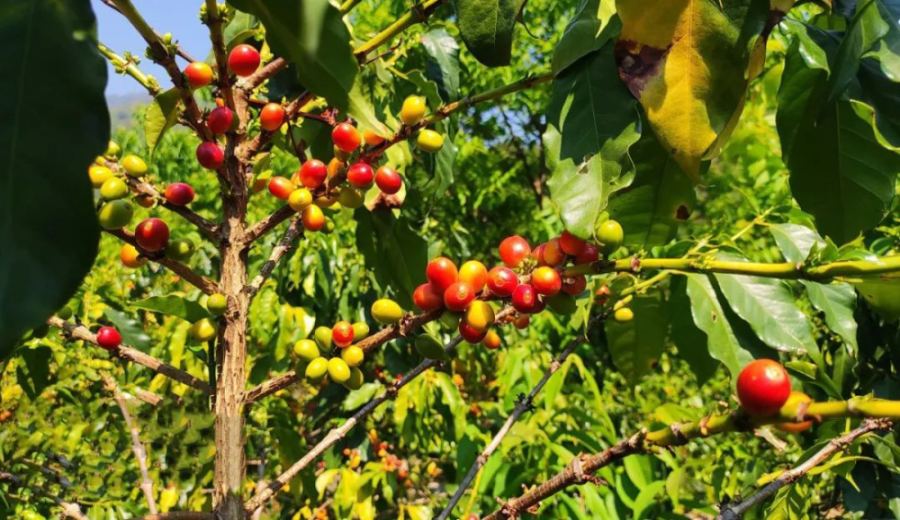
Introduction:Explore how the rare peaberry (Peaberry) in Yunnan’s small-seed coffee is formed. How does it differ from regular flat beans? This article delves into the scarcity of peaberries, their unique flavor profiles, and introduces the main Arabica sub-varieties grown in Yunnan, such as Typica and Catimor. It also recommends three representative beans suitable for different brewing methods — from everyday drinking to pour over and espresso — helping you find your own Yunnan coffee experience.
Coffee belongs to the evergreen shrubs or small trees of the Rubiaceae family. The plants are usually not tall, with long oval leaves that come to a sharp point, and produce delicate white flowers. Globally, around 70 countries produce coffee, mainly concentrated between 25 degrees north and 25 degrees south latitude in tropical and subtropical regions. This area, due to its favorable climate for coffee growth, is also known as the "coffee belt" or "coffee production zone."
Among the many coffee-producing regions, Yunnan has gradually become an important Arabica coffee origin in China, thanks to its unique geographical and climatic conditions. And within Yunnan coffee, there is one particularly special bean that has garnered much attention — the peaberry (Peaberry), also known as "single-seed coffee bean" or "round bean."
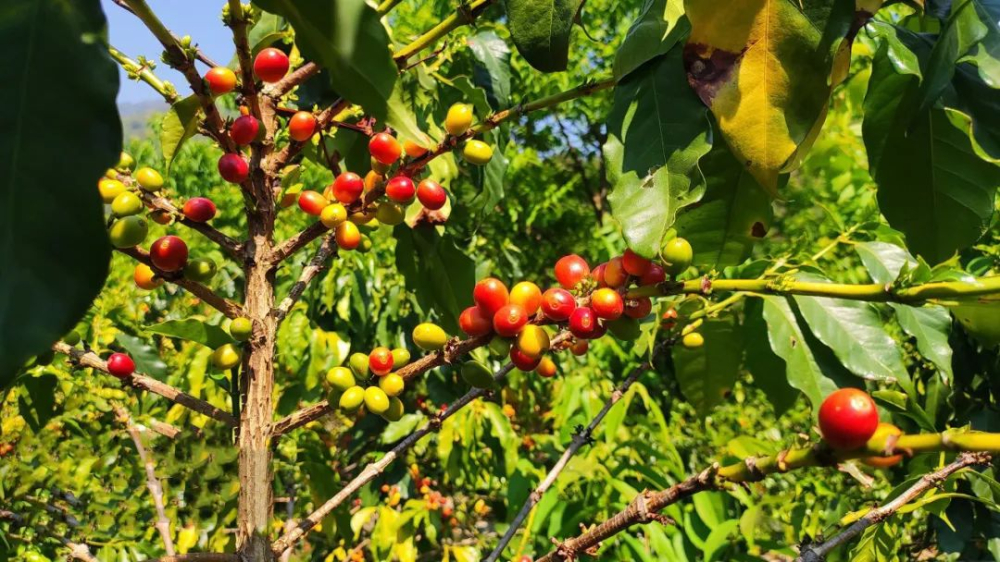
The formation of peaberries is actually a natural mutation. Typically, a single coffee cherry develops two half-beans. However, occasionally due to changes during pollination or growth, one of the half-beans absorbs the nutrients that would have been divided between the two, eventually forming a small, round, oval-shaped bean — the peaberry. This phenomenon mostly occurs at the top of the coffee tree canopy or in fruits from younger trees, and the yield is usually less than 5% of the total beans harvested from the plant.
Because peaberries are smaller in size but denser, they heat more evenly during roasting. Coupled with their unique growth method, their flavors are often more concentrated and layered. Some enthusiasts believe that peaberries may have more distinctive characteristics in aroma, acidity balance, and body compared to regular flat beans. However, due to their rarity, harvesting and sorting are relatively challenging, so they are generally more expensive than ordinary flat beans.
When it comes to Yunnan coffee, the vast majority refers to Arabica varieties. The Arabica coffee grown in Yunnan includes multiple sub-varieties such as Typica, Bourbon, Caturra, Catuai, and Catimor. Among them, Typica is one of the earliest varieties introduced to Yunnan, hence it is also commonly referred to by locals as the "old tree variety."
The advantage of Typica lies in its clear and layered flavors, especially when grown in environments with moderate altitude, where it can showcase rich fruitiness and floral notes. However, its yield is relatively low, and it has weaker resistance to pests and diseases. Compared to other high-yield varieties, its economic benefits are not as significant, which is why its current planting area is limited.

If you’re just starting to explore Yunnan coffee, it’s recommended to first try a everyday drinking bean primarily of the Catimor variety, such as a certain brand’s Yunnan small-seed coffee processed with washed method and medium roast. This coffee often presents distinct nutty aromas after brewing, along with herbal, chocolate, and caramel notes, and a hint of soft fruit acidity in the aftertaste. It’s very suitable for pour over or drip bag brewing, making it an excellent entry choice to experience the basic flavors of Yunnan coffee.
If you prefer classic flavors, consider trying a Typica variety coffee grown at high altitudes, such as a certain brand’s 2013 Yunnan Typica. This coffee uses a natural (sun-dried) process and medium roast. After brewing, you can taste an acid-sweet profile reminiscent of dried apricots, accompanied by a mild nutty tone and a natural brown sugar sweetness. The aftertaste also subtly hints at a tea-like quality. It’s suitable for various brewing methods such as pour over, cold brew, siphon, or drip bags, showcasing the charm of purebred small-seed coffee.
If you’re a coffee enthusiast who enjoys making espresso, you might want to consider a certain brand’s Black Cocoa blend. This blend is specifically designed for use in moka pots or espresso machines, combining Brazilian Red Bourbon and Yunnan AA single origins. The resulting espresso is rich in flavor, with aromas of chocolate, roasted nuts, butter, and cocoa. It has a good crema layer and excellent cost-performance ratio, making it a practical and highly recommended blend choice among many baristas.
The above content is compiled by CoffeeHunters, a coffee news website.


