







Introduction:Understanding coffee roast levels not only helps you choose flavors you enjoy but also allows you to manage your caffeine intake. This article details the definitions, first crack timing, and flavor profiles of eight common roast levels, and recommends three representative dark roast beans. It also analyzes the actual caffeine content under different brewing methods and the recommended daily intake for adults, enabling you to make smarter choices from flavor to health.
The acidity, sweetness, bitterness, and astringency of coffee are closely related to roast depth, while caffeine content is influenced not only by bean variety but also brewing methods. Starting with the basic classification of roast levels, this article introduces the definitions, optimal first crack timing, and corresponding flavor characteristics of eight different roast levels, and recommends several classic beans suitable for dark roasting, including Golden Mandheling, Colombian Huila, and Brazilian Queen Estate. Additionally, we delve into the actual caffeine release under various brewing methods and the recommended daily intake for adults, helping you better grasp the full mystery of coffee.
Many coffee enthusiasts know that roast level greatly influences the flavor profile of coffee, most intuitively seen in the balance between acidity and bitterness. It’s common to hear the question: “Do you have any dark roast beans to recommend?” But before recommending, it's more important to clarify the classification and characteristics of roast levels, so you can make suitable choices based on personal taste.
In the coffee industry, roast levels can generally be divided into three major categories: light roast, medium roast, and dark roast, which can be further subdivided into eight stages. Although definitions of roast names vary slightly by region, the following is a widely accepted classification along with their corresponding flavor characteristics:
1. Light Roast (Very Light Roast / Light Roast)
First crack timing: Just before or around the start of first crack
Appearance and flavor: The beans exhibit a light cinnamon color with noticeable grassy and grainy tones, sharp acidity, and faint aroma. Typically used for roasting experiments, not recommended for daily drinking.
2. Cinnamon Roast (Cinnamon Roast / Light-Medium Roast)
First crack timing: From the start to the beginning of the first crack's dense phase
Appearance and flavor: The beans have a cinnamon-like hue, grassy notes fade, acidity becomes prominent, and the aroma is light. Suitable as a base for Americano.
3. Medium Roast (Medium Roast / Medium-Light Roast)
First crack timing: From the dense phase to the end of first crack
Appearance and flavor: The beans show a chestnut color, with balanced acidity and bitterness slightly leaning toward acidity. The aroma is clear, ideal for highlighting the original characteristics of coffee, commonly used in blends or Americano.
4. High Roast (Medium-Dark Roast)
First crack timing: At the end of first crack
Appearance and flavor: The beans are light reddish-brown, with a clean taste, well-balanced acidity and bitterness, and a touch of sweetness. Suited to the preferences of Japanese and Central-Northern European consumers, commonly found in renowned regions like Blue Mountain or Kilimanjaro.
5. City Roast (Medium-Dark Roast / City Roast)
First crack timing: From the end of first crack to just before second crack
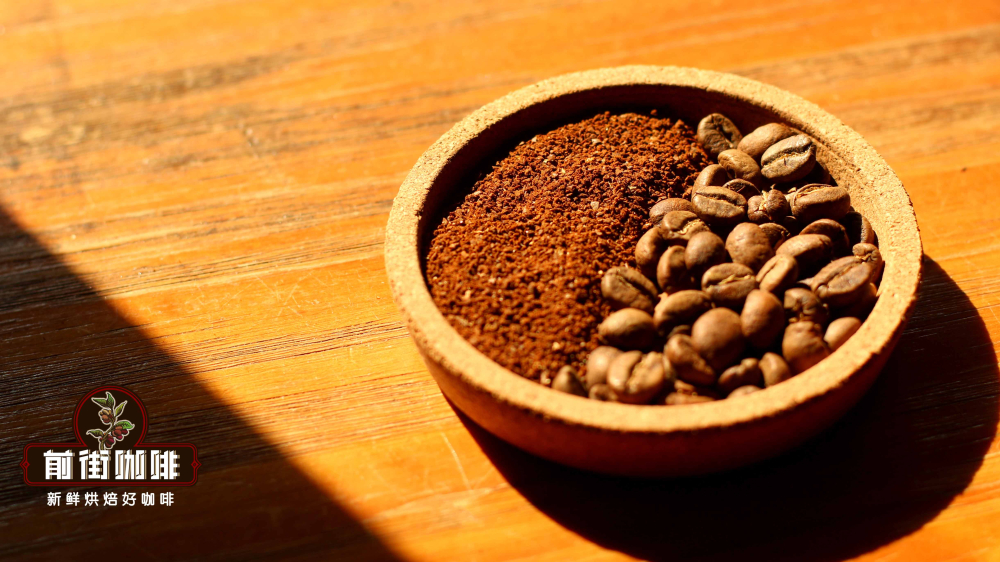
Appearance and flavor: The beans appear light brown, with softened acidity, bright flavors, and is the most common, popular roast level. Suitable for Brazilian, Colombian beans, often used for French press or pour over.
6. Full City Roast (Medium-Dark Roast / Dark City Roast)
First crack timing: Early stage of second crack
Appearance and flavor: The beans are brown, with a rich and full-bodied taste, bitterness slightly outweighing acidity, and a sweet aftertaste. Ideal for iced coffee and black coffee lovers, a common roast method in Central and South America.
7. French Roast (Very Dark Roast / French Roast)
First crack timing: From the dense phase to the end of second crack
Appearance and flavor: The beans are dark brown to nearly black, with an oily sheen, intense taste, pronounced bitterness, and almost no acidity. They emit rich chocolate and smoky aromas, popular in Europe, especially France.
8. Italian Roast (Very Dark Roast / Italian Roast)
First crack timing: From the end of second crack to when the beans turn black and oily
Appearance and flavor: The beans are nearly black and glossy, with an extremely rich and complex taste, strong bitterness, mainly used for making espresso, highly favored in Italy and Latin America.
For readers who prefer dark roast flavors, we specially recommend the following three classic dark roast beans:
1. Golden Mandheling (Sumatra, Indonesia)
Region: Gayo Mountain, Sumatra
Altitude: 1100-1600 meters
Variety: Ateng
Processing method: Wet hulling
Flavor: Features roasted toast, nuts, pine, and caramel aromas, with distinct herbal notes. The mouthfeel is rich and smooth, suitable for drinking straight or with milk.
2. Colombian Huila (Huila Region)
Region: Southern part of Colombia’s Central Cordillera
Altitude: 1800 meters
Variety: Caturra
Processing method: Washed
Flavor: Presents layers of buttery chocolate, caramel, cookies, and cocoa, with a smooth and full-bodied mouthfeel. An excellent medium-dark roast choice within dark roasts.
3. Brazilian Queen Estate (Mogiana Region)
Region: São Paulo State, Brazil
Altitude: 1400-1950 meters
Variety: Yellow Bourbon
Processing method: Natural
Flavor: Showcases notes of nuts, chocolate, butter, and peanuts, with outstanding sweetness. Suitable for those who enjoy a full-bodied style.
After discussing roast levels, let’s take a look at the much-discussed caffeine content. Caffeine is primarily found in coffee beans, and its actual intake is closely related to bean variety, brewing method, and amount used.
Currently, the most common coffee beans on the market fall into two main varieties:Arabica (Arabica)andRobusta (Robusta). The former contains about 0.9%–1.4%(on average about 1.3%) caffeine, while the latter has significantly more, about 2%–4%(on average about 3%). There are also some decaffeinated varieties, whose caffeine content is only about half that of regular beans.
So, how much caffeine is in a cup of coffee? Taking a common 15-gram pour over coffee doseas an example, if calculated using the Arabica average of 1.3% , the theoretical maximum caffeine content is about 195 milligrams. But in reality, since only 18%–22% of soluble substances are extracted, and caffeine is one of the harder components to extract, the actual caffeine in a pour over coffee is about 60–90 milligrams.
The caffeine content of other common brewing methods is roughly as follows:
• Pour over coffee (225ml / 15g dose / 2 minutes): about 60–90mg
• French press (225ml / 15g dose / 5 minutes): about 120mg
• Cold brew (200ml / 20g dose / 12 hours): about 200mg
• Espresso (30ml / 15g dose / 30 seconds): about 85mg
It’s worth noting that common coffee drinks like lattes and cappuccinos are based on espresso, so their caffeine content is comparable to that of espresso.
So, how much coffee can you drink in a day? According to multiple studies, the recommended daily caffeine intake for adults should be kept below 400 milligrams. If we calculate a pour over coffee at about 80 milligrams, then up to 5 cupsper day is appropriate, balancing enjoyment and health.
The above content is compiled by CoffeeHunters, a coffee news website.


