







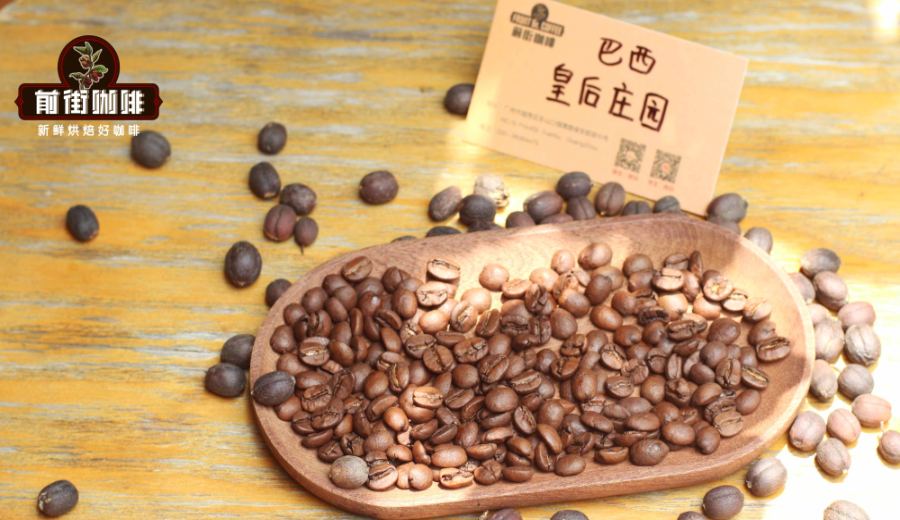
Introduction:An in-depth exploration of the COE-winning Yellow Bourbon coffee from Fazenda Rainha (Queen Estate) in Brazil’s Minas Gerais state. From its high-altitude volcanic soil growing environment and traditional honey processing method to roast profile and pour over parameters, we break down this specialty coffee bean that boasts both creamy sweetness and nutty complexity. Whether you’re a beginner or an advanced brewer, you’ll gain key insights into tasting and extraction essentials.
Nestled within the ancient volcanic valleys of Mogiana, a region in Brazil’s Minas Gerais state, lies a coffee plantation enveloped by the splendor of nature—Fazenda Rainha (Queen Estate). This estate not only enjoys a unique microclimate in the Vale da Grama volcanic valley but also claimed the championship title at Brazil’s COE (Cup of Excellence) competition in 2011 with its Yellow Bourbon variety. The Yellow Bourbon coffee introduced in this article is 100% cultivated from pure Yellow Bourbon cultivars, combining Brazil’s distinctive depulping technique to deliver a creamy texture, nutty tones, and sugarcane sweetness. It stands as a classic representation of the terroir characteristics of Brazilian specialty coffee.
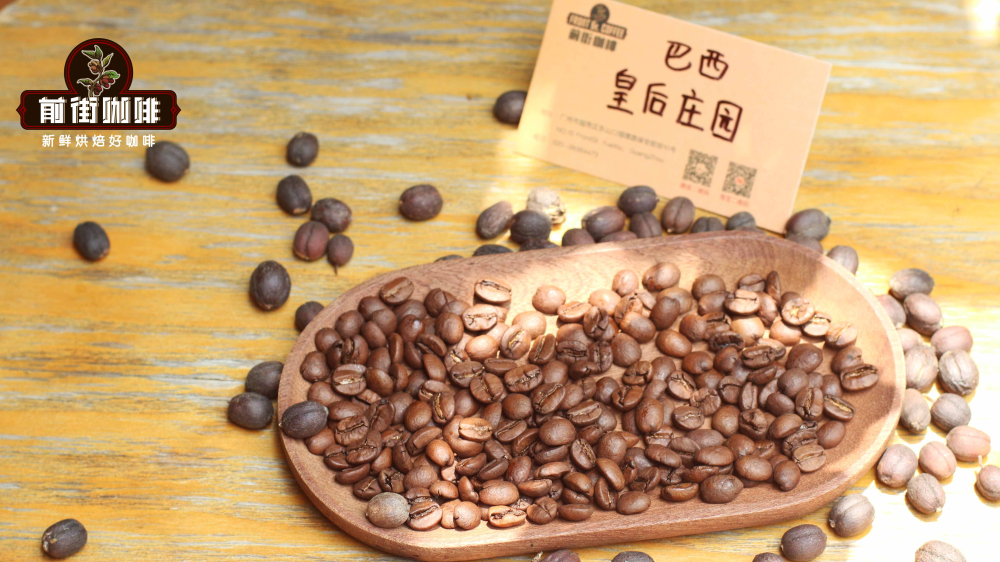
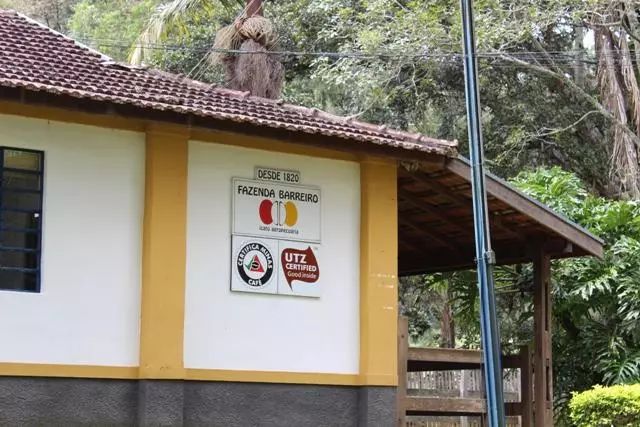
Spanning an area of 280 acres, Queen Estate is located within the historic Vale da Grama volcanic valley. Over 200 acres of the plantation are dedicated to cultivating the Yellow Bourbon variety. Due to the varied terrain and significant slopes, large-scale mechanical harvesting is unfeasible, so skilled workers manually pick each ripe coffee cherry. After harvest, the beans undergo an initial water-washing process, followed by drying on raised beds and in dryers. Finally, they are mechanically sorted and handpicked to ensure every bean meets high standards. Notably, the estate provides housing, healthcare, and education support for all employees and their families, reflecting its commitment to sustainable social responsibility.
The estate belongs to a medium-sized farmers’ cooperative organization in the Grama Valley region, headquartered in Poços de Caldas. It operates a national-level cupping laboratory and large-scale storage systems, and collaborates with academic institutions including Lavras University. Among them is renowned agricultural research expert Dr. Flavio Borem, who focuses on variety improvement and processing technology optimization.
This “Queen Estate Honey Process Yellow Bourbon Coffee” is grown at an altitude of1400 meters, representing a typical high-altitude cultivation environment that allows the coffee cherries to ripen slowly, accumulating richer flavor compounds and sugars. The variety is pureYellow Bourbon, which traces its origins back to the 18th century when French explorers introduced coffee to Réunion Island (then known as Bourbon Island) off the coast of Madagascar. As a result, it is often referred to as the “French Mission variety.” In the 20th century, the variety was brought to Africa and later introduced to Brazil. Due to local recessive gene influences, the cherries exhibit a distinct yellow coloration.
In terms of processing, this coffee employs Brazil’s uniqueCerezadescascado method (pulped natural or depulped honey process), a natural processing technique that falls between washed and full natural. The specific process involves removing the skin and pulp with a small amount of water, then placing the mucilage-covered coffee seeds directly on drying racks. These are regularly turned to ensure even sun exposure. After several days, mechanical assistance is used to reduce the moisture content. This method not only retains more fruity aroma and sweetness but also results in a more stable bean structure, with higher density and lower moisture content. Of these,98% of the beans are sized 16 mesh or larger, with about half reaching 18 mesh, facilitating better heat transfer and flavor development during roasting.
Regarding roasting, although this bean originates from Brazil, it is not well-suited to the heavy profile typically associated with traditional dark roasts. According to roaster Chris Kornman’s analysis, its high density and low moisture content allow for excellent heat absorption, requiring slightly increased firepower during roasting to smoothly reach first crack and sustain good development. Amedium-dark roastis recommended, bringing out a final flavor profile that includes a creamy smooth texture, nutty aromas, roasted peanut notes, along with bright sugarcane sweetness and delicate fruit acidity. The overall taste is rich, layered, and well-balanced.
For pour over enthusiasts, it is recommended to use a medium-fine grind (such as a medium setting according to the Golden Cup standard), with water temperature controlled at90~92°C, using a 2:1 to 2.5:1 coffee-to-water ratio. Employing pulse pouring or center-pour techniques will better highlight its creamy sweetness and nutty finish. When using an espresso machine, a medium-light to medium roast is advisable, paired with a medium-fine grind. Extraction pressure and time should be around 9–10 bar and 25–30 seconds respectively, to achieve a balanced body and expressive flavors.
In summary, this COE-winning Yellow Bourbon coffee from Brazil’s Queen Estate not only embodies the essence of volcanic soil and high-altitude terroir, but also maximizes the potential of Yellow Bourbon through its unique honey processing method. Whether enjoyed as a daily brew or as an entry point into exploring Brazilian specialty coffee, it offers drinkers a wealth of surprises and satisfaction.
The above content is compiled by CoffeeHunters, a coffee news website.


