







Introduction:Explore how the Huakui coffee beans from Ethiopia’s Hambella region rose to fame as the 2017 TOH Natural Category Champion, and analyze the flavor differences between the Huakui X.0 series and the Small Bean Huakui. This article delves into their historical background, competition achievements, and provides professional pour-over brewing recommendations along with tested flavor profiles, offering insight into the unique charm and brewing essentials of this African natural-processed bean.
In the specialty coffee world, the Huakui coffee beans produced in Ethiopia’s Hambella region gained prominence by winning the 2017 TOH (The Taste of Harvest) Natural Category Championship. Their fame further soared when a barista used this particular lot to defeat the then-dominant Geisha at the World Brewers Cup. These beans, originating from Ethiopia’s Sidama region—specifically Hambella—not only put the Hambella region on the map but also led to the subsequent creation of the Huakui X.0 series and the Small Bean Huakui.
Green bean competitions have long been a vital platform for specialty coffee regions to showcase their strengths, especially during harvest seasons in African producing countries, where numerous high-quality beans often emerge. Among the many African coffee-producing nations, those beans that undergo meticulous cultivation throughout the year and are carefully processed post-harvest tend to be more competitive. If they also earn the favor of baristas and achieve strong results in international competitions, their market position and recognition can quickly rise.
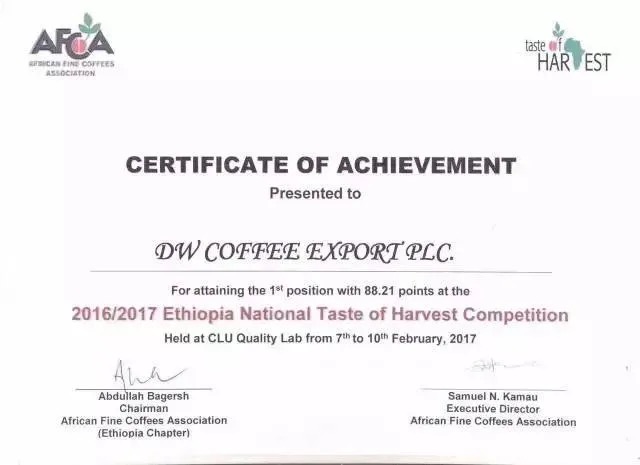
The Huakui coffee beans are, in fact, the Chinese translation for beans sourced from Ethiopia’s Hambella (Hambella) region in the Sidama zone. In 2017, these sun-dried beans—renowned for their strawberry and cream aroma profile—won the Ethiopian Natural Category Championship at the TOH green bean competition with an impressive score of 88.21. However, the real turning point that brought them widespread recognition was in the same year, when a Chinese barista named Li Jianfei used this very lot to compete in the World Brewers Cup, defeating numerous competitors using Geisha beans to secure second place in the China division. This catapulted the beans from Hambella into the spotlight.
Looking back at the coffee market at the time, since 2004, Panama’s Geisha (Gesha/Geisha) coffee had dominated major international competitions with its extraordinary flavor profile, essentially monopolizing the scene and becoming the “star variety” of the circuit. The name Geisha, similar in pronunciation to the Japanese word for “geisha,” led some markets to phonetically refer to it as “Geisha coffee.” Just as Geisha was dominating the market, a natural-processed bean from Hambella defeated it in competition—an astonishing feat. To promote this promising bean, a Beijing-based green bean merchant named it “Huakui,” meaning “the champion,” which not only echoed its championship status but also created an associative link with Geisha (the geisha), successfully opening up the market.
In the following years, the same green bean merchant continued importing natural-processed beans from the Hambella region, introducing them under the “Huakui X.0 Series” to distinguish different harvest seasons. For example, Huakui 2.0 was launched in 2018, followed by Huakui 3.0 and 3.1 in 2019, and so on, up to Huakui 5.0. To this day, Huakui 5.0 can still be found in some specialty cafés. However, starting in 2020, the Hambella natural beans were divided into two main categories: “Huakui” and “Small Bean Huakui,” reflecting subtle changes in processing and variety within the region.
The original Huakui beans came from the Buku Abel processing station in the Hambella region, which is part of the DW company. After winning the championship in 2017, DW established several additional processing stations in the Dimtu area of Hambella’s core production zone. There are now five stations in total: Buku Abel, Tirtiro Goye, Seke Bokosa, Haro Soresa, and Buku Saysay. However, it is important to note that only the sun-dried beans processed at Buku Abel can be called “Huakui.” Moreover, due to yearly variations in climate, soil, and processing methods—even beans from the same region can exhibit slight flavor fluctuations—though the core flavor characteristics of the variety are generally retained.
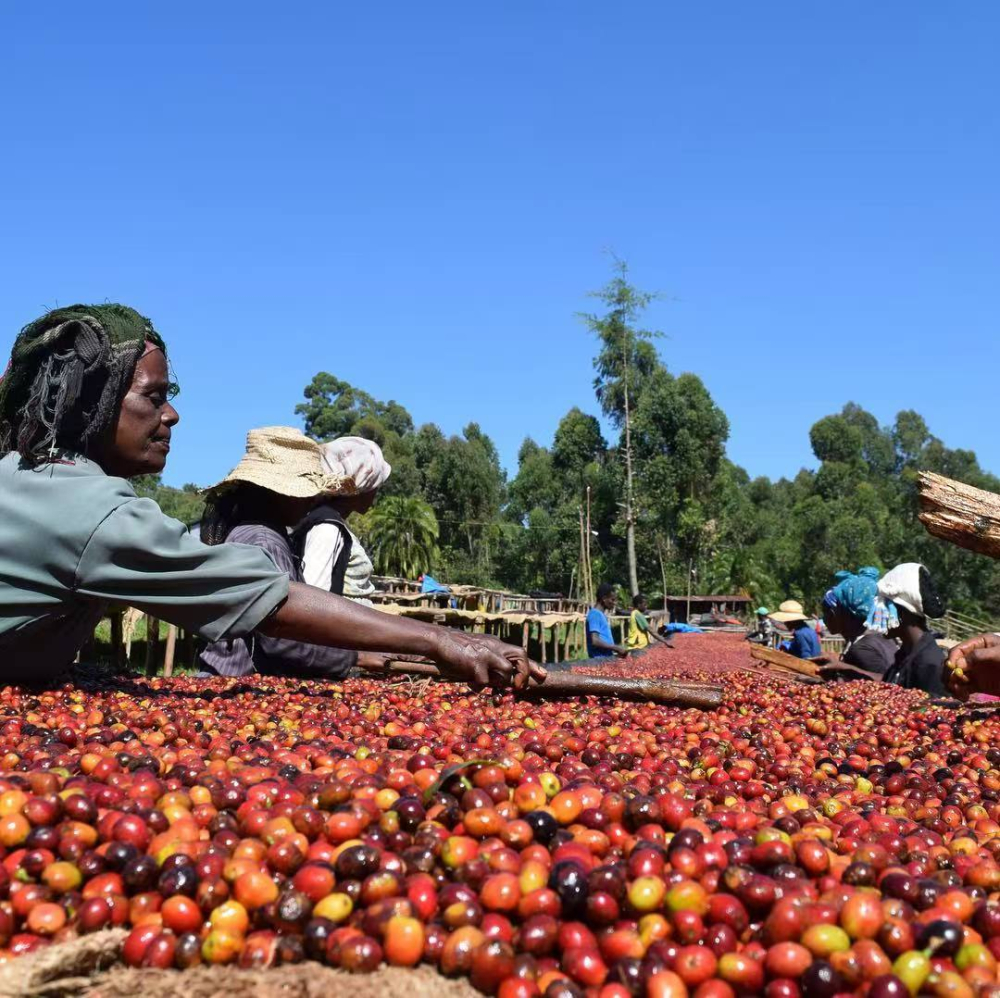
A certain coffee team has long monitored developments in the region and tracked the flavor profiles of the Huakui series annually. Through years of cupping observations, they found that while different vintages of Huakui may show minor differences in detail, they universally exhibit intense berry juice-like flavors, aromatic fermentation notes from ripe fruits, and a moderately pronounced sweetness—key reasons for their widespread popularity. Additionally, the team observed that in some batches, the smaller-sized beans display aroma and flavor profiles highly reminiscent of the 2017 championship batch.
As early as in the 2018 and 2019 Huakui batches, a few sacks among the usual ten occasionally contained small beans with flavor profiles similar to those of the earlier vintages. Though slightly less full-bodied and with a less pronounced aftertaste compared to 2017, their aroma characteristics were distinctly notable. After comparison and confirmation with the green bean supplier, it was determined that these small beans were the main source of the champion-level flavor profile. Therefore, starting in 2019, the supplier began separating these small beans, forming an independent category known as “Small Bean Huakui.” By the 20/21 harvest season, the Hambella natural beans were officially divided into “Huakui” and “Huakui 5.0.” Although both come from the same region, their flavor profiles had become notably distinct.
To better understand the actual performance of the two, try brewing and comparing them side by side. Using the 20/21 harvest “Huakui” and “Huakui 5.0” as examples, it is recommended to use the pour-over method with 15 grams of coffee grounds, a 1:15 brew ratio, a Hario V60 filter, and water temperature maintained between 90–93°C. The grind size should be medium-fine (approximately 80% through a #20 Chinese standard sieve). Follow a three-stage extraction method: begin with a 30-second bloom using twice the coffee weight in water (around 30 grams), then pour in a slow circular motion until you reach 125 grams for the first pour. Once the water level drops to about one-third, continue pouring until you reach 225 grams, then end the extraction. Total brew time is approximately 2 minutes.
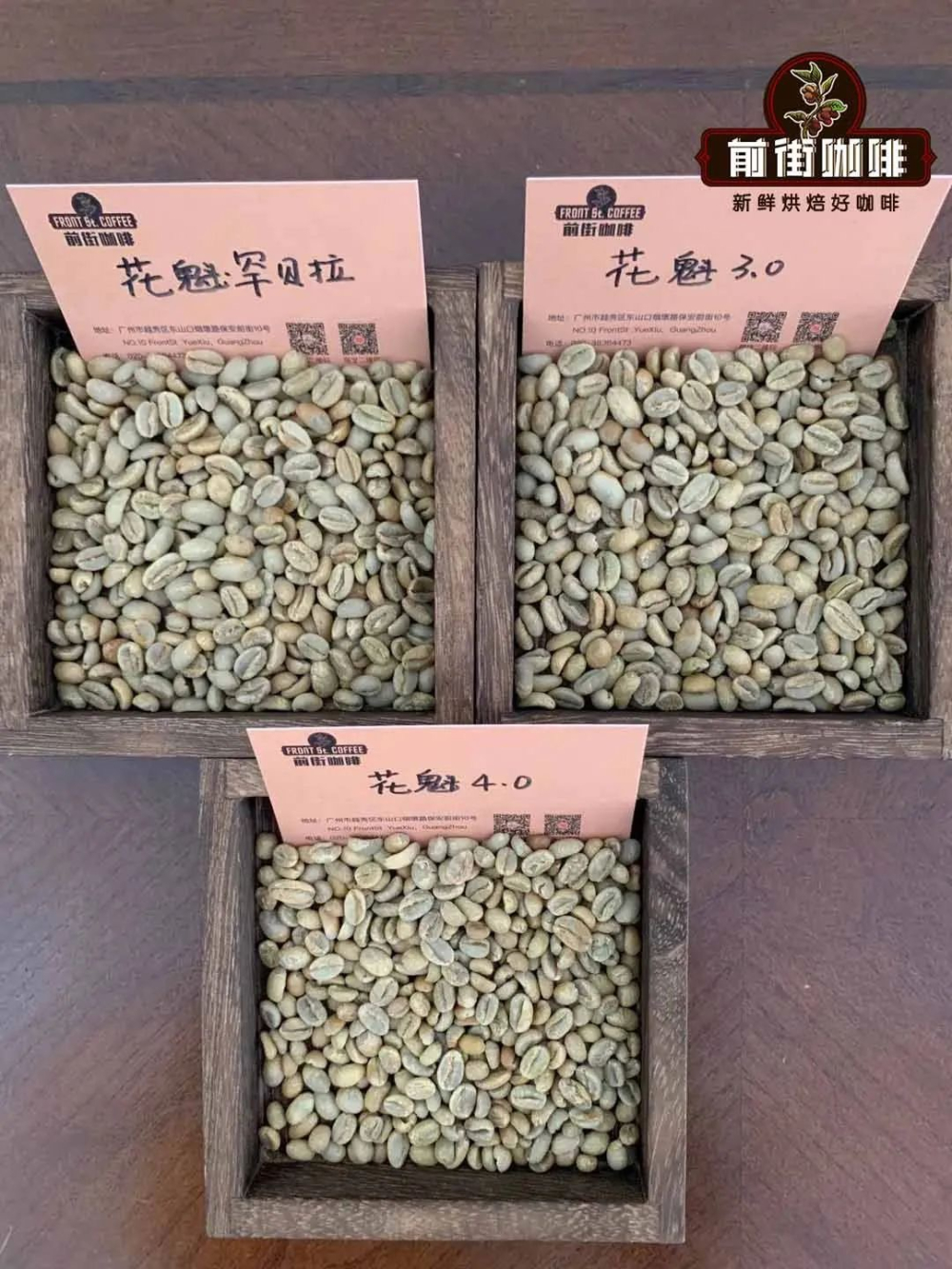
After brewing, gently swirl the cup before tasting. According to test results, “Huakui” offers prominent melon-like aromas, with a soft fruity acidity and smooth mouthfeel. Its flavor profile includes notes of passion fruit, jackfruit, and various berry tones such as strawberry. In contrast, “Huakui 5.0” is dominated by citrus aromas paired with subtle tropical fruit notes, featuring a more pronounced juicy character. Through this practical comparison, you’ll gain a more intuitive understanding of the distinctive traits and ideal brewing styles for each bean.
The above content is compiled by CoffeeHunters, a coffee news website.


