







Introduction:From obscurity to joining the ranks of top-tier specialty coffee, Panama’s Geisha from Hacienda La Esmeralda has captured global attention with its unique floral and fruity flavor profile. But did you know? Not all Geishas can exhibit this classic trait. This article will delve into three key elements—variety genetics, terroir environment, and green bean processing—to reveal how they collectively shape Geisha’s diverse flavors. It also includes practical brewing parameters and tasting tips to help you better understand the allure of this premium coffee.
The rise of Geisha coffee is inseparable from the outstanding performance of Panama’s Hacienda La Esmeralda at the BOP (Best of Panama) competition in 2004. At that time, this coffee quickly won over judges with its perfect combination of jasmine, citrus acidity, and honey-like texture, also making the “Geisha flavor” an industry benchmark for high-quality coffee. However, many products on the market that claim to be Geisha may not necessarily deliver this classic trait.
Just as citrus fruits vary—navel oranges, blood oranges, and Sunkist oranges each have distinct flavor profiles—Geisha also exhibits a diverse spectrum of taste due to differences in variety, origin, and processing methods. To truly appreciate the essence of Geisha, one must first understand how these three key factors influence the final flavor profile.
First, let’s talk about variety. About 70% of a coffee’s flavor foundation comes from the genetics of the green beans, and Geisha is no exception. Although many coffees on the market are named “Geisha,” not every one possesses the genetic potential to produce floral and fruity notes. Tracing back to its roots, Panama’s Geisha was actually collected in the 1930s from the Gesha forest near the Kaffa forests in Ethiopia. However, according to French biologist Jean Pierre Labouisse, the coffee trees initially categorized as “Geisha” were actually a mix of different local varieties. In other words, Geisha is not a single pure variety—there are still thousands of similar strains in Ethiopia, and Panama’s Geisha is just one of them.
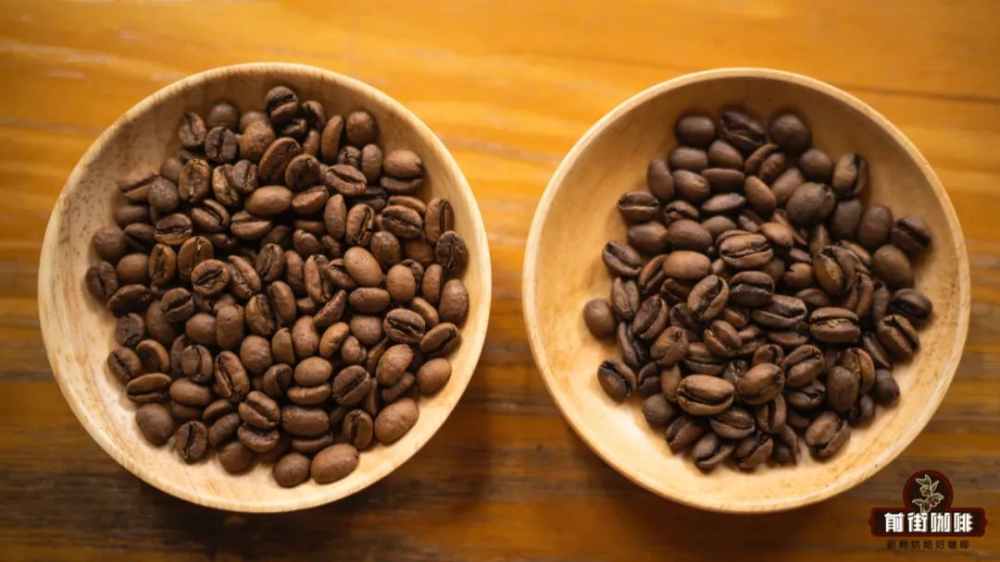
Subsequent research has found that even if both are called Geisha, Ethiopian Geisha often exhibits a more intense juiciness and bright fruit character, while Panamanian Geisha is known for its delicate floral notes and honey-like texture—this difference is an inherent distinction brought about by variety genetics. (Left is Ethiopian Geisha, right is Panamanian Geisha)
Next, let’s look at the terroir environment. Variety determines about 70% of a coffee’s foundational flavor, while the remaining 30% is shaped by the microclimate, soil, and altitude of the growing region. As the old saying goes, “An orange grown in Huainan is an orange, but one grown in Huaibei is a trifoliate orange”—this applies perfectly to coffee. Even with the same variety, different growing locations can dramatically alter the flavor due to environmental factors.
Specialty coffee emphasizes the “taste of terroir” precisely because conditions such as altitude, rainfall, sunlight, and soil directly affect the sugar accumulation and acidity expression of coffee cherries. For example, Geisha grown in Costa Rica may have a distinct sweet orange aroma, while Geisha from Ethiopian regions often features a fresh lemon-like acidity. These location-specific flavor characteristics are the uniqueness that specialty coffee enthusiasts seek.
Lastly, there’s the processing method. Even with the same variety and origin, different green bean processing methods can give Geisha entirely different flavor profiles. Green bean processing is essentially a fermentation process, and differences in fermentation duration, intensity, and participating substances directly impact the final flavor.
Take Panamanian Geisha as an example: traditional washed processing typically brings out classic notes such as white flowers, citrus, and berries; whereas anaerobic processing (like the famous 90+ Juliet Geisha) may develop unique flavors such as champagne, muscat grapes, or even spices. These differences prove that processing techniques are a key driver in shaping Geisha’s diverse expressions.
From this, it’s clear that even though they share the name Geisha, the vastly different tastes are due to the interplay of variety, origin, and processing methods. Of course, roasting also affects flavor expression, but its primary function is to regulate the intensity of existing flavors rather than create new ones—thus, the former three are the core determinants of Geisha’s flavor essence.
For coffee enthusiasts trying Geisha for the first time, it’s recommended to start with the Panamanian region. The mature cultivation techniques and processing craftsmanship here can consistently present classic Geisha flavors. Among them, Panamanian Boquete Geisha processed via washed method offers a relatively approachable price while delivering an experience close to the traditional “Geisha flavor,” making it an excellent entry choice.
The washed processing flow is as follows: first, coffee cherries are sorted, then the pulp and flesh are removed, and the mucilage-covered beans are soaked in water for fermentation for about 24 hours; next, the residual mucilage is washed away with running water, followed by drying (reducing moisture content to around 12%), and finally, the parchment is removed. This traditional method not only ensures stable quality but also highlights Geisha’s high cleanliness and refreshing character. After roasting, one can often perceive elegant white floral notes, lively citrus and lemon acidity, and even a faint hint of green tea undertones, with a distinctly layered overall flavor.
To fully bring out the refined flavors of Geisha, brewing parameters are crucial. It is recommended to use medium-light roasting (fine-tuned for different batches) to preserve the vibrant acidity and delicate aromas of high-altitude beans. When brewing, it’s necessary to increase extraction yield. It’s advised to use water at 91-92°C, a grind size similar to fine sugar (about 80% passing through a #20 sieve), and to increase the powder-to-water ratio to 1:16 to extract more aromatic compounds.
To balance acidity and sweetness and avoid over-extraction, the V60 filter cone is recommended. Its unique spiral ridges and large central hole design extend the contact time between water and coffee grounds while concentrating the water flow pressure, resulting in a richer layering of flavors.
Below are the actual pour-over parameters for the store’s Emerald Label Natural Geisha, for reference and adjustment:
Filter cone: V60 | Water temperature: 91-92°C | Coffee dose: 15g | Powder-to-water ratio: 1:16 | Grind size: Fine sugar size (sifted through a #20 sieve to 80%)
Three-stage extraction steps: First stage: pour 30g of water for a 30-second bloom (small water stream, circling from center outward to ensure even saturation); second stage: pour 120g of water with a slightly larger stream (vertically and evenly, reaching a cumulative 150g at around 55 seconds); third stage: when the liquid level drops to half, switch to a small stream and pour 90g of water in small circles (control flow rate to avoid dispersing the coffee bed), total water volume 240g, dripping time approximately 2 minutes and 10 seconds. After extraction, shake the server before serving.
This Panamanian washed Boquete Geisha, upon tasting, presents clear white floral notes along with citrus and pomelo acidity and sweetness, accompanied by a warm base of caramel and roasted sweet potato, with a lingering finish as refreshing and long as Tieguanyin tea. The overall profile is clean and layered, making it an excellent choice for experiencing classic Geisha flavors.
The above content is compiled by CoffeeHunters, a coffee news website.


