







Introduction:Delve deep into Ethiopia’s Yirgacheffe region to explore its historical roots, varietal characteristics, and the significant impact of its two main processing methods—natural and washed—on flavor. Analyze multiple representative beans from Aricha to Guji Dingding, and get practical suggestions on water temperature and grind size to help you master optimal extraction methods and savor Yirgacheffe’s distinctive fruit acidity and floral notes.
Yirgacheffe is one of Ethiopia’s most iconic specialty coffee regions, renowned worldwide for its pronounced citrus and lemon tones, bright acidity, and enchanting jasmine floral aromas. This article begins with the background and history of the region, analyzing in detail how the natural and washed processing methods shape distinctly different flavor profiles. It also takes an in-depth look at classic beans such as Aricha, Kochere, Konga, Guji Dingding, and Wolkite. In addition, it offers practical recommendations on key parameters during actual extraction, such as grind coarseness and water temperature, helping coffee enthusiasts build a comprehensive understanding of the region and brewing mindset.
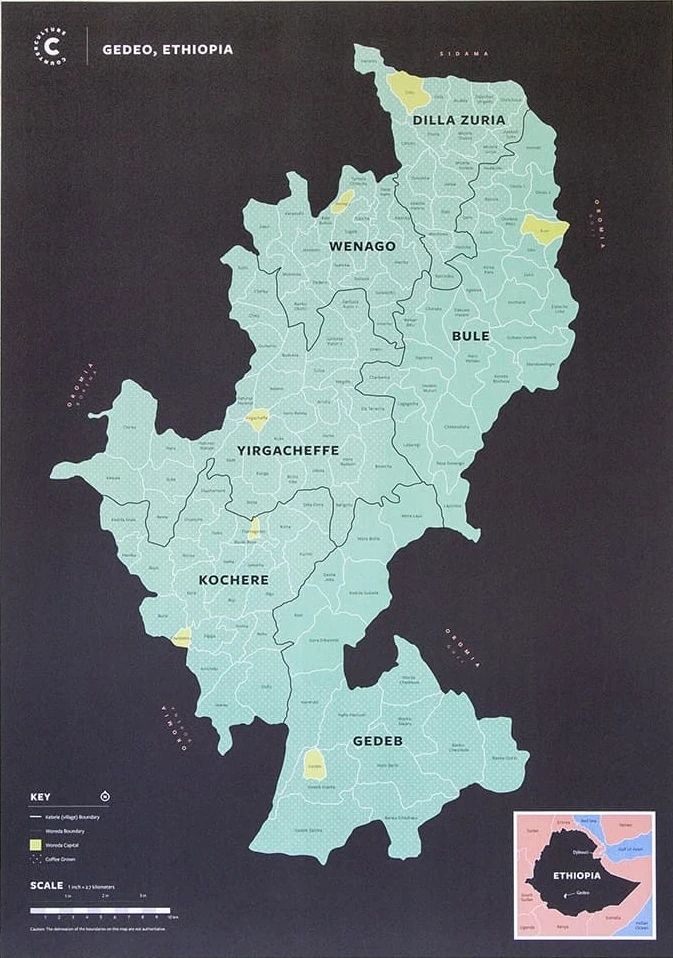
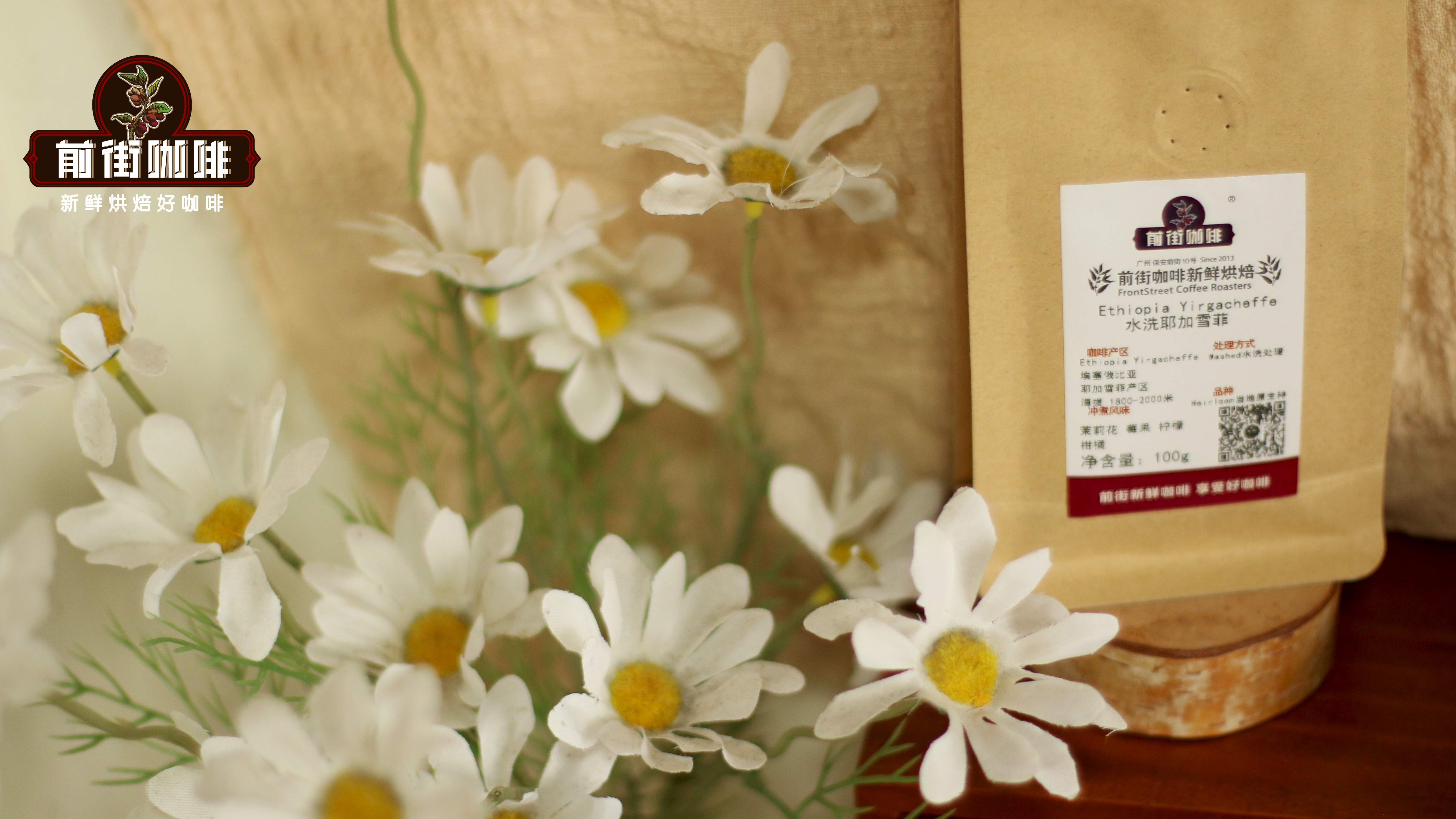 To truly understand the personality of a coffee bean, the most direct approach is to start with its origin and processing methods. The name Yirgacheffe comes from the local language, where “Yirga” means “to settle” or “to reside,” and “cheffe” refers to “wetland.” Together, it can be interpreted as “we have settled in this moist land.” The meaning alone adds much mystery and poetry to this land.
Yirgacheffe is located in southern Ethiopia, a country considered one of the important birthplaces of specialty Arabica coffee globally. Many coffee enthusiasts even believe that Ethiopia is the birthplace of coffee. For local residents, Yirgacheffe is not just a producing region but also a town that carries generational memories. Coffee trees are treated as part of the homeland and are carefully nurtured.
In the early days, Yirgacheffe coffee was mostly introduced and planted by European missionaries, on a limited scale. Later, as market demand increased, coffee gradually became an important cash crop for the locals. Many farmers chose to intercrop coffee with other crops such as sweet potatoes and mangoes, forming what is known as a “garden coffee” cultivation system, planting about 1,000 to 1,800 coffee trees per hectare. This model still accounts for approximately half of Ethiopia’s total coffee production today.
 Traditionally, Yirgacheffe mainly used the natural processing method, but earlier techniques were relatively rough, often causing the beans to absorb off-flavors or even earthy notes. Subsequently, the washed method gained popularity due to its more stable quality performance, though the natural process did not disappear. Instead, it formed a strong flavor contrast with the washed method, each with its own distinctive characteristics.
The washed processing method allows for more precise quality control and highlights the “cleanliness” and “purity” of the coffee beans themselves, making it an important reference for understanding the flavor profile of Yirgacheffe. Many beginners who first encounter Yirgacheffe are also advised to start with the washed version, familiarizing themselves with its fresh, bright citrus and floral foundation before further exploring the complex layers of the natural process.
The coffee varieties in Yirgacheffe are often broadly referred to as “heirloom.” This term originated in the early days of the specialty coffee movement when some buyers found it difficult to distinguish between traditional varieties such as Typica and Bourbon. They simply grouped these unnamed, unclassified varieties from Ethiopia under the umbrella term of heirloom. Due to Ethiopia’s vast and complex coffee gene pool, the authorities have not yet fully disclosed detailed variety information in order to protect genetic diversity.
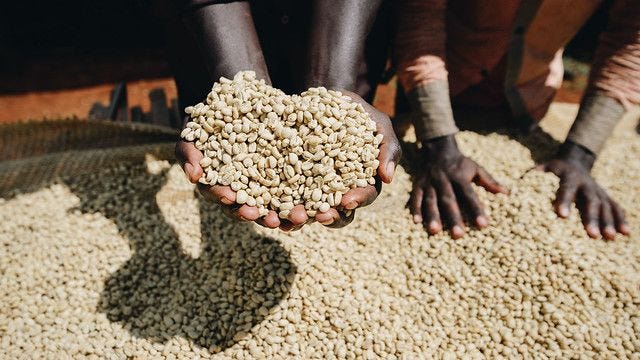 Among various processing methods, the natural process of Yirgacheffe is relatively primitive yet full of variation. Its basic procedure is: after harvesting ripe cherries, floatation is used to remove unripe or overripe beans, then the selected beans are evenly spread on drying beds and turned multiple times daily. Depending on climatic conditions, this entire process takes about two to three weeks until the moisture content inside the beans drops to 11%–13%. Then, a hulling machine is used to remove the dry, hard pulp husk, completing the process.
For example, Aricha, a natural bean from the Adorsi washing station, grows at altitudes of 1900–2000 meters. Thanks to the high altitude and favorable climate conditions, its dry fragrance has a sweet fruity aroma, while its wet aroma emits a refreshing berry note. After brewing, it shows bright acidity, rich layers, outstanding sweetness, and is a classic representative of natural flavors. Another bean, Kochere, comes from plateaus at 1650–1800 meters and is also processed naturally. Its flavor is dominated by jasmine floral notes and citrus tones, with a smooth mouthfeel and balanced acidity and sweetness. As for Konga beans, produced in the Gedeo Zone at elevations above 1800 meters, their growth alongside crops like mangoes and avocados often results in honey-like sweetness, creamy texture, and a juice-like refreshing mouthfeel.
In contrast, the washed processing method emphasizes precision and hygiene. First, the coffee cherries are placed in a water tank to remove defective beans via floatation, then the pulp and flesh are stripped using a depulper. Next, they are placed in a fermentation tank for 16–36 hours of fermentation to break down the mucilage. After fermentation, the beans are thoroughly rinsed with large amounts of clean water to remove residues, and then the moisture content is controlled at 11%–13% through sun drying or mechanical drying. Finally, the parchment and silver skin are removed to complete the process.
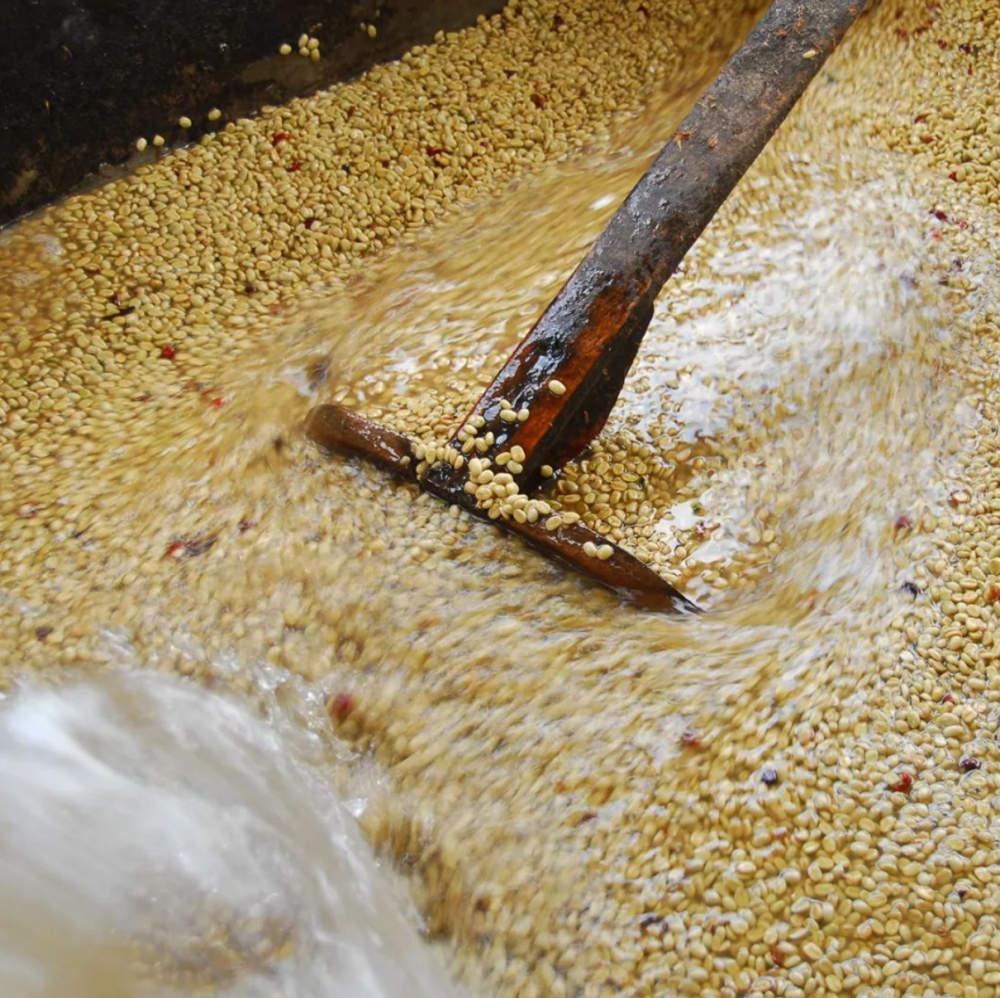 Take Guji Dingding as an example. This bean from a small village in the Gedeo Zone at altitudes of 2000–2100 meters, when processed using the washed method, delivers a clean and bright citrus and tea-like profile, with delicate floral notes and a subtle caramel finish. The overall taste is refreshing, balanced, and clean. On the other hand, Wolkite coffee, through a 72-hour-long fermentation in water tanks, highlights a clear acidity and a pure, bright tone. Though it lacks the fruity aroma of the natural process, it presents a fresher and crisper style.
Overall, natural Yirgacheffe typically showcases richer fruit aromas and fermented wine-like notes, with diverse layers, often accompanied by tropical fruit tones. In contrast, the washed version excels in bright fruit acidity, vivid floral notes, and a clean mouthfeel, making it suitable for drinkers who prefer lighter flavors. The natural processing cycle lasts more than 20 days, preserving the richness brought by fruit pulp fermentation. The washed process has a shorter fermentation time, resulting in more direct flavors and a crisper acidity.
For practical extraction, it is recommended to use a medium-fine grind (such as the fineness of table sugar for pour over) for washed Yirgacheffe, with the water temperature controlled at90–92°C, to fully highlight its fresh fruit acidity and floral notes. For the natural version, the grind can be slightly coarser, close to that of white sugar, with the water temperature suggested at88–90°C, which helps balance sweetness and complex fruit tones while avoiding over-extraction that may lead to sharp acidity.

The above content is compiled by CoffeeHunters, a coffee news website.


