








Introduction:Want to understand the difference between a Flat White and a latte? This in-depth analysis starts with the very name of the Flat White and details its key differences from the latte in terms of cup size, espresso ratio, milk foam thickness, and more. It also provides professional-level practical brewing references to help you grasp the essence of this classic Oceanian coffee. Whether you're ordering at a café or making it at home via pour over, you'll be able to easily identify and brew it.
In the world of specialty coffee, the Flat White has always been a highly discussed item. Originating from Australia and New Zealand, it is seen as a localized variation of the latte, but compared to the common latte we know, it has subtle yet significant differences in coffee ratio, milk foam treatment, and overall flavor profile. This article will start with the English naming of Flat White and take you through a comprehensive comparison of its differences with the latte in terms of cup size, espresso extraction volume, milk foam thickness, and flavor direction, along with actual brewing parameters to help you fully understand the distinction between the two.

If you've ever seen a Flat White on a coffee shop menu, you might have noticed that it doesn’t appear as frequently as a latte or cappuccino—more often than not, it's a "hidden option." This naturally makes one wonder: what’s so special about this coffee, dubbed the “Australian version of a latte”? In fact, the Flat White is a product of the coffee cultures of Australia and New Zealand. It uses less milk and even thinner foam to highlight the layers and flavors of the espresso itself. Compared to a traditional latte, it places more emphasis on showcasing the taste of the coffee rather than having it masked by the milk.
So, how exactly should a Flat White be defined? Simply put, it is a coffee beverage made with two shots of espresso (or one ristretto shot) mixed with a small amount of steamed milk and topped with an extremely thin layer of milk foam. According to the practices of most professional baristas, a Flat White typically uses a smaller cup than a latte, usually between 200 to 220 milliliters, while lattes generally use cups over 300 milliliters. This design ensures that every sip delivers a richer coffee aroma, while still retaining a moderate amount of milk flavor and a smooth mouthfeel.
If we specifically compare industry standards (for illustrative purposes only, not an advertisement), the differences between the two become even clearer: a latte generally uses a 300-milliliter ceramic cup, with an espresso extraction volume of 40 grams, paired with a total of 260 milliliters of milk and milk foam, and a milk foam thickness of about 1 centimeter; whereas a Flat White uses a 220-milliliter glass cup, reduces the espresso extraction to 30 grams, with a total of about 190 milliliters of milk and milk foam, and a milk foam thickness of only about 0.5 centimeters—almost an ultra-thin foam that sits close to the liquid surface. This combination makes the Flat White taste more pronouncedly of coffee, with the milk flavor playing a supporting role, resulting in a smooth and layered drinking experience.
Not only do they differ in proportion, but they also have different requirements in milk foam handling and latte art presentation. Because the milk foam in a Flat White is extremely thin, more care must be taken with the milk pouring speed and stability, and the latte art pattern is also harder to maintain—simple designs like a heart or small dots are recommended, or even no latte art at all. Lattes, on the other hand, with their thicker foam, allow for a wider variety of patterns and are often a stage for baristas to showcase their skills.
When it comes to flavor, there’s even a humorous saying circulating: a latte is like “coffee-flavored milk,” emphasizing the softness and creaminess brought out by the milk; while a Flat White is described as “milk-flavored coffee,” with the focus clearly on the coffee itself, allowing one to better appreciate the sweet-acid balance and aromatic layers of the espresso. This characteristic makes the Flat White an ideal choice for those who enjoy pure coffee flavor but don’t want to drink black coffee.
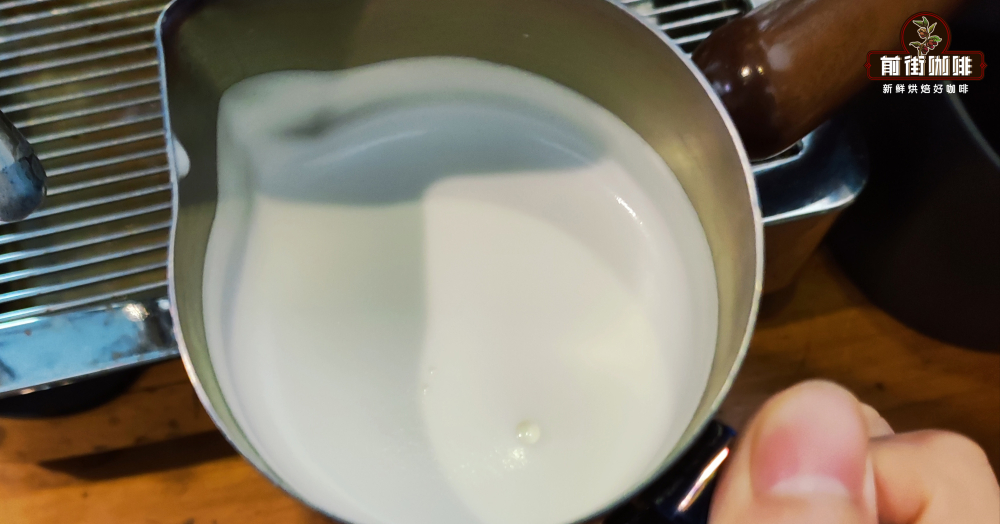
If you’d like to try making a Flat White at home that comes close to professional standards, here are some practical suggestions: first, choosing the right coffee beans is crucial—go for a medium-to-dark roast blend with noticeable sweetness and medium-to-low acidity to support the overall flavor expression. Next, when extracting the espresso, it’s recommended to use about 20 grams of coffee grounds and extract around 30 grams of espresso within 20 to 25 seconds, ensuring sufficient concentration without excessive bitterness. Then, steam and froth about 180 to 190 milliliters of milk, keeping the milk foam as thin as possible, aiming for a thickness of 0.5 centimeters, to maintain a smooth and delicate texture in the final drink.
In summary, although the Flat White and the latte may seem similar, they actually have clear distinctions in cup size, espresso ratio, milk foam thickness, and overall flavor profile. Understanding these differences not only helps you make a more suitable choice when ordering at a café, but also allows you to more accurately recreate this classic Oceanian coffee flavor at home. Whether you’re pursuing a rich coffee taste or looking to explore an alternative to the latte, the Flat White is definitely worth a try.

The above content is compiled by CoffeeHunters, a coffee news website.


