







Introduction:Indonesian wet-hulling, Brazilian pulped natural, and Central American honey processing — these three common coffee processing methods each possess unique flavor profiles and processing logics. This article delves into their operational procedures, moisture content control, roasting characteristics, and pour over recommendations. It also compares acidity, sweetness, and aroma profiles through practical examples to help you choose the right coffee beans based on your taste preferences.
The diversity of coffee flavors stems not only from varietal and regional differences but also significantly from processing methods. Among the many techniques, Indonesian wet-hulling, Brazilian pulped natural, and honey processing have emerged in response to varying geographical environments and resource conditions, giving rise to distinctly different coffee personalities. This article will provide a detailed breakdown of the actual steps involved in these three methods, their impact on flavor, along with professional roasting and pour over parameter references. It also incorporates real cupping case studies to help you grasp the characteristics and brewing essentials of each processing method.
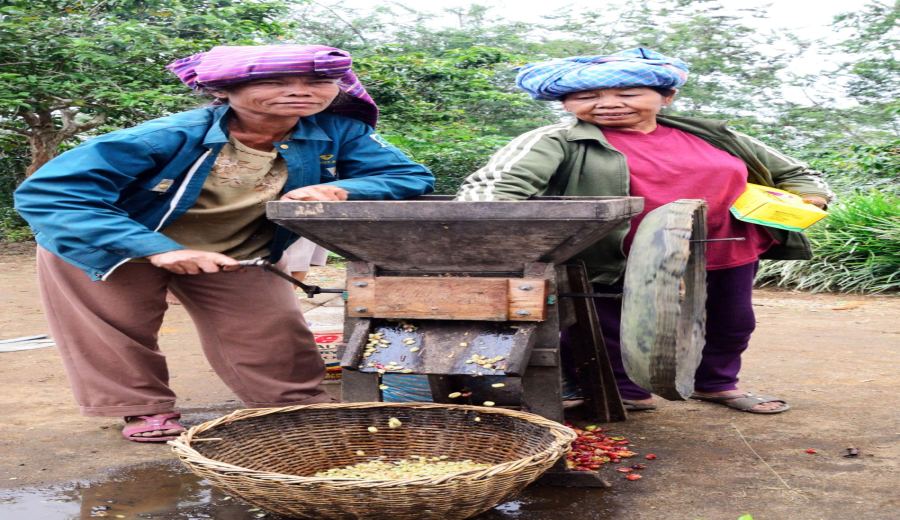
Known as wet hulling (or Giling Basah in Indonesia), this traditional processing method was developed in Indonesia due to its high-humidity, rainy climate. The steps include: first removing the coffee cherry’s skin and pulp, leaving the parchment and mucilage layers intact; then placing the mucilage-covered beans in water tanks for brief fermentation before washing off the surface mucilage with clean water; subsequently drying the beans with their parchment for 2–3 days until the moisture content drops to 20–24%; next, the parchment is removed, exposing the green beans directly to air, which are then continuously dried until the moisture level reaches 12–13%, at which point they are ready for export. Because the protective parchment is removed early in the wet-hulling process and the humid Indonesian environment leads to multiple stages of intermittent drying, this type of coffee generally exhibits low acidity, a full body, and distinctive herbal or spicy notes. However, it also faces challenges related to lower consistency in quality.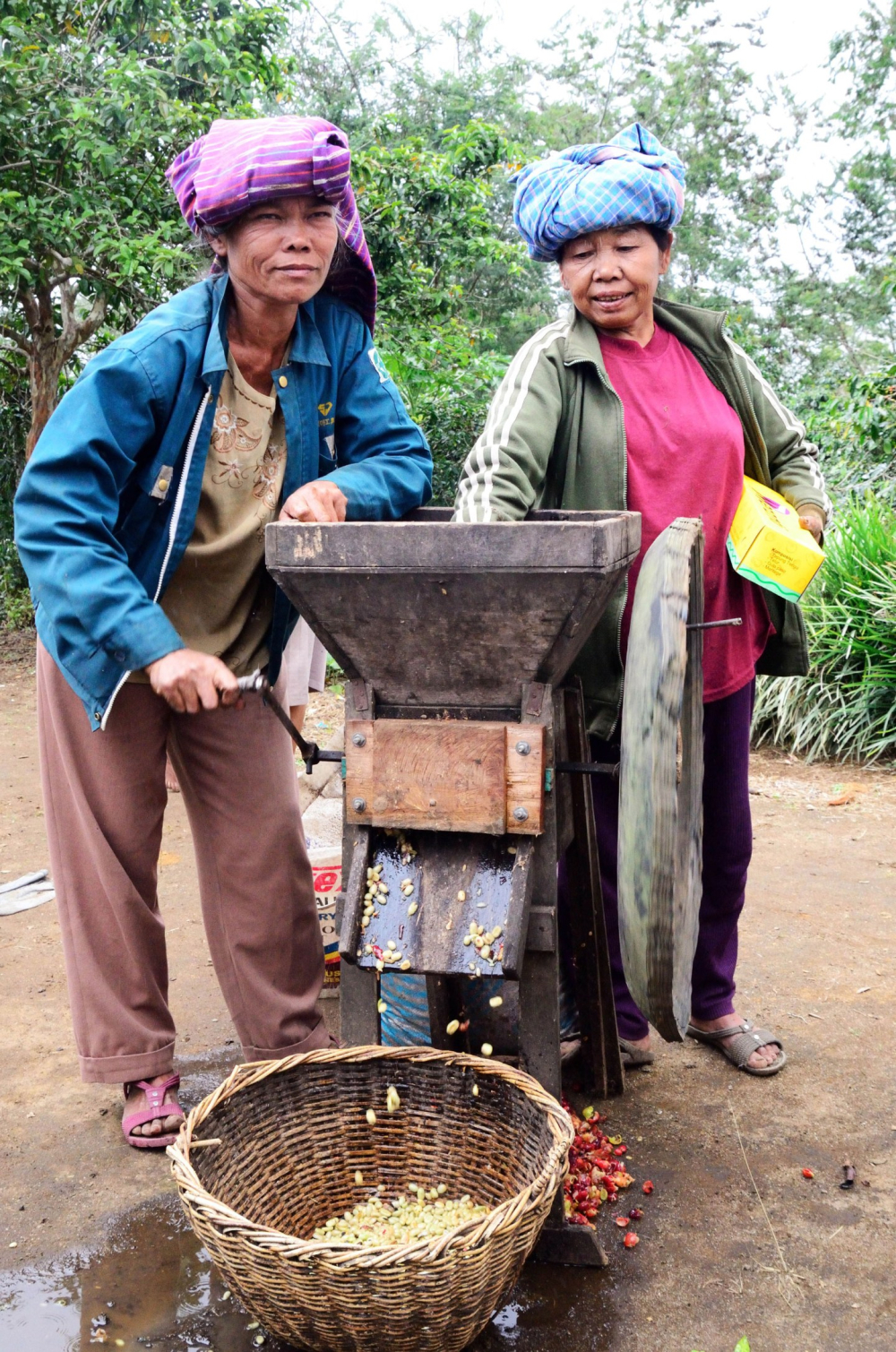
Take the Golden Mandheling from Indonesia’s Sumatra region as an example. This bean variety is Typica, grown at altitudes of 1100–1600 meters, and processed using the wet-hulling method. In terms of roasting recommendations: due to its relatively high moisture content in the green beans, special attention should be paid during the drying phase. Immediately after loading the beans, close the air damper and let them rest (preheat/bloom) for 30 seconds. Once the bean color turns light green or white, gradually adjust the air damper, and open it fully after the first crack. Using a Yangjia 800N machine as an example, it is recommended to start roasting at 200°C, with the turning point (yellowing stage) around 5 minutes 40 seconds (148°C). The first crack begins at 9 minutes 54 seconds (191.2°C), followed by a development phase of about 3 minutes 30 seconds, and the beans are dropped at 204.5°C. For pour over, it is recommended to use a KONO filter, with water temperature controlled at 88–90°C and a coffee-to-water ratio of 1:15. The grind size is medium (70% passing through a #20 sieve). The specific technique is as follows: the first pour is 30 grams of water for a 30-second bloom; the second pour continues until 125 grams, then pause when the water level drops and is about to expose the coffee bed, then pour up to 225 grams before removing the filter. Total extraction time is about 2 minutes. Cupping flavor notes reveal a rich, well-balanced profile with a full body, featuring pronounced notes of nuts, chocolate, and spices, complemented by caramel aromas and fruity aftertaste, with a long-lasting finish.
In contrast, the pulped natural method originated in regions with relatively abundant water resources but dry climates, such as Brazil. This method first uses water tanks to remove defective beans, then removes the skin, pulp, and part of the mucilage. After a brief wash (about one hour), some mucilage remains on the bean husk, which is then spread on African-style raised beds with good airflow for sun drying. This approach combines the sweetness of sun-drying with the cleanliness of washed processing, though it also requires attention to potential fluctuations in quality due to moisture control and weather variations.
Honey processing, meanwhile, is an adapted version of Brazil’s pulped natural method that emerged in Central America. Its defining feature is the retention of the sticky mucilage layer on the coffee bean surface during sun drying. Due to water scarcity often faced in high-altitude regions, this method skips washing and directly dries the mucilage. Based on the proportion of mucilage removed and the sun-drying conditions, it is further categorized into black honey, red honey, orange honey, yellow honey, and white honey. Generally speaking, the more mucilage retained (e.g., black honey removes only about 20%), and the longer the drying time (often exceeding 14 days), the higher the sweetness and body — though strict control of drying speed is required to avoid over-fermentation. Conversely, the more mucilage removed (e.g., white honey retains about 20–30% and is dried in thin layers), the cleaner and crisper the flavor, with less fermentation character. Honey-processed coffees are generally notable for their prominent sweetness, higher sugar content than washed coffees, and a relatively pronounced body (compared at the same roast level).
Practical cupping examples show that black honey-processed beans, due to retaining a large amount of mucilage, require the longest drying time (over 14 days), and shading is used to slow down the drying rate to promote sugar conversion. Their flavor profile features intense fermentation aromas and dark fruit notes. When sipped, one can perceive complex layers of plum, citrus, raisin, and spices. Red honey offers fermented wine-like notes, with a balanced flavor rich in pineapple, sweet orange, nectarine, and maple syrup. Yellow honey, with less mucilage retained and typically dried in thicker layers, has a fresher flavor dominated by citrus notes, with minimal fermentation character. Observing the roast curves: yellow honey reaches the turning point (yellowing) at about 5 minutes 30 seconds, with first crack starting at 8 minutes 46 seconds (184°C) and developing for about 2 minutes 30 seconds before being dropped at 196°C. Red honey and black honey have first cracks beginning at 8 minutes 40 seconds (185°C) and 8 minutes 50 seconds (183.6°C), respectively, with slightly longer development times and drop temperatures close to 197°C and 195.8°C.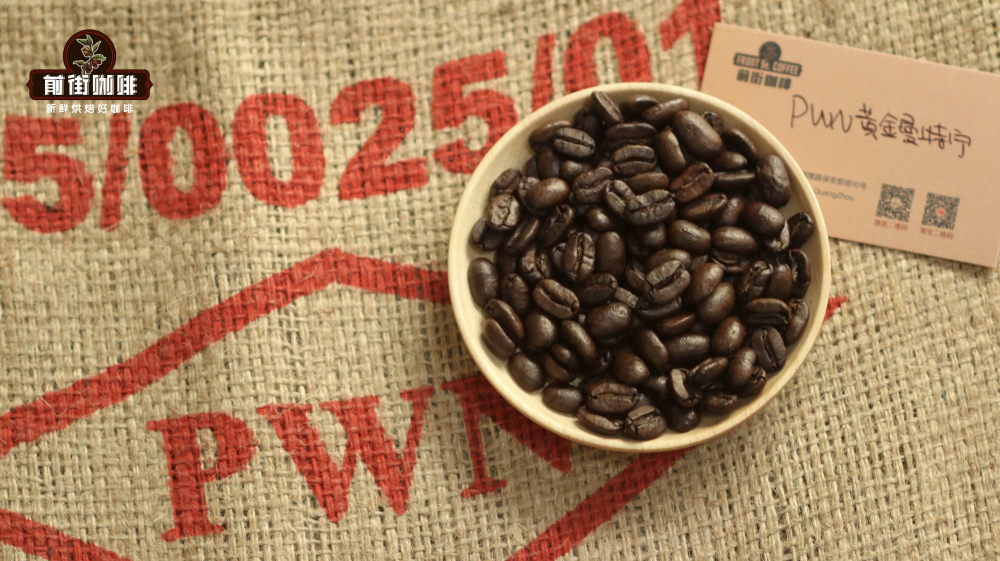
Overall comparison of the three processing methods shows that in terms of acidity, washed coffee scores highest, followed by semi-washed, honey processed, wet-hulled, and finally natural/sun-dried with the lowest acidity. Sweetness follows the opposite trend, with natural processed being the most outstanding, followed by honey processed, then wet-hulled, semi-washed, and washed, in descending order. Regarding production risks, wet-hulling and sun-drying are more dependent on climatic conditions, making them higher risk; washed and honey processing are relatively stable, with semi-washed in between. Equipment requirements are highest for washed and semi-washed, followed by honey processing and wet-hulling, while sun-drying is the simplest. In terms of water usage, washed consumes the most, followed by semi-washed, while honey processing and wet-hulling require almost no significant water, and sun-dried needs none at all.
The above content is compiled by CoffeeHunters, a coffee news website.


