







Introduction:Kenyan coffee is renowned for its unique bright acidity, but did you know it was once a darling of dark roasting? This article presents an in-depth analysis comparing dark roast vs. light roast through hands-on testing of two Kenyan AA-grade washed beans — Karogoto and Assaliya. We explore the differences in flavor profiles and mouthfeel layers between these roast levels, and share specific parameters and tips for brewing with both pour over and French press methods. Additionally, we discuss the industry logic behind the evolution of Kenyan coffee roast levels from the second wave to the specialty coffee era, helping you find the brewing method that best suits your taste.
Many fans of Kenyan coffee are impressed by its refreshing and vibrant acidity. However, looking back at history, Kenyan coffee was once widely subjected to dark roasting — a stark contrast to the currently popular light-to-medium roast style. So, what kind of flavor profile does dark-roasted Kenyan coffee actually present? For this test, we selected two AA-grade washed beans from Kenya’s high-altitude regions — Karogoto and Assaliya — and conducted a deep comparison of their performance at different roast levels.
Both beans come from Kenya’s renowned Nyeri and Kiambu-Thika regions, grown at elevations of approximately 1800 meters for Karogoto and between 1550–1750 meters for Assaliya, both firmly within the category of typical high-altitude hard beans. They are processed using Kenya’s signature washed method, and the varieties are the famed SL28 and SL34 — two Bourbon mutations known for their dense bean structure and intense flavor characteristics. Due to these beans’ inherently poor heat conductivity, deeper roasting often achieves better heat penetration and overall development, helping to fully elicit their internal flavor compounds.
In our roasting experiment, we roasted both beans to the point where the first cracks have just begun and the bean surface wrinkles have completely flattened. This ensures sufficient caramelization while preserving some regional characteristics. Through cupping, we compared their flavor profiles and found that after dark roasting, the originally bright fruit acidity of Kenyan beans shifted markedly toward a richer, more mellow tone.
Among them, Karogoto exhibited an aroma profile of cedar, flowers, and herbs after dark roasting, accompanied by soft berry acidity, delivering a well-balanced overall mouthfeel. Assaliya, on the other hand, highlighted citrus, berries, and hazelnuts, complemented by chocolate and a velvety body, with gentle acidity and a distinctly sweet aftertaste. Compared to their light roast counterparts, both dark-roasted beans showed a general reduction in acidity — for instance, Karogoto’s previously prominent tomato-like scent in the dry fragrance almost disappeared, transforming into rich spice aromas; Assaliya’s blackcurrant acidity also faded, while the sweet notes of berries and citrus became more pronounced.
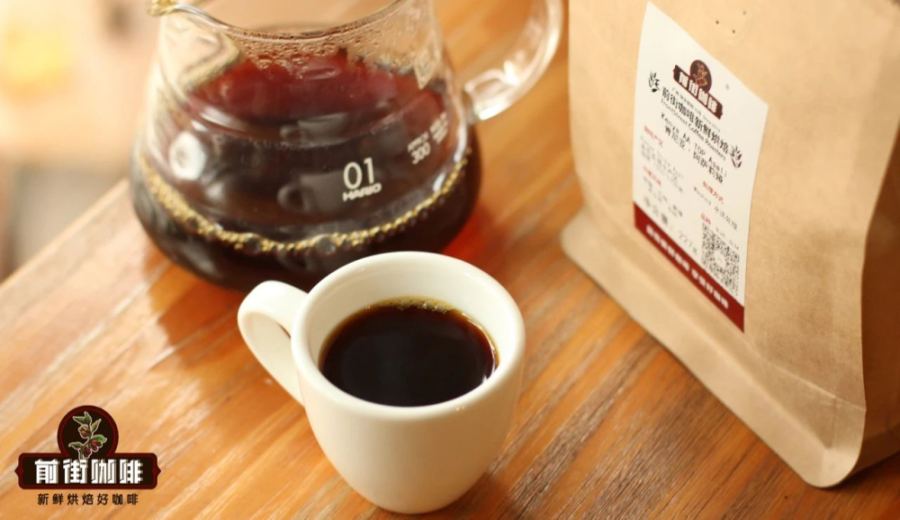
To more directly experience how dark-roasted Kenyan coffee performs in actual brewing, we chose the more complex-flavored Assaliya and tested it using two common brewing devices: pour over and French press. For the pour over, we used a V60 filter, setting the coffee dose at 16 grams with a medium-coarse grind, water temperature at 88°C, and a brew ratio of 1:16, achieving a total brew time of about 2 minutes and 15 seconds. The specific technique involved a 30-second bloom with 30 grams of water, followed by pouring 130 grams of water in the second stage, a brief pause, and then adding the final 100 grams to complete extraction. Under these parameters, the brewed coffee emitted a wet aroma with clear floral and citrus notes. While there was slight astringency upon entry, it was soon followed by captivating almond and berry flavors. The body was full, with lingering notes of cedar and toffee, resulting in an overall warm and balanced cup.
For the French press, we used a two-cup capacity press, maintaining the same 16-gram dose and medium-coarse grind, slightly reducing the water temperature to 87°C, and keeping the brew ratio at 1:16, with a total extraction time of 2 minutes and 30 seconds. The process began with preheating the press, followed by adding the coffee grounds. The first stage involved pouring 30 grams of water for a 30-second stir and bloom, then adding 230 grams of water, letting it steep with the lid on for about 2 minutes, and finally pressing down quickly. Surprisingly, this method produced a delicate layer of crema on the coffee’s surface, with a relatively clean taste and almost no astringency. The dominant aromas were citrus, almond, and caramel, while the later stages and aftertaste featured rich berry notes. The underlying cedar note subtly lingered in the finish, resulting in a long-lasting and layered aftertaste.
During testing, we found that dark-roasted Assaliya not only performed well with pour over, but also paired unexpectedly harmoniously with the French press. This led us to further experimentation: what if we used it to make espresso? Considering that Kenyan beans, when used as single-origin (SOE), often exhibit overly high acidity, thin body, and lack of roundness in the cup, we decided to blend it with a deep-roasted Mandheling bean known for its body and smooth mouthfeel, using a 1:1 ratio. The result was surprisingly successful — the blend produced an espresso with rich crema, a full body, and intense aromas of toffee, chocolate, and peach, with almond notes running throughout. When milk was added, it became even smoother and creamier, reminiscent of indulging in a dense black chocolate cranberry brownie.
Upon deeper analysis, we concluded that while dark roasting Kenyan beans can deliver intense woody aromas and caramelized flavors, it can also mask their otherwise outstanding floral and fruity characteristics — especially the bright berry acidity and juicy mouthfeel. That said, the trade-offs are balanced. However, when used in blends, dark roasting proves to be a highly practical strategy, effectively enhancing overall body and balance.
Finally, why was Kenyan coffee so widely dark roasted in the past? This largely ties back to the context of the second wave coffee movement. During the era when espresso-based drinks dominated, roasting equipment and techniques were relatively primitive, and processing methods had not yet been refined. Faced with the high-density washed Kenyan beans, many roasters, worried about underdevelopment or “baking,” opted for dark roasting to ensure the core of the bean was also fully matured. With the rise of specialty coffee culture, European-style light roasting gradually became the mainstream, emphasizing enzymatic aromas and the expression of regional character. Many beans once deemed “difficult to roast” can now precisely showcase their native flavors through medium-light roasting techniques. This evolution has given us much broader imagination and room for experimentation in exploring roast levels.
The above content is compiled by CoffeeHunters, a coffee news website.


