








Introduction:Many coffee enthusiasts wonder why specialty coffee shops typically do not offer iced flat whites. This is actually closely related to the inherent characteristics of the flat white. This article delves into the core differences between the flat white and drinks like the latte and cappuccino from various perspectives—cup size, milk foam thickness, and flavor structure—to analyze why the iced version struggles to present the delicate flavors a flat white should have, and explains why it is often misunderstood as a “small iced latte.”
Ordering an iced flat white at a specialty coffee shop often results in a polite refusal, which puzzles many coffee lovers. It’s understandable that a dirty isn’t served hot, but why not an iced flat white? The key lies in the fact that the flat white is an espresso-based drink with distinct characteristics—its hallmark features being an extremely thin layer of milk foam (usually no more than 0.5 cm) and a relatively small cup size, typically around 180–200 ml. These design elements allow it to showcase rich coffee aromas while maintaining a smooth mouthfeel.
To gain a deeper understanding, one might start by comparing the differences between the flat white, latte, and cappuccino. These three classic coffees all use espresso as their base, but differ significantly in terms of cup size, milk foam thickness, and overall flavor profile.Image  illustrates their main visual and taste differences, helping with intuitive understanding.
Many regular customers of this shop may have noticed that popular items like the dirty or flat white are not listed on the menu. In fact, the blackboard at this shop features a relatively concise selection of espresso-based drinks, listing only four flagship products. This is not a restriction but rather an encouragement for customers to experiment and tailor their drinks according to personal taste, often resulting in a more satisfying flavor experience.
For example, the dirty is best made with medium-to-dark roasted blends or SOEs (single-origin espressos), as these beans typically offer rich caramel notes and a full-bodied texture, creating a nice contrast with sweet milk and a more pronounced aftertaste. For those who prefer consistency, classic blends and dark cocoa-based blends are ideal choices, both of which have ample crema and exude enticing aromas of butter and roasted chestnuts.
Image 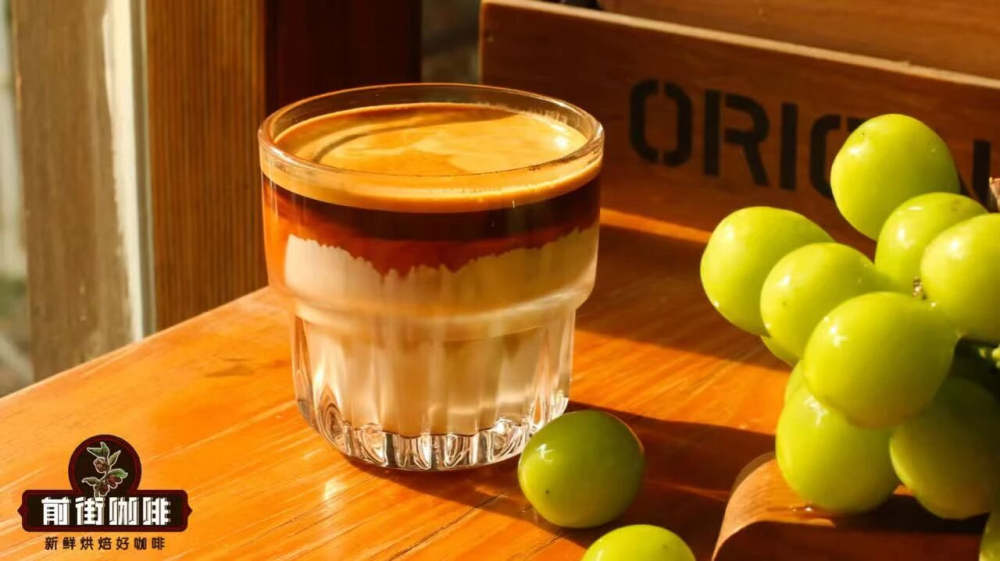 helps understand the performance differences of different beans when used in a dirty, and further grasp bean selection tips.
If you’re drawn to the unique character of single-origin beans, the Queen Estate SOE or Sumatra · PWN Golden Mandheling SOE are also good options. These beans, after extraction, exhibit strong caramel and chocolate tones, which create a more layered taste contrast when paired with pure milk.
However, although such customized coffees are favored by seasoned coffee drinkers, they may increase the difficulty of choice—or even lead to special requests—for general consumers, such as “hot dirty” or “iced flat white.” When customers make such requests, baristas often decline, prompting the question: why can’t the flat white be served iced?
The answer is closely tied to the design philosophy behind the flat white itself. As a coffee with clear regional and cultural roots, the origin of the flat white is the subject of much debate—whether New Zealand or Australia claims its invention, or whether it resulted from insufficient milk fat content or barista error—all add to the drink's legendary appeal. But setting aside these anecdotes, we can analyze it based on its technical features.
Image  helps further connect market phenomena with product characteristics.
Generally speaking, the flat white has a smaller cup size than the latte and an extremely thin layer of milk foam, usually less than 0.5 cm. This design makes the coffee flavor more concentrated while maintaining a silky drinking sensation. Compared to the cappuccino, the flat white has thinner foam, so within the same cup size, it doesn't overpower the coffee flavor; meanwhile, its relatively larger amount of milk makes the bitterness less noticeable, achieving an excellent balance between coffee and milk.
It’s worth noting that the flat white originally existed only as a hot drink, much like the latte and cappuccino. Many classic coffee drinks did not have iced versions at their inception, with cold options introduced later to broaden their audience. However, most specialty coffee shops do not offer iced flat whites, due to both technical and flavor considerations.
The key lies in the “milk foam thickness.” The name “Flat White” comes from “flat,” meaning level or smooth, and “white,” referring to the white appearance from the milk. In other words, one of the essences of the flat white is that thin, flat layer of milk foam. In its hot form, this thin foam not only affects the intensity of the coffee but is also directly related to the smoothness and delicate texture of the mouthfeel. When the foam is just right, the combination of coffee and foam delivers a richer layering and smoother experience; conversely, overly thick foam presents a distinctly different, denser mouthfeel.
Image  visually demonstrates the impact of foam thickness on the overall performance of the coffee.
However, when served iced, the foam is usually frothed separately and not integrated with the coffee, thus failing to deliver the enhanced mouthfeel effect found in the hot version. That’s why, aside from the cappuccino—which is characterized by its thick foam—other drinks typically omit the foam in their iced forms, becoming mere mixtures of coffee and milk.
An iced flat white without its signature foam often ends up being just a small, cold drink—essentially no different from a common iced latte. Most coffee shops already offer numerous options in this category, such as standard iced lattes or non-iced dirty drinks. Therefore, an iced flat white that neither showcases unique flavors nor stands out from other beverages naturally seldom appears on the menus of specialty coffee shops.
Image  helps compare the visual and structural differences among various iced coffee drinks, offering further insight into the logic behind market offerings.
The above content is compiled by CoffeeHunters, a coffee news website.


