







Introduction:Gesha coffee beans are renowned for their delicate floral notes and unique fruity aromas, making them a dream bean for specialty coffee enthusiasts. This article delves into the reasons behind Gesha’s pricing, the differences between Red and Green Label beans, and highlights how light roasting preserves its refined flavors. It also provides pour-over recommendations and a three-stage extraction technique for the Jade Red Label Natural Gesha, helping you master the brewing essentials of this star coffee bean.
Gesha coffee beans are undoubtedly the superstar of the specialty coffee world, celebrated for their captivating floral notes, refreshing acidity reminiscent of citrus and peaches, silky-smooth mouthfeel, and an aftertaste that carries the aroma of oolong tea. This coffee bean not only consistently commands high prices but is also highly esteemed for its rarity and exceptional flavor profile. Understanding what makes Gesha unique not only helps you appreciate its charm more deeply but also teaches you how to extract it correctly to bring out its best flavors.
Why is Gesha so expensive? Scarcity and flavor performance are key.
There’s a common joke in the market: specialty coffee can be divided into two categories—Gesha and all other Arabica varieties. Though meant as a joke, it speaks to Gesha’s extraordinary status in the specialty coffee scene. The reason Gesha commands such high prices lies not only in its cup profile—showcasing intense yet elegant floral notes, bright acidity of citrus and peaches, rich fruitiness, and a complex texture that is creamy yet finishes with an oolong tea-like aftertaste—but more importantly, its extremely limited production.
Take Panama as an example: the country’s total annual coffee production is around 10,000 metric tons, while the famous Hacienda Esmeralda produces only about 150 bags of green beans annually, equivalent to roughly 9,000 kilograms. If Gesha accounts for just 3% of that, the annual output is only about 270 kilograms. Coupled with its high media exposure and strong market demand, the price remains naturally high.
Gesha is difficult to grow, with inherently limited yields.
Compared to other Arabica varieties, Gesha not only has lower individual plant yields but also demands very high growing conditions. It requires high altitudes, fertile and well-drained soil, and moderate shading—direct exposure to intense sunlight is not suitable. Gesha has thinner leaves, resulting in lower photosynthetic efficiency, and its root system is fragile, slowing down water and nutrient absorption. As a result, its overall yield is far lower than common varieties like Caturra. Statistics show that a single Gesha coffee tree yields only about half that of a Caturra tree, which is an inherent factor contributing to its high price.
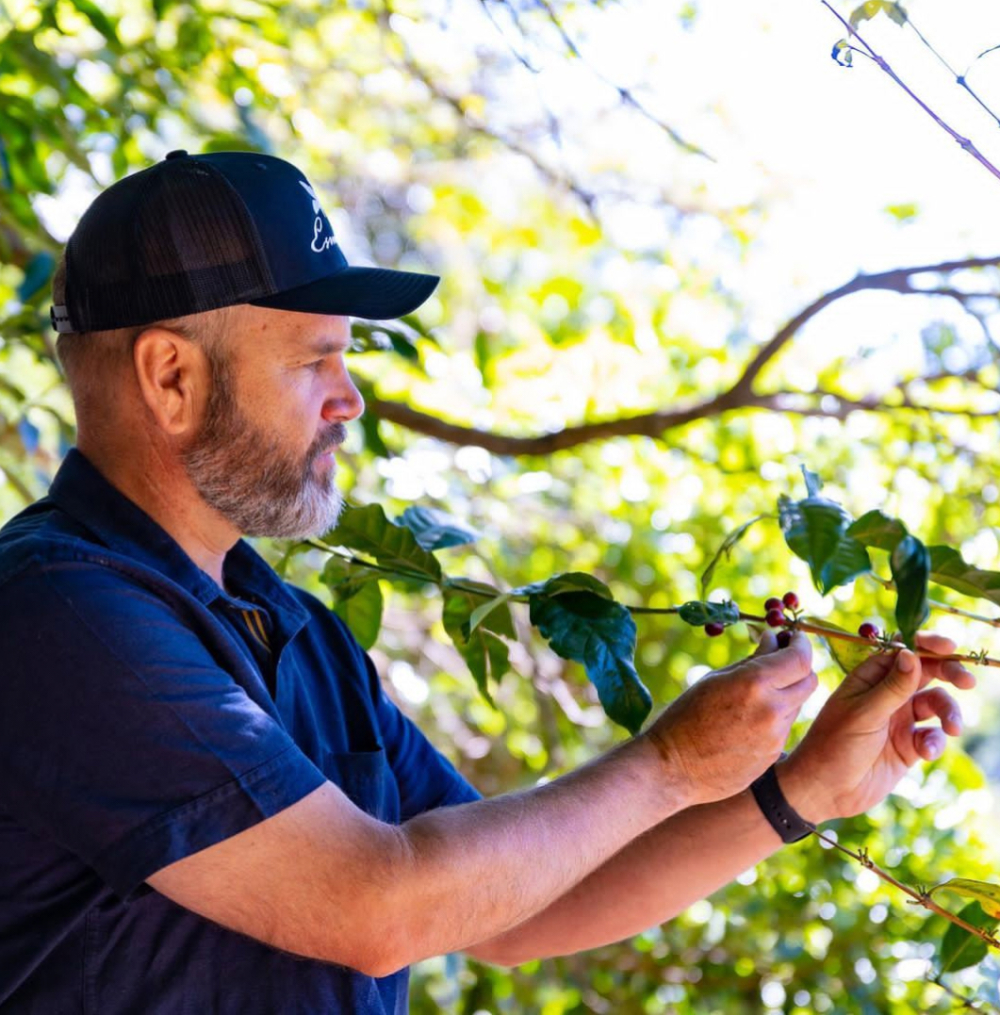
The manager of Hacienda Esmeralda has pointed out that growing Gesha requires a significant amount of shade trees, and traditional pruning methods must be used initially; otherwise, the plants may easily die. The high-altitude environment extends the fruit ripening period, which enhances the richness and complexity of the flavors, but also demands precise timing during harvest—any delay can affect the final quality.
The rise of Gesha: Starting from the Best of Panama competition
The international fame of Gesha is inseparable from Panama’s Hacienda Esmeralda. According to the third-generation owner, Daniel, before participating in the Best of Panama (BOP) competition in 2003, he selected Gesha from among many varieties. During cupping, it displayed astonishing flavors such as jasmine, citrus, peach, blueberry, bergamot, and sugarcane—though different from the mainstream preferences at the time, he decided to enter it into the competition, ultimately winning the championship.
In 2005, Hacienda Esmeralda sent Gesha to compete in the Specialty Coffee Association of America (SCAA), once again defeating numerous other varieties and earning world-class specialty coffee recognition. It went on to win the championship in both 2006 and 2007, solidifying its status in the international specialty coffee scene. Since then, various coffee-growing regions, including Taiwan, have begun cultivating Gesha, but Hacienda Esmeralda’s natural processing methods and strict quality control are still regarded as the benchmark for showcasing classic “Gesha flavors.”
What’s the difference between Red Label and Green Label Gesha?
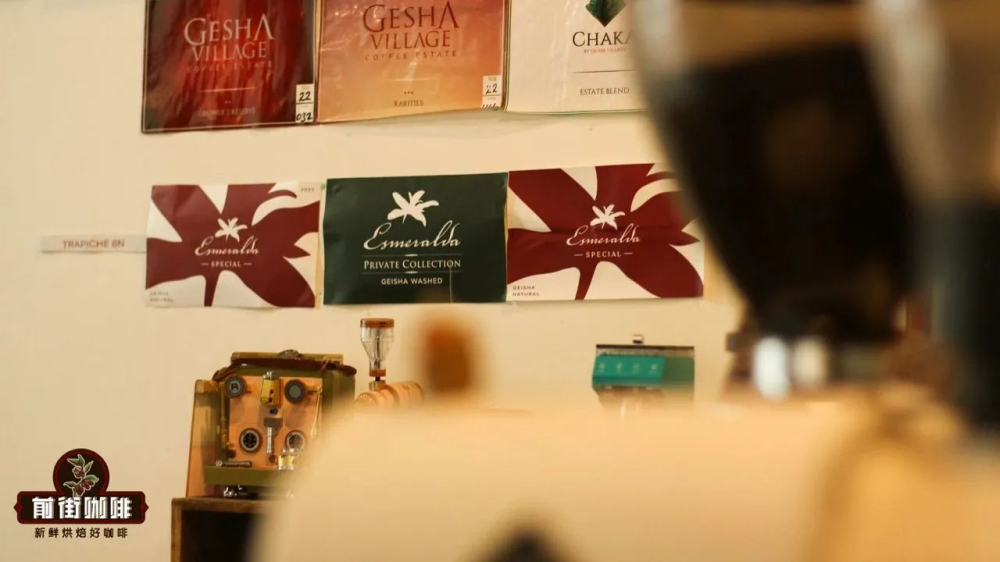
In specialty coffee offerings, Gesha is commonly categorized into Red Label and Green Label. The Red Label is the Hacienda Esmeralda Special Selection (ESMERALDA SPECIAL), including auction lots, typically sourced from high-altitude farms such as Jaramillo and Cañas Verdes at 1600–1800 meters, with cupping scores exceeding 90 points. The Gesha from these plots features the most pronounced floral and fruity aromas, and the auction lots under the Red Label even have unique lot numbers representing specific plots—for instance, the famous Mario plot at Jaramillo Farm, often processed using natural methods.
The Green Label Gesha belongs to the Private Collection grade, sourced from micro-lots within the same altitude range but not from specific plots. These are typically washed-processed, offering a fresher flavor profile with notes of lemon, berries, pomelo, and Tieguanyin tea. Although not part of the auction, they still showcase the classic characteristics of high-altitude Gesha and are an excellent entry point for those trying Gesha for the first time.
How to brew light-roast Gesha? Pour-over parameters and V60 three-stage steps
To preserve Gesha’s delicate floral and fruity aromas and acidity, most specialty shops opt for light roasting. Due to the dense structure of light-roast beans, it is recommended to use92–93°C wateranda fine grind with 80% passing through a #20 sieve,to fully extract the flavors. A V60 resin filter cone, which extends the contact time between water and coffee grounds, is also recommended. Its unique spiral ribs and large holes enhance the layering of the extraction.
Here are the recommended pour-over parameters for Jade Red Label Natural Gesha:
- Filter cone: V60 (resin material)
- Water temperature: 91–92°C
- Coffee dose: 15g
- Coffee-to-water ratio: 1:16
- Grind size: 80% through a #20 sieve (similar in coarseness to fine sugar)
Three-stage extraction steps:
- Place 15g of coffee grounds in the filter cone. Start with a 30g bloom using hot water for 30 seconds. Use a small stream of water, circling from the center outward, to ensure even saturation of the coffee bed.
- For the second stage, pour 120g of water with a vertical and even stream to lift the coffee bed. Aim to reach a total of 150g by around 55 seconds.
- In the final stage, when the liquid level drops to about half, use a small stream to pour 90g of water. Be careful to circle slowly to avoid disturbing the coffee bed. The total water volume should be 240g, and the extraction time should be controlled to around 2 minutes and 10 seconds. After brewing, give the coffee in the server a gentle swirl before enjoying.
The brewed Jade Red Label Gesha will showcase elegant rose floral notes, citrus, strawberry, and tropical fruit acidity, paired with a long-lasting black tea-like aftertaste. The overall mouthfeel is smooth, and different flavor layers emerge as the temperature changes, making it a classic specialty coffee perfect for savoring slowly.
The above content is compiled by CoffeeHunters, a coffee news website.


