








Introduction:Kenyan coffee is renowned for its bright acidity and rich berry flavors, with the AA grade being particularly celebrated. This article delves into the altitude, varieties, and flavor profiles of Kenya’s six core coffee-growing regions, explores the key steps of the K72 washed processing method, and offers practical pour-over parameters and roasting recommendations to help you fully grasp the essence of this high-quality coffee.
Kenyan coffee stands out in the global specialty coffee market with its distinctive bright acidity and bold berry flavors, and the AA grade is considered a classic among many coffee enthusiasts. This article begins by discussing Kenya’s geographical environment and growing conditions, then takes you on a tour of its six major producing regions—including Thika, Kirinyaga, and Nyeri—to analyze their respective altitudes, cultivated varieties, and flavor characteristics. It also covers Kenya’s unique coffee auction system and the emerging direct trade model, giving insight into how these high-quality beans reach the market. Additionally, we’ll explore the origins of classic varieties such as SL28 and SL34, as well as the details of the renowned K72-hour washed fermentation process, helping you understand where Kenyan coffee’s unforgettable acidity and juicy mouthfeel come from. Finally, using a medium-light roasted Kenyan coffee as an example, we’ll share practical V60 pour-over parameters and flavor notes, enabling you to brew a professional-grade cup at home.
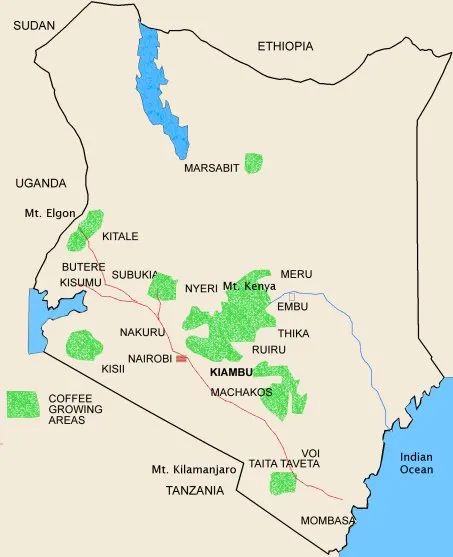
Kenya’s geography is unique—it is located in East Africa, with the equator running through it. The country features mostly highland terrain, with an average elevation of about 1,500 meters. The East African Rift Valley runs north to south, and Kenya shares borders with Somalia to the east, Tanzania to the south, Uganda to the west, Ethiopia and Sudan to the north, and faces the Indian Ocean to the southeast. This terrain and climate create an ideal environment for coffee cultivation, especially in volcanic soil regions situated between 1,600 and 2,100 meters above sea level. The cooler temperatures slow down the coffee bean growth cycle, aiding the accumulation of flavor compounds and resulting in brighter acidity and denser beans. These conditions make Kenya an ideal place for producing specialty coffee.
Coffee farming in Kenya is mainly concentrated in six regions: Thika, Kirinyaga, Mt. Kenya West, Nyeri, Kiambu, and Muranga. Harvests in these areas typically occur during two main seasons—from October to December (main season) and from June to August (fly season). Variations in altitude and microclimate contribute to the distinct flavor profiles of each region.
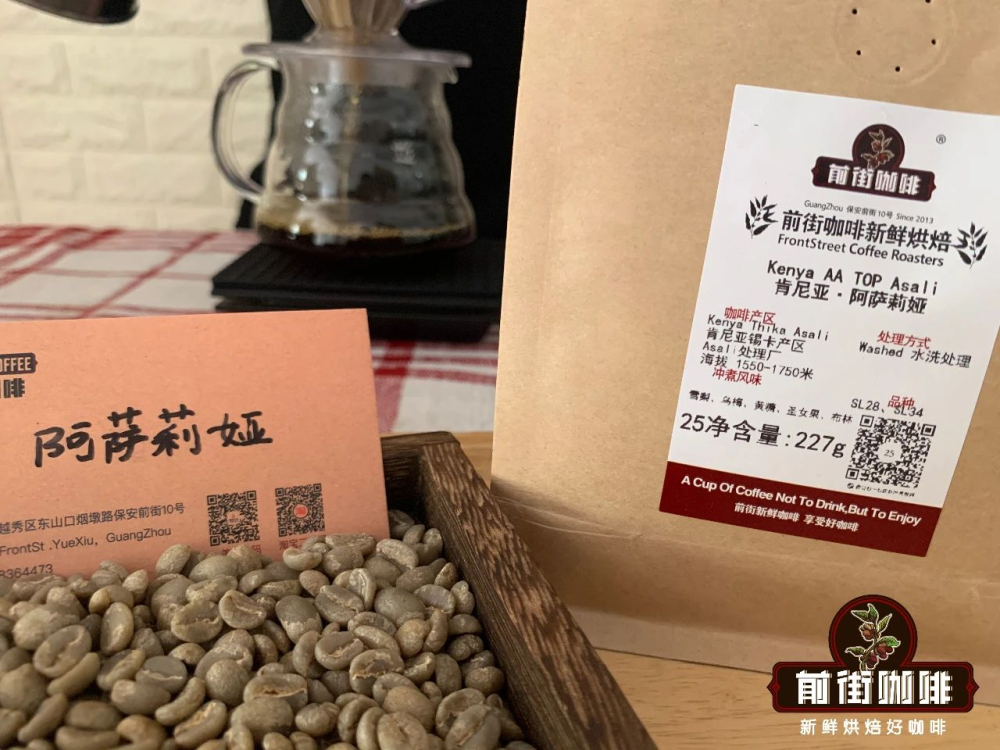
First, let’s look at the Thika region—a town near the capital Nairobi that, while primarily industrial, is surrounded by numerous coffee farms and natural waterfalls. Thika has around 2,000 coffee farmers who mainly grow the SL28 and SL34 varieties, which now account for over 90% of the coffee planted in the area. The coffee from this region is known for its bright acidity, rich berry juiciness, and honey-like sweetness. With elevations ranging from approximately 1,550 to 1,750 meters, it is an excellent choice for coffee lovers seeking a balance of fruity aroma and acidity.
The Kirinyaga region is located on the slopes of Mount Kenya, adjacent to Nyeri, and is one of the most highly regarded coffee-producing areas in the global specialty coffee market. The region is largely composed of smallholder farmers organized into cooperatives, which process their coffee through centralized washing stations to ensure consistent quality. Kirinyaga coffee is celebrated for its intense acidity, delicate sweetness, and medium body, offering complex and well-rounded flavor profiles. With altitudes ranging between 1,300 and 1,900 meters, it is a top choice for many roasters and brewing enthusiasts.
Mt. Kenya West encompasses the Kisii and Bungoma districts, with Kisii near Lake Victoria. Coffee here is mostly produced by small cooperatives. The coffee from this region tends to have a softer profile, with roasted nut notes and mild acidity, making it better suited for consumers who prefer a gentler taste compared to the more intense acidity of central Kenyan coffees. Elevations here range from about 1,450 to 1,800 meters.
Nyeri is one of the most representative coffee-producing regions in Kenya, situated at the foot of the dormant Mount Kenya volcano. It is characterized by red soils and predominantly small cooperatives. The coffee from this area is known for its vivid berry juiciness, citrus aromas, and delicate floral notes—qualities that have played a key role in establishing Kenya’s reputation in the global coffee scene. The altitude here varies widely from 1,200 to 2,300 meters, with higher-altitude coffees often exhibiting exceptional quality.
Kiambu and Muranga are known respectively for their higher altitudes and volcanic soils. Some parts of Kiambu, due to their elevation, may face challenges such as dieback disease, resulting in limited production but still holding quality potential. Muranga, historically a settlement for missionaries, is home to many smallholder coffee farmers. The coffee from this region also displays bright acidity and robust juice flavors, making it a good fit for those who enjoy bold profiles.
Coffee trading in Kenya is primarily conducted through the Nairobi Coffee Exchange, which holds public auctions every Tuesday. Only qualified traders can participate, and they are allowed to cup samples prior to bidding. This system is seen as a precursor to the COE (Cup of Excellence) competition, emphasizing transparency and efficiency, and encouraging farmers to improve quality for greater returns. However, the auction system also has issues such as excessive intermediaries and difficulties in traceability. In recent years, the Kenyan government has gradually relaxed direct trade restrictions, allowing certified agents to trade directly with international roasters, which helps farmers receive more direct benefits.
In terms of varieties, Kenyan coffee is most famous for SL28 and SL34, which were developed by the Scott Laboratories in the 1930s. These varieties are known for their strong citrus and dark plum flavors, along with excellent sweetness and complexity. Ruiru 11, introduced in 1985 as a rust-resistant variety, has high yield but generally average flavor performance, and is mostly used in commercial blends. Kenya also cultivates varieties like Batian, which represent important directions for future varietal improvement.
Kenya’s unique K72 washed processing method is at the heart of its flavor profile. In this method, harvested coffee cherries are meticulously sorted on the same day to select dense, ripe berries. After pulping, the beans undergo three cycles of 24-hour fermentation and washing, totaling 72 hours, followed by sun drying. This process fully develops the coffee’s acidity and sweetness while preserving clean and bright flavor characteristics.
Kenyan coffee is graded by bean size, with AA being 17–18 mesh size and representing one of the highest grades, while AB (15–16 mesh) is the main volume grade. Beyond size, there are also unofficial grades based on cupping results—such as TOP, PLUS, and FAQ—used to further distinguish flavor profiles.
Taking a Kenyan AA-grade coffee from the Thika region as an example, it is recommended to use a medium-light roast to highlight its fruity acidity and berry juiciness. For pour-over brewing, a V60 filter is suggested with a 1:15 coffee-to-water ratio, a water temperature of 91°C, and a grind size similar to fine sugar (EK43s setting 10, approximately 80% passing through a 20-mesh sieve). Start with a 30-gram bloom for 30 seconds, then pour in a total of 225 grams of water in stages, aiming for a total extraction time of about 2 minutes. This will bring out a balanced flavor profile featuring dark plum, cherry tomato, brown sugar sweetness, and berry aromas.
The above content is compiled by CoffeeHunters, a coffee news website.


