







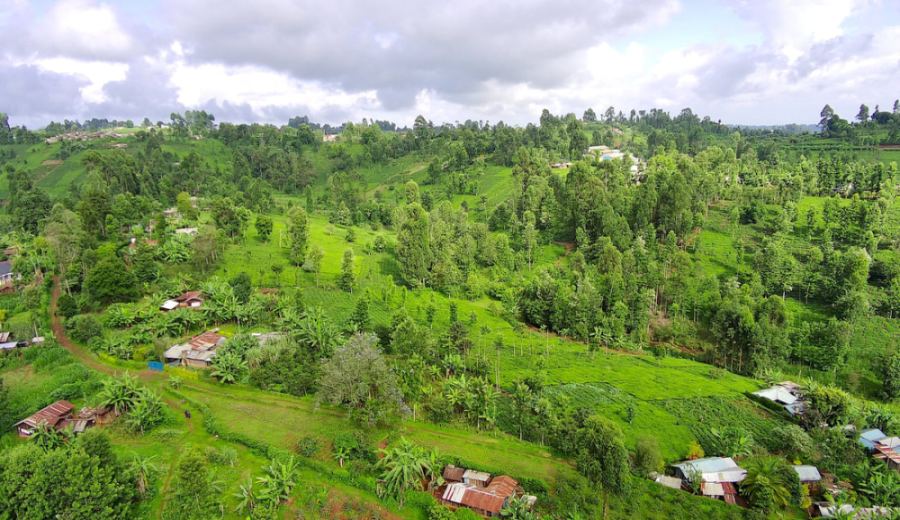
Introduction:Kenyan coffee is renowned for its vibrant berry-like juiciness and distinctive plum-like acidity, with the 'AA' grade being a top choice for many coffee enthusiasts. But do you know what the grading criteria for Kenyan coffee are? What are the unique characteristics of the SL28 and SL34 varieties? This article will delve into Kenya’s seven major growing regions, the classic K72 processing method, and guide you through the brewing and cupping essentials for AA TOP-grade coffee — from origin to cup, all in one go.
Within the landscape of African specialty coffee, Kenya has always played a pivotal role. Unlike the bright, clean acidity of Ethiopian coffee, Kenyan coffee is widely praised for its rich berry-like juiciness, distinctive plum-like acidity, and solid sweetness. Many newcomers to coffee often hear the term 'Kenya AA,' but what does this grade actually signify? How does Kenya’s coffee grading system work?
This article will start with Kenya’s geographical environment and seven core producing regions, introduce you to the history and flavor profiles of the two classic coffee varieties, SL28 and SL34, and provide a detailed breakdown of Kenya’s famous K72 washed processing method. Additionally, we’ll explore the grading standards for AA-grade coffee in depth, using the AA TOP-grade coffee from the Asali Honey Processing Factory in Thika as an example. We’ll also share practical roasting curves, cupping insights, and pour-over parameters, giving you a comprehensive grasp of the allure of Kenyan coffee — from origin to cup.
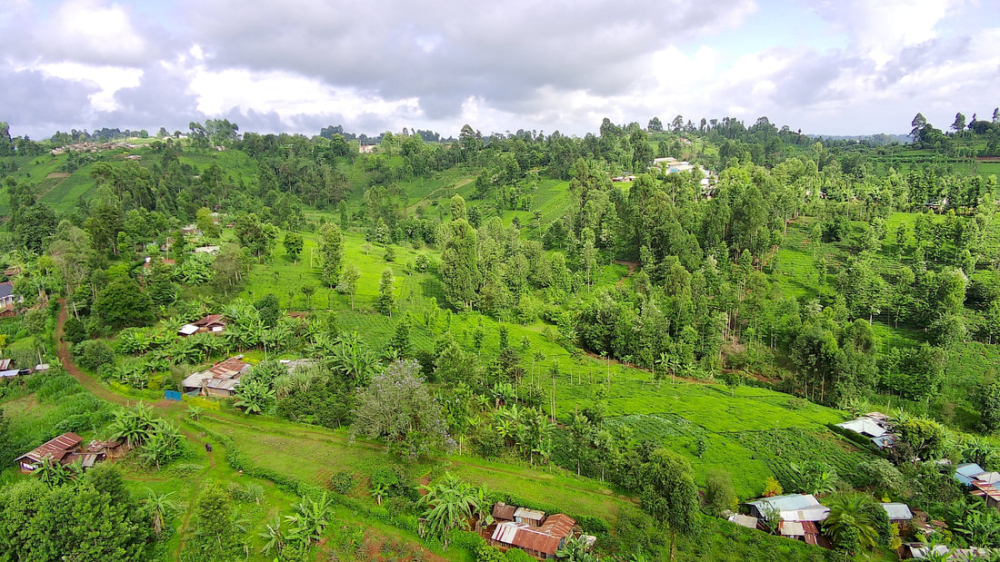
When it comes to African coffee, most people think first of either Ethiopia or Kenya. Ethiopian coffee is known for its clarity and clean acidity, while Kenyan coffee is famed for its rich berry-like juiciness, often accompanied by a tomato juice-like intensity and a unique plum-like acidity. Many coffee lovers are curious about 'Kenya AA' — what does it represent? Let’s explore everything from growing regions, varieties, and processing methods to brewing, to fully understand the full picture of Kenyan coffee.
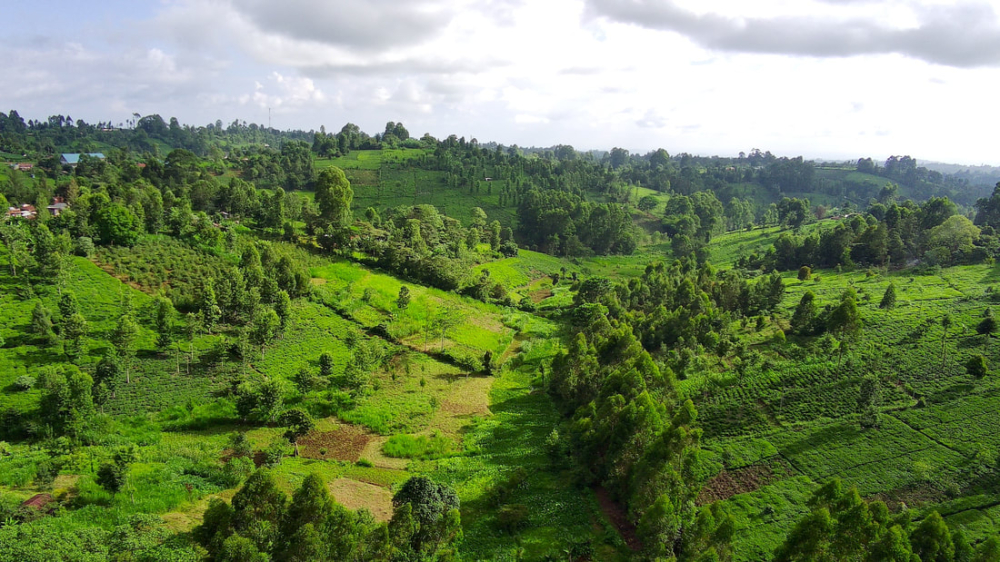
Kenyan coffee-growing regions are mostly located in highland areas with elevations generally exceeding 1,500 meters. The equator runs through the country, and the East African Rift Valley stretches from north to south, creating a unique microclimate ideal for coffee cultivation. The terrain is predominantly plateau, with the towering Mount Kenya (Batian Peak) in the center reaching 5,199 meters — the second highest peak in Africa. The summit is snow-capped year-round, bringing abundant rainfall and suitable diurnal temperature variations to the surrounding areas.
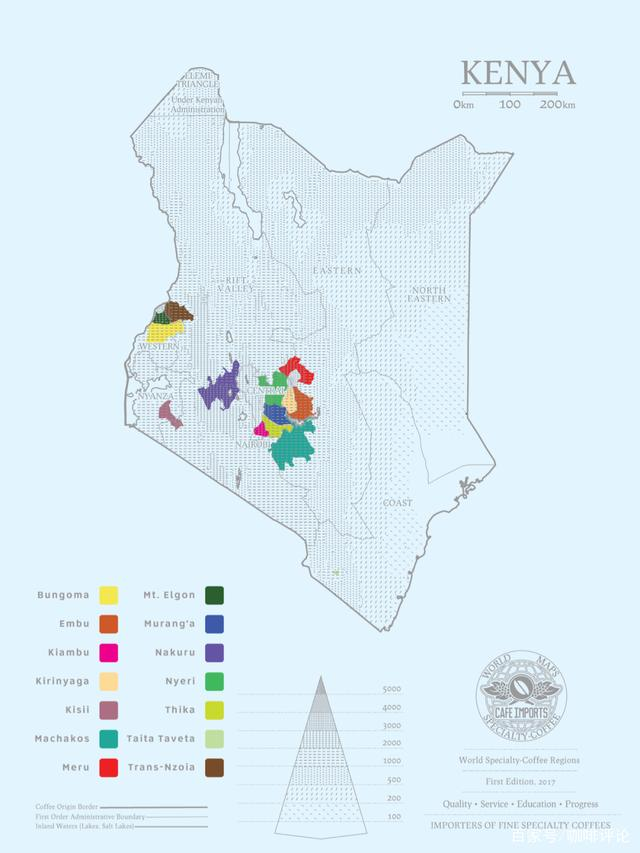
Kenya has seven well-known coffee-growing regions: Thika, Kirinyaga, Mt. Kenya West, Nyeri, Kiambu, Ruiri, and Muranga. Among them, Nyeri, Kirinyaga, Thika, and Muranga, located at the foothills of Mount Kenya and the Aberdare Mountains, are the main producers of specialty coffee.
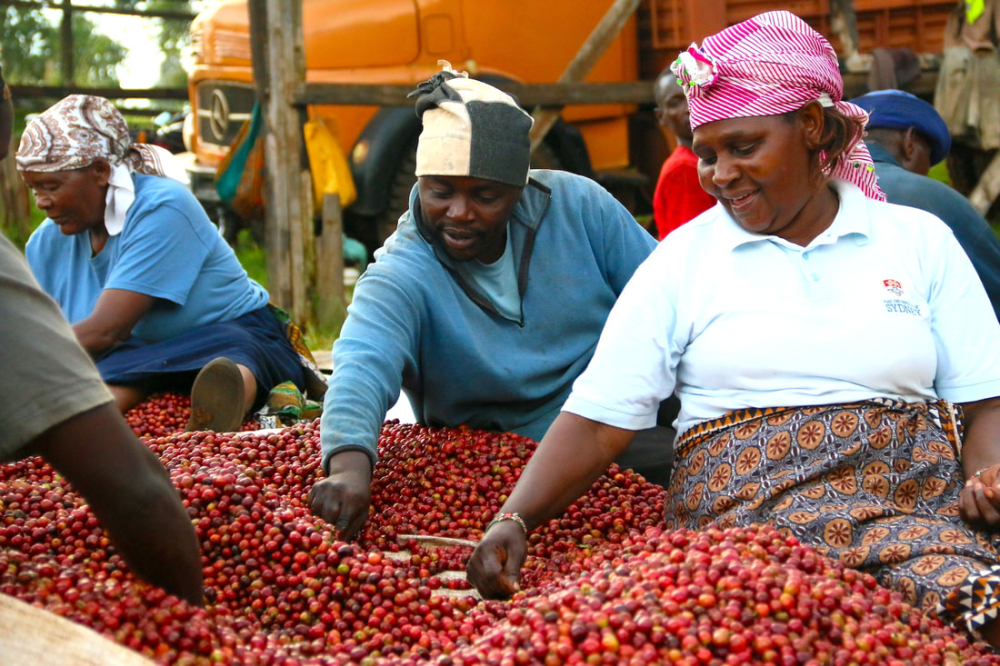
The Nyeri region is located in central Kenya and is home to the famous extinct volcano Mount Kenya, whose red volcanic soil provides coffee with abundant minerals. This area is dominated by cooperatives formed by smallholder farmers, with fewer large estates. Elevations range between 1,200 and 2,300 meters. There are two main harvest seasons per year: the main season from October to December, and the secondary season from June to August.
The Muranga region is also located in Central Province and is home to over 100,000 coffee farmers. It was an inland area where missionaries gathered in the early days. As the Portuguese once prohibited them from living on the coast, many missionary activities shifted inland, which also promoted the development of coffee cultivation. The elevation here ranges from 1,350 to 1,950 meters, and like Nyeri, it is mainly comprised of smallholder farms with similar harvest seasons.
The Kirinyaga region borders Nyeri and lies on the slopes of Mount Kenya, making it one of the sources of Kenya’s top-tier coffee. The coffee here is known for its layered complexity, intense flavors, and solid body, ranking alongside Nyeri as one of Kenya’s premier specialty coffee regions. The area is primarily composed of small coffee farmers who share advanced washed processing facilities through cooperatives to ensure consistent coffee quality. Kirinyaga means 'white mountains' in the Kikuyu language, reflecting the snow-capped Mount Kenya — also Africa’s second highest peak. Elevations here range approximately from 1,300 to 1,900 meters, with harvest seasons divided into the main season from October to December and the secondary season from June to August.
The Thika region is located near Kenya’s capital, Nairobi, and is an industrial town surrounded by coffee-growing areas and spectacular waterfall landscapes. The Thika area is home to around 2,000 coffee growers, and its coffee-growing history dates back to the late 19th century when coffee seeds were introduced from neighboring Ethiopia and gradually adapted to the local environment. The main varieties planted today include SL34, SL28, Bourbon, Typica, and a small amount of Ruiru 11, with SL34 and SL28 accounting for over 90%. Elevations here are about 1,550 to 1,750 meters, and the coffee is known for its bright fruit acidity, rich berry-like juiciness, and honey-like sweetness.
When talking about Kenyan coffee, one cannot overlook its representative SL28 and SL34 varieties. Both were selected by Kenya’s Scott Laboratories (now known as the Kenya Coffee Research Foundation) in the 1930s and remain the soul of Kenya’s specialty coffee to this day.
SL28 was first selected in 1935 from drought-resistant populations in Tanganyika (now Tanzania). It boasts outstanding drought resistance and is suitable for planting at medium to high altitudes, though it is more susceptible to diseases. Interestingly, the seeds of this variety were initially discovered by a British official in the Modoi region of Tanganyika, where coffee trees exhibited exceptional drought tolerance and disease resistance, leading to their introduction to Kenya for cultivation. Even at ages of 60 to 80 years, SL28 can still maintain considerable yields.
SL34 was selected in the late 1930s by Scott Laboratories from a coffee tree known as 'French Mission' at the Kabete Loresho Estate in Kenya. This tree dates back to 1893, when French missionaries established a church in the Taita Hills of Kenya and introduced Bourbon seeds from Réunion Island. Later, these coffee seedlings were brought to the area near Saint Augustine (close to Nairobi) and further distributed to local farmers. Although often mistaken for a Bourbon variety, genetic testing shows that SL34 is more closely related to Typica, leaving its origins still debated.
In terms of cupping performance, both SL28 and SL34 exhibit complex berry acidity and caramel sweetness. SL34 usually has a richer mouthfeel, with acidity leaning toward dark berries like blackberry, balanced acidity and sweetness, and a pronounced caramel finish. SL28, on the other hand, tends toward blueberry-like acidity when cooled, with slight increases in acidity and brighter sweetness, showcasing typical characteristics of the Bourbon variety.
The processing method is a key factor in the unique flavors of Kenyan coffee, and the most representative of these is the 'K72 washed process.' This method emphasizes precision and time, fully bringing out the coffee’s clarity and layered complexity.
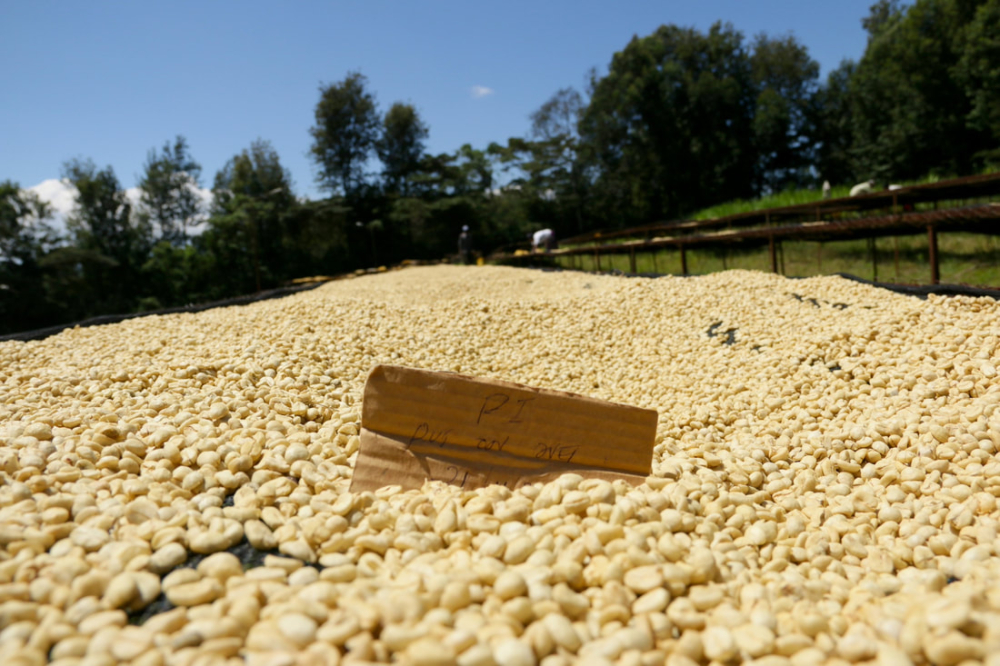
On the day of harvest, farmers first select the ripest and highest-quality coffee cherries. After removing the outer skin, they undergo the first fermentation for about 24 hours, then are thoroughly washed with clean water. This is followed by a second 24-hour fermentation and wash. This process is repeated a total of three times, accumulating 72 hours of fermentation — hence the name K72 process. This method allows the coffee beans to undergo prolonged fermentation in a low-temperature environment, followed by gradual dehydration through sun drying, ultimately resulting in a bright, clean, and full-bodied flavor profile.
Kenya’s coffee grading system is mainly based on bean screen size, post-processing density, and defect rate. Common grades include:
AA Plus (AA+):Represents the batches with the highest cupping quality within the AA grade, exhibiting particularly outstanding flavor and mouthfeel.
AA:Beans with a screen size of 17–18, are recognized as a high-quality grade in the market.
AB:With a size of 15–16, this is the most produced grade and offers good value.
C:Smaller in size than AB.
TT:Lighter beans sorted from AA and AB grades via air classification.
T:Light beans further sorted from the C grade.
E (Elephant Bean):An unusually large bean formed by the fusion of two coffee beans, resembling an elephant’s ear.
PB (Peaberry):A round seed that develops singly inside the coffee cherry, not directly related to flavor but often favored in the market.
The sample introduced in this article comes from the Asali Honey Processing Factory in Kenya’s Thika region, grown at elevations between 1,550 and 1,750 meters, with varieties SL28 and SL34, processed via the K72 washed method, and graded as AA TOP — representing the pinnacle of specialty coffee in the region.
For AA TOP-grade coffee, the recommended roasting curve is as follows: Preheat the roaster to 200°C before dropping the beans, set the air vent to 3, ignite after 30 seconds, adjust the heat to 160, and keep the air vent unchanged. The turning point occurs at approximately 1 minute and 34 seconds, maintaining the same heat. At 5 minutes and 30 seconds, when the beans turn yellow and enter the dehydration phase, reduce the heat to 130 and gradually enter the Maillard reaction. At 178°C, reduce the heat again to extend the Maillard phase, adjusting the air vent to 3.5.
At 7 minutes and 45 seconds, dehydration is complete, and the heat is reduced to 80. At 8 minutes and 30 seconds, when wrinkles and dark spots appear on the bean surface and the aroma intensifies, listen carefully for the first crack. At 8 minutes and 52 seconds, the first crack begins. Open the air vent fully to 5, reduce the heat to 50, control caramelization, and extend the first crack development time by about 2 minutes and 10 seconds. Drop the beans at 191.6°C, which helps lower overall acidity and enhance flavor complexity.
Cupping results show that this Kenyan AA TOP coffee has a wet aroma of ripe tomatoes and elegant floral notes. The flavor profile features bright acidity reminiscent of cherry tomatoes and plum, with a clean mouthfeel and medium body. The mid-palate highlights prominent sweetness with distinct juiciness, while the aftertaste carries berry aromas and brown sugar sweetness, along with a hint of green tea freshness.
For brewing recommendations, since this coffee is medium-light roasted, it is advised to use a V60 filter cone with a higher water temperature to fully showcase its bright acidity and juiciness, while avoiding over-extraction. The recommended powder-to-water ratio is 1:15 (15 grams of coffee to 225 ml of water), with water temperature controlled between 90°C and 91°C, and grind size roughly equivalent to coarse sugar (20-mesh sieve passing rate of 78%).
The specific steps are as follows: First, pour 30 grams of water for a 30-second bloom, then add 95 grams of water (totaling about 125 grams) by around the 1-minute mark. When the water level drops to two-thirds of the coffee bed, add the remaining 100 grams of water (totaling about 225 grams) and finish pouring by around 1 minute and 40 seconds. The total extraction time is about 2 minutes, yielding a Kenyan pour-over coffee with bright, layered flavors.
Brewed flavor profile: The cup opens with distinct acidity of plum and cherry tomato, followed by a rich sweetness and juicy body in the mid-palate. The aftertaste continues with berry aromas and brown sugar sweetness, along with a hint of green tea freshness. The overall profile is balanced and layered.
The above content is compiled by CoffeeHunters, a coffee news website.


