








Introduction:Many coffee enthusiasts are puzzled about the relationship between Yunnan small-grain coffee and Catimor, and some even don’t know whether Catimor belongs to the Arabica species. This article delves into the origins of the Catimor variety, explores its hybrid background with Timor and Caturra, and analyzes how different altitudes affect its flavor. It also introduces the current development status of the Yunnan coffee-growing region and how high-altitude cultivation enhances the performance of both Catimor and Typica, helping you better understand this increasingly noteworthy coffee bean.
What coffee variety category does the Catimor bean actually belong to? The answer is: although it carries a small amount of Robusta lineage, its dominant genes are Arabica, so it is still classified as an Arabica species. However, the background of this variety is not simple—it is actually an artificially hybridized cultivar developed to meet disease resistance and yield demands.
The Catimor variety used by this coffee shop originated in Portugal in 1959, where agricultural researchers crossed the rust-resistant Timor variety with the Caturra variety, which has excellent flavor but is more susceptible to disease. The result was a new variety that combined disease resistance with a certain level of flavor potential. Thanks to its high resistance to leaf rust and high yield per unit area, Catimor quickly became an economical choice for cultivation in many regions, especially across Asia.

However, because Catimor contains some Robusta genes, its flavor profile differs slightly from traditional Arabica varieties. Generally speaking, altitude has a significant impact on the performance of Catimor. Catimor grown at altitudes between 600 and 1000 meters often exhibits a rather thin flavor due to climatic limitations, tending to show noticeable bitterness, herbal notes, and astringent acidity—beans like these are commonly used as raw material for instant coffee or commercial-grade beans.
Conversely, when Catimor is grown in high-altitude areas above 1200 meters, the large day-night temperature variations and slower growth rate significantly enhance its flavor. Such high-altitude Catimor can typically display bright acidity akin to plums, rich caramel sweetness, and delicate aftertastes of roasted nuts or licorice, with overall performance even comparable to classic Arabica varieties like Bourbon, Caturra, or Catuai.
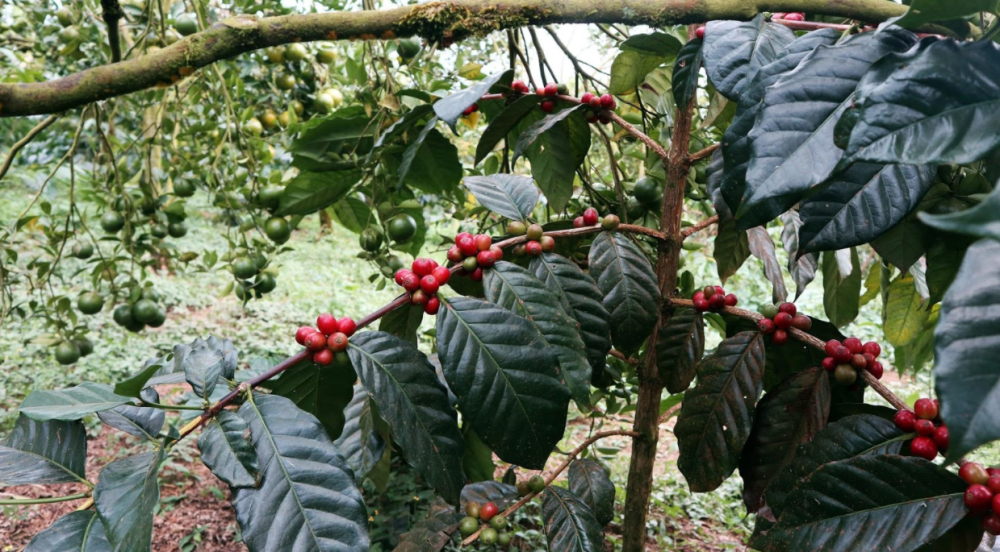
Focusing on the Yunnan growing region, over the past decade, Yunnan coffee’s international reputation was once poor, but with the local government pushing for quality reforms and farmers adopting more scientific planting and post-harvest processing techniques, the overall quality has improved markedly. Especially in high-altitude areas such as Baoshan, Catimor planted around 1200 meters can take full advantage of the local red soil nutrients and significant day-night temperature differences, yielding beans with plum-like acidity, caramel sweetness, nutty aftertastes, and even a hint of licorice flavor.
This type of washed Catimor is suitable for medium roasting and performs well whether brewed using pour over, cold brew, moka pot, or home espresso machines. After brewing, one often experiences a refreshing plum-like acidity, melon aroma, and a smooth, brown sugar tea-like aftertaste—making it an excellent choice for many coffee beginners.
However, to further enhance the overall quality and international competitiveness of Yunnan small-grain coffee, variety selection and improvement are crucial. As early as 2013, a certain coffee shop planted the Typica variety in the mountainous region of Lincang, Yunnan, at an altitude of about 1300 meters. Typica, one of the oldest Arabica varieties, is renowned for its exceptional cleanliness and outstanding sweetness. Many classic flavor profiles from renowned regions such as Jamaica Blue Mountain and Hawaii Kona originate from this variety.
Yunnan also planted Typica in the early days, but due to its relatively low yield and weak disease resistance, it was largely phased out in the past. Later, international brands like Nestlé, drawn by Yunnan’s growing conditions, introduced the high-yield Catimor, leading to the gradual decline of Typica. Yet Typica’s potential remains—especially in high-altitude and well-managed environments, its flavor performance is often purer and sweeter than that of Catimor.
The Typica planted by this coffee shop, also known as the “2013 Coffee,” is grown in the high-altitude mountainous region of Lincang, Yunnan, at around 1300 meters, and processed using the traditional natural (sun-dried) method. After medium roasting, this coffee can showcase a balanced sweet-tart profile reminiscent of plums, soft berry fermentation aromas, rich brown sugar sweetness, and a mellow black tea-like aftertaste—perfectly suited for coffee lovers who enjoy a combination of fruity and sweet notes.
The above content is compiled by CoffeeHunters, a coffee news website.


