







Introduction:Aceh Tiger Mandheling is a classic wet-hulled processed coffee from Sumatra, renowned for its rich, bold body and intense flavor profile. This article delves into its regional background, the origins of the wet-hulling process, varietal composition, and roasting strategy, while also providing practical pour over parameters to help you fully understand this representative Indonesian coffee — every detail from origin to cup.
Tiger Mandheling is a well-known coffee from Aceh Province in Sumatra, Indonesia. Through its unique wet-hulling process, it delivers a full-bodied mouthfeel and a highly distinctive flavor profile. This article will provide a detailed explanation of the natural conditions and cultivation history of the Aceh region, the logic and process details of the wet-hulling method, the main varietal makeup of Tiger Mandheling, and an in-depth exploration of roasting and pour over parameter settings — taking you on a journey from the soil of the origin to the formation of flavors in the cup.
Regional Environment and Cultivation Background
Indonesia is made up of numerous islands, with Sumatra, Java, and Sulawesi being the main coffee-producing regions. Aceh is located in the northern part of Sumatra and boasts the high-altitude Gayo mountain range and the famous Lake Tawar, making it one of the important growing areas for Arabica coffee. The region has a tropical rainforest climate with high average annual temperatures, abundant rainfall, and volcanic soils rich in minerals — all highly conducive to coffee cultivation. However, due to its remote location, local coffee farming started relatively late, around 1924, and is mostly grown using traditional shaded cultivation methods without pesticides, representing a near-natural, organic farming approach.
Coffee in Aceh is a vital pillar of the smallholder economy, with an estimated 60,000 small-scale growers in the region, each managing an average of 1 to 2 hectares of coffee farms. The coffee supply chain in Indonesia is typically multi-tiered, with multiple intermediaries between farmers and exporters. Direct sales and exports from farmers are relatively rare.
Wet-Hulling: Indonesia’s Unique Processing Method
Wet-hulling (known as Giling Basah in Indonesian) is a coffee processing technique unique to Indonesia and is key to forming the bold personality of Tiger Mandheling. Despite the word “wet” in its name, it is quite different from the washed process. The final coffee produced by this method often exhibits strong earthy, spicy notes and a heavy body, with a very distinctive flavor profile.
The steps of the wet-hulling process are as follows:
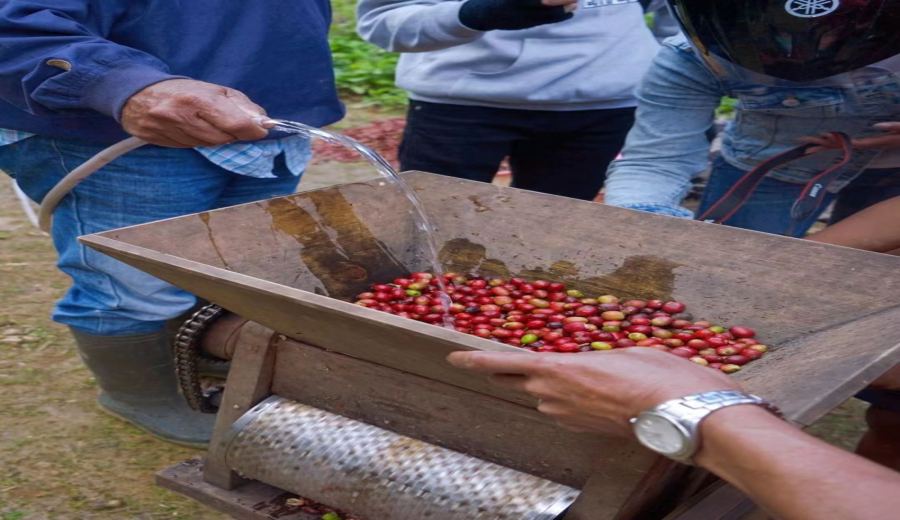
- Remove the skin and pulp, leaving the parchment and mucilage
- Soak in water tanks for fermentation
- Wash off the mucilage
- Sun-dry with parchment for 2–3 days, reducing moisture content to 20–24%
- Hull off the parchment (at this point the beans are still semi-dry)
- Continue drying until moisture content reaches about 12–13%
- Final packaging for export
Indonesia’s hot and humid climate makes coffee drying difficult. Traditional washed methods that involve long periods of drying with the parchment on can easily lead to mold or inconsistent quality. Wet-hulling accelerates moisture evaporation by removing the parchment early, significantly shortening the drying time while also reducing the risks of over-fermentation and bacterial growth. Additionally, this method is closely tied to the historical economic model of Dutch colonizers seeking quick returns. Moreover, because the beans are in a semi-dry and fragile state during processing, they are prone to so-called “goat hoof” or “kuku kambing” defects — small nicks and bruises on the bean surface — resulting in a relatively high defect rate that requires multiple rounds of manual sorting.
Tiger Mandheling Green Bean Varieties
Aceh Tiger Mandheling primarily uses the following varieties: Caturra, Typica, and Sidikalang. Caturra exhibits distinct citrus and lemon notes, with sweetness influenced by fertilization management. Though it has higher productivity, it requires ongoing care, has a shorter tree stature, and dense branching. Typica is the variety closest to the original Arabica type, with an elongated bean shape, clean acidity, bright lemon notes, and a lasting sweetness. However, it is less disease-resistant, has lower yields, and requires harvests every two years.
Roasting Strategy and Flavor Development
Tiger Mandheling green beans have a round, plump appearance with a greenish-yellow hue and relatively high moisture content. Therefore, medium-to-dark roasting is recommended to balance the high acidity while bringing out a rich body and sweet complexity. In actual roasting cases, it is suggested to use a semi-direct flame roaster (such as a 600g Yangjia machine), with an inlet temperature controlled at around 200°C. Initial heat can be slightly higher, but attention should be paid to extending the drying phase to avoid sourness and astringency.
During the roasting process, it is necessary to adjust the heat and air vent sequentially, especially around the yellowing point and just before first crack, where careful control of temperature rise is essential to prevent scorching. It is recommended to drop the coffee about 4 minutes after first crack and 20 seconds before second crack, which helps deepen caramelization while maintaining good cleanliness and a balanced sweetness. The final drop temperature is around 203°C, highlighting layers of cream, dark chocolate, and nuts.
Pour Over Recommendations and Extraction Parameters
When brewing Tiger Mandheling, it is recommended to use a KONO filter, with a coffee-to-water ratio of 1:14 and a grind size of about 70% passing through a Chinese No. 20 sieve (similar to coarse sugar texture). Set the water temperature to 86°C to help bring out sweetness while suppressing excessive impurities. Suggested pour over steps: begin with a 30-second bloom using 26g of water, then add water in pulses up to 118g, followed by gradually increasing the flow rate to slowly pour up to 210g. Total brew time should be around 2 minutes. Under these parameters, the flavor profile highlights sweetness as the main axis, with low acidity, noticeable but not sharp bitterness, and an overall balanced, layered mouthfeel.
In summary, Aceh Tiger Mandheling achieves its rich, bold, and distinctive flavor characteristics through its unique regional environment and the wet-hulling processing method. Whether you want to explore the processing features of Indonesian coffee or are seeking a medium-to-dark roast bean suitable for pour over, Tiger Mandheling is a classic worth savoring in detail.
The above content is compiled by CoffeeHunters, a coffee news website.


