







Introduction:Kenyan coffee is renowned for its bright acidity and rich fruity aromas, making it one of the sought-after specialty beans among many coffee enthusiasts. This article will delve into the historical background of Kenyan coffee, the flavor differences across its six major producing regions, and the grading logic behind AA and PB grades. It also provides practical pour over brewing recommendations, including water temperature, grind size, and brewing steps, to help you better understand the characteristics of this East African star coffee and find your ideal brewing method.
Kenyan coffee is famous for its vibrant acidity and intense berry-like profile, considered a delicacy by many coffee aficionados. However, beyond its captivating flavors, do you know about the cultivation history, regional distribution, and how green bean grades are classified in Kenya? This article will start with the origins of Kenyan coffee, guide you through the unique flavors of its six main producing regions, analyze the grading rationale behind AA and PB grades, and offer practical pour over advice to give you a comprehensive grasp of this high-quality coffee from East Africa.
For those new to specialty coffee, tasting often begins with well-known regions like Yirgacheffe or Mandheling. As they grow more familiar with their flavor preferences, some gravitate toward fuller-bodied, lower-acid styles such as Mandheling, Blue Mountain, or Brazilian coffee, while others are drawn to high-acid, bright, and fruit-forward beans—Kenyan coffee and Panamanian Geisha being top choices for these enthusiasts. Many seasoned coffee lovers, when describing Kenyan coffee, often mention its lively acidity reminiscent of small tomatoes, its crisp and sharp acid profile, along with vibrant berry notes, all leaving a deep impression.
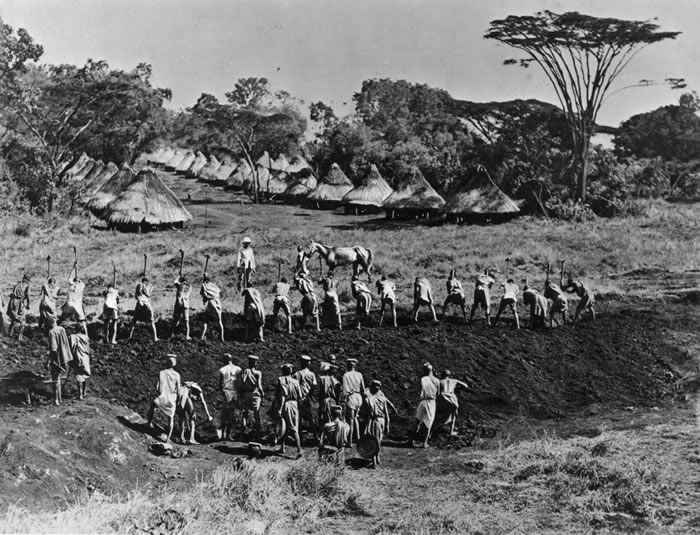
Although Kenya’s coffee cultivation history is not as long as that of its neighbor Ethiopia, its development is closely tied to colonialism. Kenya shares a border with Ethiopia, which is regarded as the birthplace of coffee, yet coffee planting in Kenya only began in the late 19th century. Historical records indicate that in 1893, French missionaries introduced coffee trees from Réunion Island to Kenya, with the first harvest occurring in 1896.
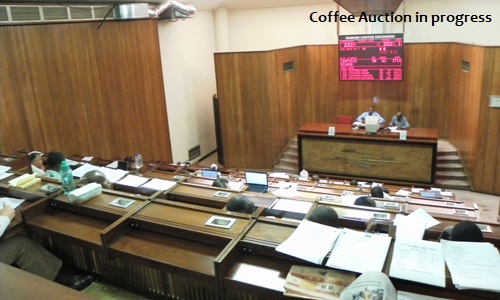
At that time, Kenya was under British colonial rule as part of the "East Africa Protectorate." Coffee was considered an important cash crop, but local residents were not allowed to grow it privately. As a result, early coffee plantations were mostly controlled by large estates operated by British colonists, with harvests typically shipped back to Britain for trade. It wasn’t until 1933, with the establishment of the Kenya Coffee Board, that coffee sales rights gradually returned to locals. In 1934, an auction system was introduced, and the first coffee auction was held in the capital Nairobi the following year. This system continues to this day and is considered a key mechanism for ensuring quality and transparency.
In the early 1950s, the Kenyan government implemented agricultural reforms, allowing more families to obtain farmland and grow cash crops to increase income. Today, Kenyan coffee is primarily sold through the Nairobi Coffee Exchange. During harvest seasons every Tuesday, auctions are held where traders can preview samples for cupping and then bid to secure desired lots of green beans. This model is not only open and transparent but also incentivizes coffee farmers to continuously improve quality.
Kenya has several coffee-growing regions, among which Kirinyaga and Nyeri are the most well-known. Overall, Kenya’s coffee-producing areas can be broadly divided into the following six regions:
Kiambu: Located in central Kenya, it is dominated by large estates, though the number of estates has gradually declined due to urbanization. The region includes areas such as Thika, and its coffee is known for bright acidity and a full body, often featuring distinct fruit flavors like black plum and cherry tomato, paired with caramel-like sweetness and a berry finish, offering a richly layered taste profile.
Kirinyaga: This volcanic region is famed for its fertile soil and refined processing techniques. The coffee produced here is typically intense in flavor and well-structured, and is considered one of Kenya’s top-tier coffee regions.
Nyeri: Adjacent to Kirinyaga and home to Mount Kenya, its volcanic red soils nurture many high-quality smallholder coffees. Nyeri coffee often exhibits bright blackberry acidity, citrus aromas, and a rich mouthfeel, making it a highly acclaimed origin on the international market.
Embu: Close to the Mount Kenya area, about 70% of its residents are engaged in small-scale farming, with tea and coffee as the main cash crops. Mostly produced by smallholders, output is limited but quality remains consistent.
Mount Kenya West: Including the regions of Kisii and Bungoma, it is dominated by small cooperatives with relatively small production volumes. The coffee tends to have a softer profile, with roasted nut and mild fruity acidity, suitable for those who prefer less pronounced acidity.
Murang’a: Located in the Central Province, its volcanic soils produce bright acidity and a solid juiciness, making it a popular area for many coffee farmers who focus on meticulous cultivation.
The grading system of Kenyan coffee is primarily based on bean size, appearance, and density, managed uniformly by the Kenya Coffee Directorate. The commonly seen 'AA' grade represents the highest quality green beans, typically larger in size and superior in quality. Another common grade, 'PB', refers to peaberry—a rare bean form where a single round seed develops inside the coffee cherry instead of two flat ones—valued for its concentrated flavor and rarity.
So, how should Kenyan coffee be brewed to bring out its best flavors? It is generally recommended to use medium-light roasted Kenyan beans and brew them via pour over at a high water temperature of 93°C, which helps highlight their bright acidity. A Hario V60 dripper is recommended for its spiral ribs that accelerate water flow, resulting in a clean, clear taste and vibrant aroma.
Practical brewing parameters are suggested as follows: 15 grams of coffee, a 1:15 coffee-to-water ratio, and a grind size around EK43s#10 (approximately 80% passing through a #20 sieve). The brewing steps are: start with a 30-second bloom using 30 grams of water, then pour up to 125 grams for the second pour, wait for the liquid level to drop, and then pour up to 225 grams to complete the extraction. The total brew time is about 2 minutes, effectively showcasing the sweet-tart balance and fruity vibrancy of Kenyan coffee.
The above content is compiled by CoffeeHunters, a coffee news website.


