








Introduction:Although Tanzanian coffee is not as well-known as that of its neighbor Kenya, it is renowned for its rich body and gentle acidity, with the Kilimanjaro region in particular hailed as a representative of premium African beans. This article details Tanzania’s coffee grading system, from the particle size standards of AA, AB, PB to C grades, and analyzes the flavor characteristics and price differences of each grade. Through the cupping and pour over experience of a certain coffee shop’s Kilimanjaro AA washed beans, we’ll explore how this coffee showcases citrus and berry notes along with a honey-tea sweetness in the finish, and provide purchasing recommendations.
Have you ever tried Tanzanian coffee? If not, why not start with Kilimanjaro AA washed beans? This premium African coffee, when brewed using the pour over method, reveals clear fruit acidity—but unlike Kenyan beans, it is not overly sharp or intense. Instead, it offers gentle citrus and berry tones, with a balanced sweetness and complexity, making it an excellent choice for clearly experiencing the characteristics of its origin.

In Tanzania, coffee is locally referred to as "kahawa (卡哈瓦)." This East African country boasts diverse geography, bordering Kenya and Uganda to the north, Malawi, Mozambique, and Zambia to the south, and Rwanda and Burundi to the west. Approximately 250,000 hectares of land across the nation are used for coffee cultivation, the majority of which—about 75%—lies in high-altitude regions.
When Tanzanian coffee is mentioned, most people first think of the Kilimanjaro region. Thanks to its volcanic terrain and suitable altitude, the coffee beans produced here are known for their full body, moderate acidity, and intense aroma, earning them the title “Gentleman of Coffee.” Compared to neighboring Kenyan beans, Tanzanian coffee has gentler acidity, more pronounced sweetness, and a hint of rich, wine-like fragrance.
Although Tanzanian coffee enjoys slightly less international fame than Kenyan coffee, its annual production is comparable, at around 50,000 metric tons. The earliest Arabica seeds originated from Réunion Island (French: La Réunion), initially planted in the Bayamoyo and Mogoro regions. In 1893, coffee cultivation on the slopes of Kilimanjaro achieved a major breakthrough, and in the 1950s, additional varieties were introduced from Burundi, expanding cultivation to the western highlands. To this day, wild coffee trees are still occasionally discovered.
Tanzania’s coffee grading system is similar to Kenya’s, primarily based on the size of green coffee beans. During grading, sieves with different hole sizes are used—the larger the sieve number, the larger the beans that pass through. Below are the main grading standards:
Grade AA: Green bean size of 17–18 mesh (approximately 7.20mm sieve), representing the highest grade, typically offering the richest flavors and the highest market value.
Grade AB: Size between 15–16 mesh (approximately 6.8mm–6.2mm sieve), a common mid-to-high grade, offering good cost-performance.
Grade PB: Refers to round-shaped green beans, accounting for about 10% of total production. Due to their unique appearance and often intense flavors, they are also favored by the market.
Grade C: Size of 12–14 mesh (approximately 4.8mm–5.6mm sieve), generally of lower grade, mostly used for commercial blends or mixed formulations.
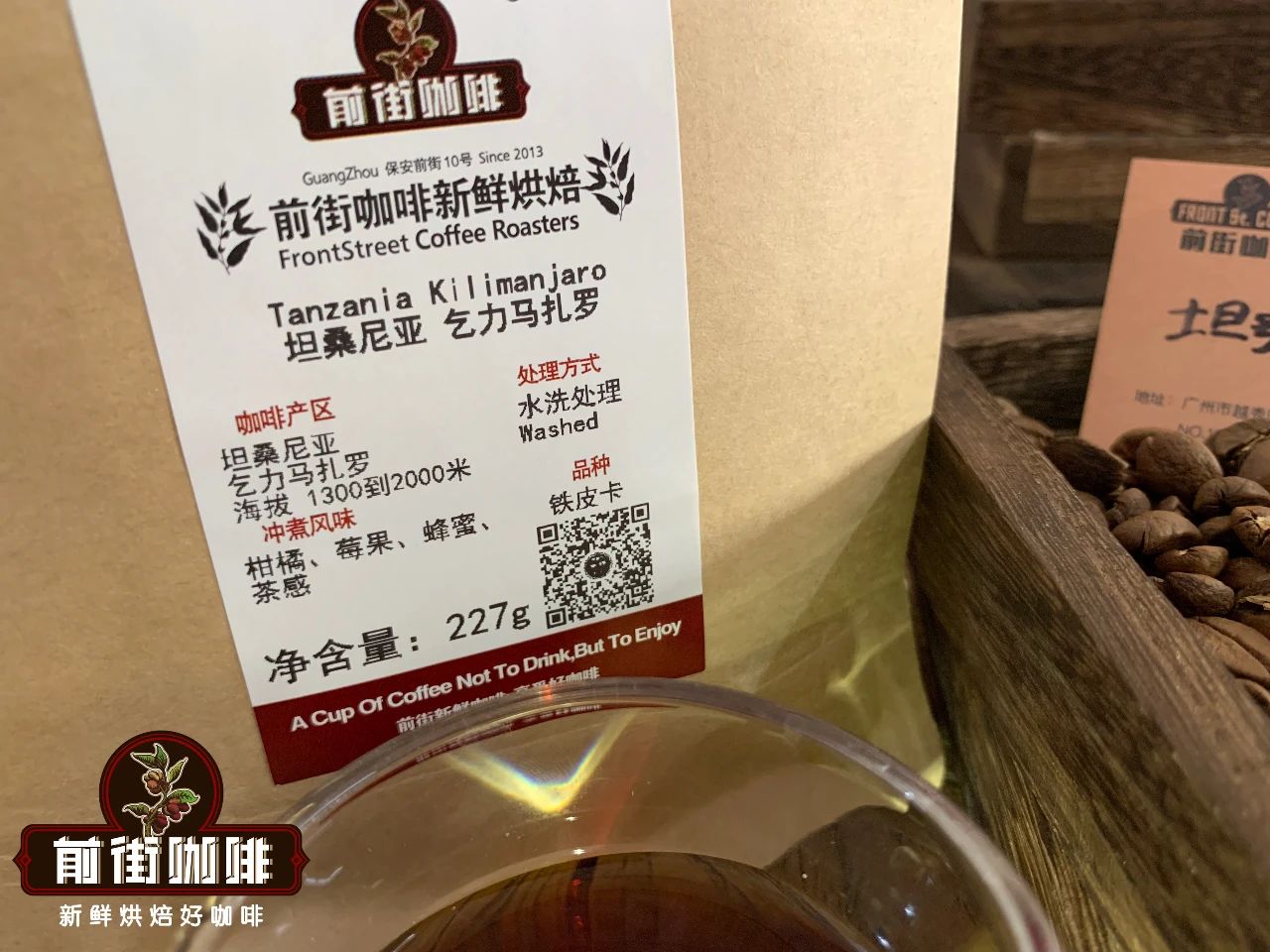
The Tanzanian Kilimanjaro AA washed beans from a certain coffee shop come from highlands at elevations of 1,300–2,000 meters, are of the Bourbon variety, and are processed using the washed method—they belong to the top-grade AA level. When medium-light roasted, these beans fully express their unique berry aroma, with a soft citrus acidity on the palate that is refreshing and pleasant; the mid-palate transitions into a honey-like sweetness, while the finish offers a tea-like sensation with lingering aftertaste.
For coffee enthusiasts, understanding the screening criteria and flavor differences among the various grades can help make more suitable choices based on personal taste preferences. Grade AA may be more expensive, but usually delivers more concentrated and brighter flavors; Grade PB is also worth trying due to the unique traits and taste of peaberry beans; while Grades AB and C are suitable for consumers on a budget who still want to experience Tanzanian flavors.
When selecting Tanzanian coffee, in addition to paying attention to the grade, it is also recommended to consider factors such as origin, processing method, and roast level—all of which directly affect the final flavor profile. Through actual cupping and pour over experiences, one can more accurately grasp the characteristics of each bean and find the Tanzanian coffee that best suits their personal taste.
The above content is compiled by CoffeeHunters, a coffee news website.


