







Introduction:Yunnan small-grain coffee has become a market favorite, but many still have only a vague understanding of its varietal evolution and flavor differences. This article delves into the historical background, genetic makeup, and significant flavor distinctions of Yunnan coffee—from the early Typica and Bourbon to today’s dominant Catimor—helping you make more informed choices and better appreciate the specialty coffees that truly represent Yunnan’s unique character.
Nowadays, walking into a specialty coffee shop, the term “Yunnan small-grain” is becoming increasingly common, but it actually conceals a generational story of varietal change. In the early days, Yunnan small-grain mostly referred to traditional Arabica varieties like Typica and Bourbon, known for their delicate fruity notes and balanced acidity. Today, however, the majority of what’s marketed as “Yunnan small-grain” is actually Catimor—a high-yield, disease-resistant variety. Understanding this history not only gives you a deeper appreciation of the coffee in your cup but also helps you make better purchasing and brewing decisions.
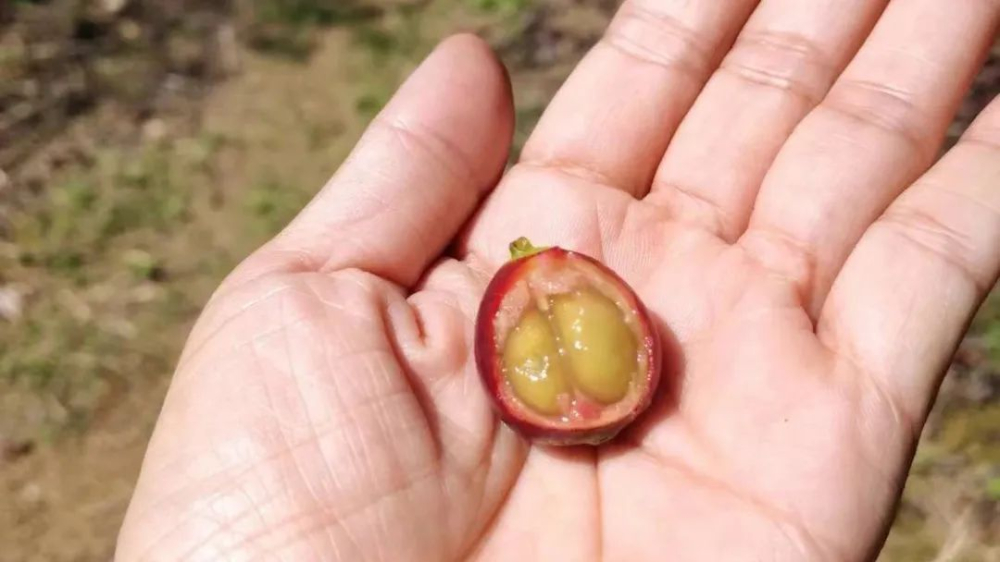
Small-grain coffee is actually an industry colloquialism for Arabica. The term “small-grain” refers to the relatively smaller size of Arabica coffee cherries—meaning the whole fruit, not the seeds inside—compared to other coffee species like Robusta. Thus, Yunnan small-grain coffee, as the name suggests, refers to Arabica grown in Yunnan. However, it’s important to note that the varietals referred to as “Yunnan small-grain” in the past and present have undergone significant differences.
Tracing back to the early 20th century, coffee entered Yunnan via two routes: one introduced by French missionaries from Vietnam, planted in Zhukula Village, Binchuan County, where they even taught villagers grinding and brewing techniques; the other brought by the Jingpo ethnic border residents from Myanmar into Longxian Village, Ruili County. Early coffee was mostly grown as an ornamental plant in courtyards, with minimal scale and no established industry. It wasn’t until 1952, after agricultural experts confirmed that these red fruits were indeed the small-grain coffee varieties from South America, that systematic breeding began, and China’s first small-grain coffee planting base was established in Ludian, Baoshan City.
Thanks to Yunnan’s unique altitude, temperature variations, and soil conditions, small-grain coffee quickly adapted, showcasing a rich yet non-harsh flavor profile with pleasant fruity notes. In the early years of the People’s Republic, as China became a major coffee supplier to the Soviet Union and Eastern European countries, Baoshan coffee entered a golden age of expansion, with planting areas once exceeding 50,000 mu. The name “Yunnan small-grain coffee” thus gained prominence. However, as Sino-Soviet relations deteriorated in the 1960s and 1970s, this glorious chapter came to an abrupt end, though the term “Yunnan small-grain coffee” endured.

Entering the 1980s, the global coffee industry faced a widespread rust disease epidemic, severely threatening traditional varieties like Typica and Bourbon, and creating an urgent need for new growing regions and disease-resistant varieties. Starting in 1988, Nestlé introduced Catimor 7963—originating from Portugal’s Coffee Rust Research Center (CIFC)—to Yunnan for trial planting as a low-cost raw material for instant coffee production, followed by the gradual introduction of various Catimor lineages. However, the earliest introduced 7963 lineage stood out for its yield and stability, becoming the primary variety for subsequent cultivation.
Catimor is actually a hybrid offspring of Caturra and Timor. Caturra is a pure Arabica lineage, while Timor is a natural hybrid of Arabica and Robusta. Therefore, at the genetic level, Catimor has 75% Arabica heritage but still carries 25% Robusta genes, giving it significant advantages in disease resistance and yield: under the same growing conditions, Catimor’s per-unit yield is about three times that of Typica, which is why it rapidly replaced older varieties and became the dominant cultivar in Yunnan. However, the Robusta lineage also brings certain flavor compromises, with common descriptions including low acidity, nutty and cocoa-leaning profiles, and sometimes earthy or other off-flavors.
This varietal shift peaked around 2010–2011, when soaring Brazilian coffee prices drew global attention to alternative growing regions, and Yunnan coffee experienced a market boom—only to stabilize again soon after. Today, Catimor accounts for over 90% of Yunnan’s total production, effectively representing what the term “Yunnan small-grain” stands for, while traditional varieties like Typica and Bourbon, due to limited planting areas and higher management costs, are now mostly found in specific estates or among niche producers.
If you want to experience the most representative modern Yunnan coffee flavor, we recommend choosing products based on Catimor, processed with washed methods and medium roasting, which clearly showcase the variety’s rich base notes and regional characteristics. If you prefer the classic profile of traditional small-grain coffee, look for Typica processed with natural (sun-dried) methods—for example, those grown at high altitudes (such as above 1,300 meters) and medium roasted, often presenting soft layers of nuts, dried apricots, chocolate, and black tea, closely resembling the flavor memories of early Yunnan small-grain coffee.
The above content is compiled by CoffeeHunters, a coffee news website.


