








Introduction:Want to learn how to properly use illy pre-ground espresso coffee powder to brew espresso with the best possible flavor? This article provides an in-depth analysis of the illy brand background, the characteristics of their espresso coffee powder, and detailed practical ratios and operational tips for using both espresso machines and American brewing methods, helping you go from beginner to advanced and master the secrets of the perfect coffee flavor.
Illy is a well-known Italian coffee brand founded in 1933, with the Chinese name 意利 (Yìlì), and is also one of the world’s first pioneers to introduce pre-ground coffee powder. In Italy, many local cafés prefer to use the beans or coffee powder specially blended by illy for espresso to produce espresso with consistent quality. These coffee powders are made from 100% Arabica coffee beans, processed through professional roasting and fine grinding. Unlike instant coffee, they cannot be directly dissolved in water and must be extracted using a filtration tool or a professional espresso machine.
To brew a cup of illy espresso with outstanding flavor and rich body, the key lies in the correct extraction technique and ratio. This article not only introduces the historical positioning and blending philosophy of the illy brand, but also thoroughly explains the origin of espresso and the working principle of espresso machines. It also provides practical brewing ratios and techniques for American coffee, allowing you to enjoy a professional-level coffee experience easily at home.
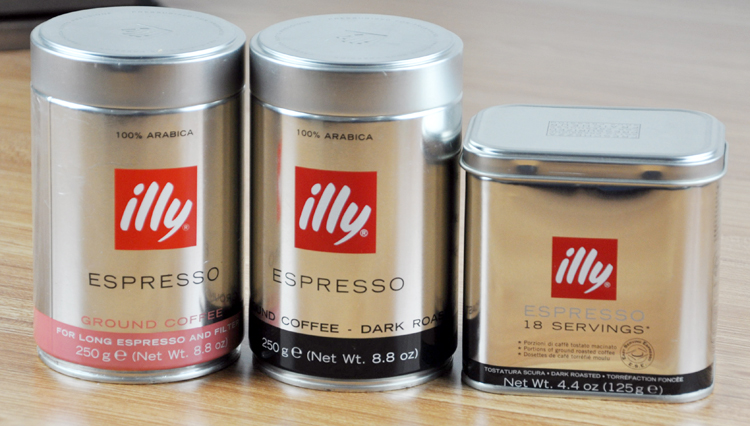
Illy Coffee was established in 1933, headquartered in Italy, and is one of the oldest coffee brands in the world. Its Chinese name is 意利 (Yìlì). The brand began selling pre-ground coffee powder decades ago, making it a pioneer in the industry. In Italy, many local cafés are accustomed to using illy’s specially blended coffee beans or coffee powder for espresso to ensure that each cup of coffee has a consistent and stable flavor.
Illy’s espresso coffee powder is a blend made from multiple Arabica coffee beans sourced from different growing regions. The biggest advantage of blending is that it can effectively balance the flavor differences between beans from various regions, reduce the impact of natural condition variations such as climate or soil on the flavor of single-origin beans, and thus maintain a stable expression of aroma, acidity, sweetness, and body in each batch of coffee powder, while also considering cost-effectiveness.
So, how should illy espresso coffee powder be brewed to taste good? This coffee powder is made from 100% Arabica coffee beans that have been roasted and finely ground, which is completely different from the commonly available instant coffee on the market—the latter is produced through extraction, concentration, and drying processes, and can be directly dissolved in hot water. In contrast, illy espresso coffee powder needs to be extracted under high pressure using a filter tool or a professional espresso machine to produce a rich coffee liquid, while preserving abundant aroma and a layer of crema.
The history of espresso can be traced back to the early 19th century, when Italians, aiming to produce a strong cup of coffee in a short time, began using the principle of steam pressure to force high-temperature, high-pressure water through a compacted puck of coffee grounds, significantly reducing the time required for traditional drip extraction. As technology continued to evolve, the semi-automatic and fully automatic espresso machines commonly seen today were gradually developed, becoming essential tools for both professional cafés and home users.
Espresso machines typically come with a built-in heating boiler that pressurizes water and forcefully pushes it through a tightly packed bed of coffee grounds. This high-pressure extraction method creates the unique intense flavor and fine crema of espresso. These machines are also known as pump-driven coffee machines. The coffee they produce is not only concentrated but also rich in complex aromas and layers, serving as the base for many coffee beverages such as lattes and cappuccinos.
Espresso refers to a form of coffee with extremely concentrated flavor and a robust body. Whether in terms of aroma complexity or flavor richness, it is hard to match with other brewing methods. To brew a satisfying cup of espresso, in addition to the equipment, the extraction technique is crucial. Factors such as water temperature, pressure, grind size, and extraction time all need to be precisely controlled to achieve the optimal balance of aromatic compounds and taste elements in the coffee.
In contrast, American coffee is a relatively simple yet equally popular coffee beverage. Its basic definition is diluting espresso with hot water. This drinking method originated during World War II, when American soldiers were not accustomed to the strong and bitter taste of espresso, so they began adding large amounts of hot water to adjust the concentration. Later, this method became popular in the United States itself and has since become the widely known American coffee we know today.
There is no fixed ratio for American coffee, but based on practical testing and shared experiences, a popular and easy-to-follow brewing ratio is 1:6—that is, adding about 240 grams of water at approximately 88°C to around 40 grams of espresso liquid to make a hot Americano. For iced Americano, you can replace the hot water with 120 grams of ice cubes and 120 grams of room-temperature water, and consume it before the ice cubes have completely melted to achieve the most refreshing and balanced flavor profile.
The above content is compiled by CoffeeHunters, a coffee news website.


