







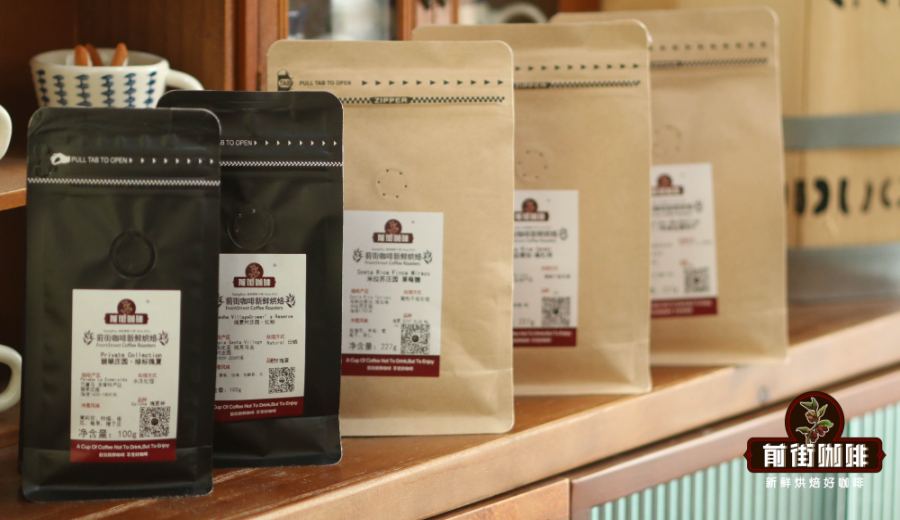
Introduction:Delve into Hawaii’s only commercially grown coffee—Kona. Explore its journey from the introduction of Typica in the 19th century to the refined craftsmanship of renowned estates like Queen Farm. Learn about its five-tier grading system, traditional hand-picking methods, and how unique volcanic soil and island climate shape its balanced acidity, nutty sweetness, and rich body. This guide also provides tested pour-over parameters and flavor profiles for five brewing devices—V60, siphon, AeroPress, and more—a must-read deep dive for coffee enthusiasts.
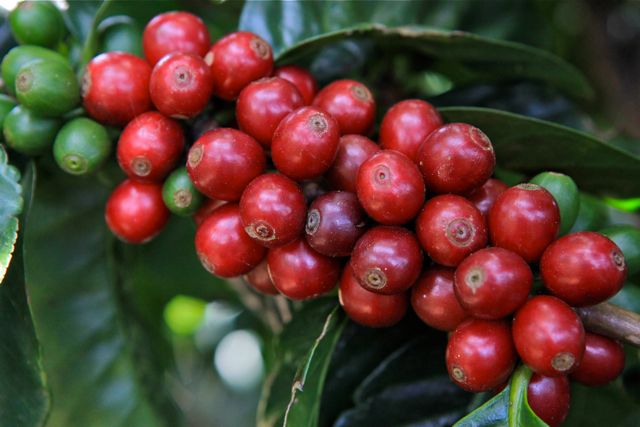
Kona coffee originates from Hawaii Island, the only region in the U.S. with commercially viable coffee-growing conditions, producing over 8 million pounds annually. Blessed with volcanic soil, mild island climate, and predominantly family-run farms, Kona coffee is famed for its silky texture, intense aroma, and perfect harmony of nuttiness and sweetness. This article traces Kona’s development since the 19th century—from the introduction of Typica to the rise of iconic farms like Queen Farm—and details its distinctive five-tier grading system and enduring tradition of hand harvesting. We also tested brewing recipes using five devices—V60, siphon, AeroPress, French press, and KONO—sharing complete roast profiles and flavor notes to help you fully appreciate this iconic specialty coffee.
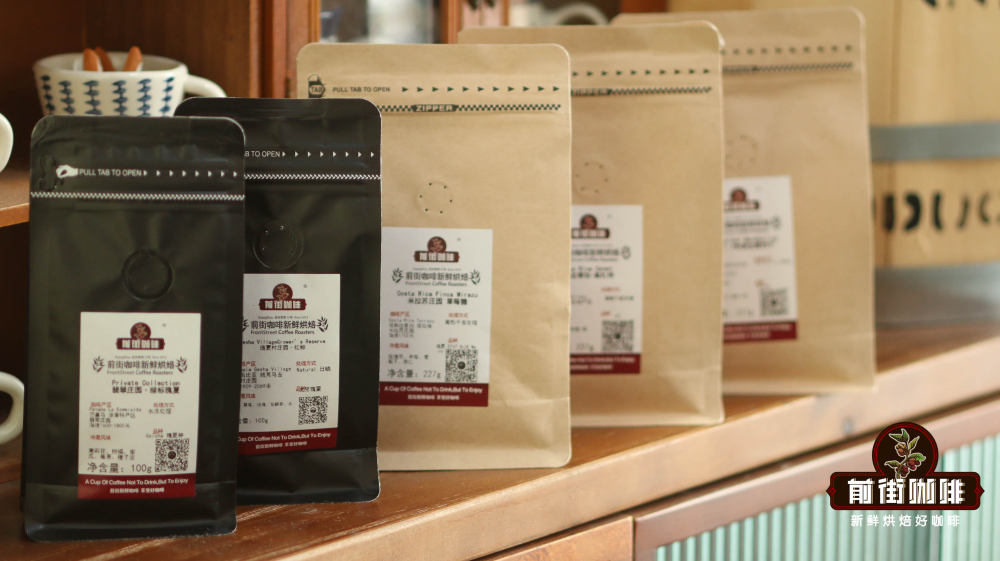
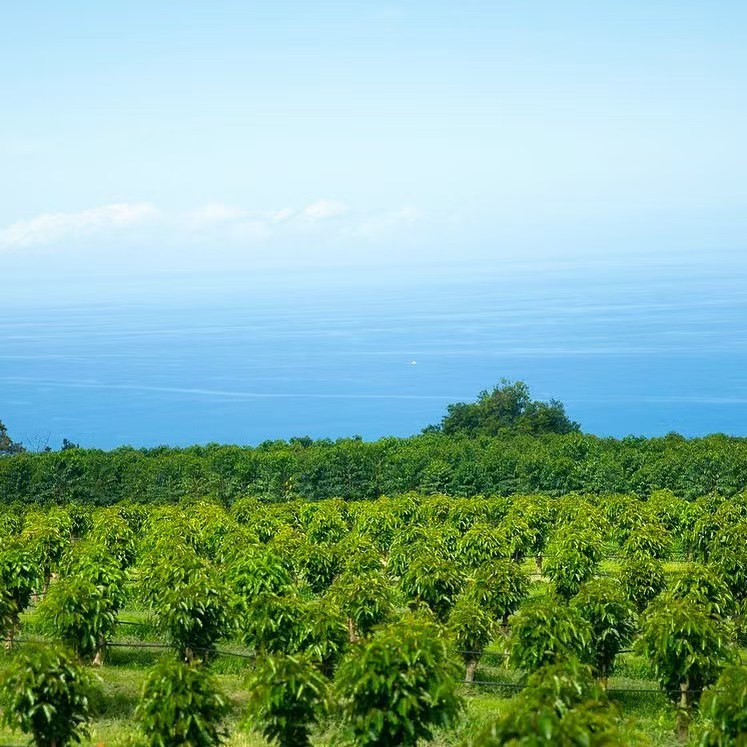
Hawaii lies in the heart of the Pacific, with coffee cultivation primarily concentrated on Hawaii Island—the archipelago’s highest in elevation and most climatically suited for coffee. The island’s volcanic soil, rich in minerals, nourishes coffee trees and forms the foundation of Kona’s renowned smoothness, bold aroma, and delightful nutty-sweet balance. Though Hawaii’s annual coffee output barely exceeds 8 million pounds, its relatively pristine growing environment—with minimal hybrid interference—cultivates a distinct terroir. Hawaiian Kona beans are celebrated for their smooth mouthfeel, fragrant profile, pleasing nutty notes, and balanced acidity, making them ideal for both newcomers and seasoned coffee drinkers.
Dating back to the early days of U.S. independence, the lack of suitable coffee-growing conditions meant the trade was dominated by Europe. Hawaii’s annexation provided the U.S. with a rare opportunity to develop a domestic coffee industry. Soon after, Typica was introduced from Guatemala and quickly gained traction on Hawaii Island. By then, Jamaican Blue Mountain coffee had already flourished for about sixty years, with a mature market and quality control system. As another island-grown coffee, Kona was often compared to Blue Mountain from the outset. Today, both are globally recognized as high-priced, high-quality representatives in the specialty coffee market.
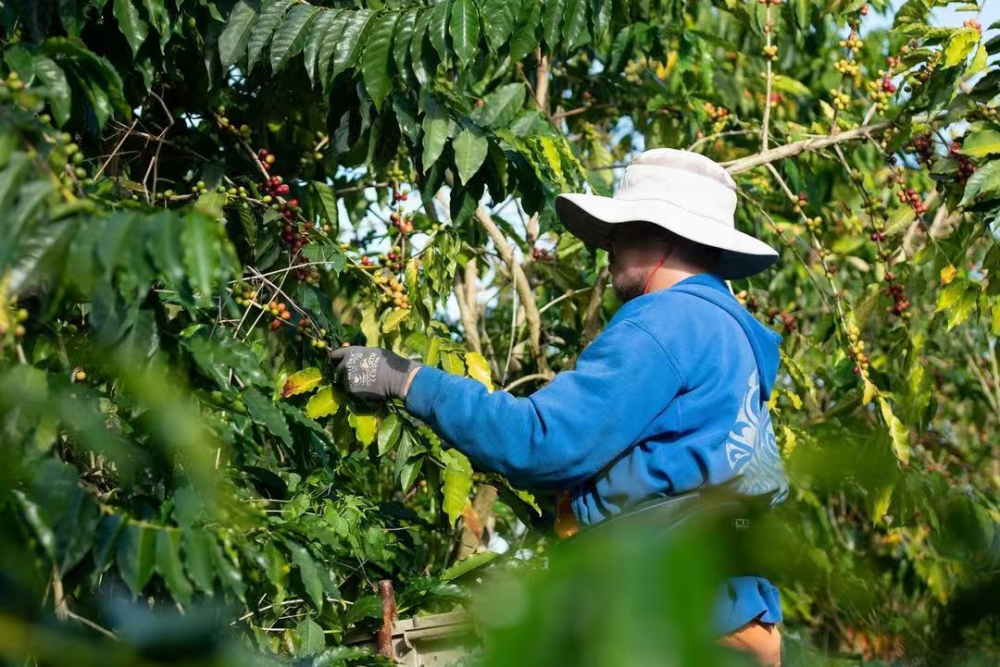
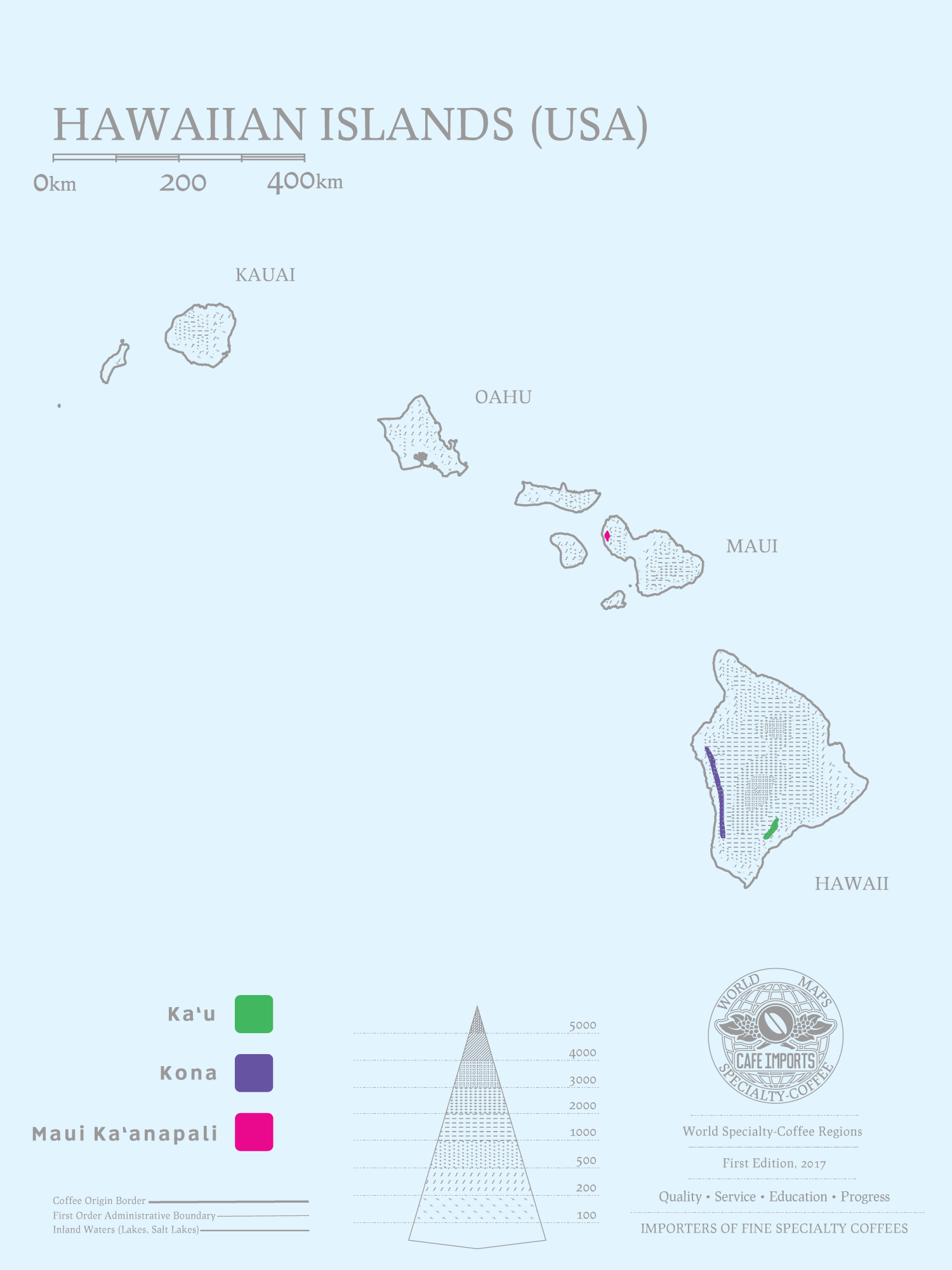
Hawaii Island’s status as Hawaii’s coffee hub stems not just from its elevation but crucially from its climate. While it’s the only island with viable coffee-growing conditions, actual cultivation is limited to elevations between 300 and 1,100 meters. Notably, by typical specialty coffee standards, Kona’s altitude doesn’t meet the “high-altitude premium” threshold—yet this hasn’t stopped it from being regarded as specialty-grade. Industry insiders note that while specialty coffee has general benchmarks, many exceptions exist—part of what makes coffee so fascinating. Today, beyond Hawaii Island, other major islands like Maui, Molokai, and Kauai have developed their own coffee regions, collectively spanning over 7,900 acres and showcasing diverse coffee expressions.
Kona coffee’s history dates to 1813, when the first coffee plants were brought to Oahu—but sugarcane dominated local agriculture, relegating coffee to obscurity. It wasn’t until the late 1820s, when Bourbon was introduced to Hawaii Island, that the first coffee estates emerged over the following decade. Yet Hawaii’s coffee industry faced relentless challenges. In 1858, a severe blight devastated coffee production on Kauai; soon after, the rise of sugarcane farming—lured by higher profits—led landowners to abandon coffee in favor of cane, fragmenting estates into small farms. After the U.S. formally annexed Hawaii in 1898, the repeal of protective coffee tariffs intensified competition, further crippling the industry. Recovery only began in the 1980s, when sugar prices plummeted.
Hawaii’s coffee regions are divided into 12, with Kona being the most prestigious. Due to its scarcity and high production costs, Kona coffee’s demand and price in the specialty market rise yearly—even approaching Jamaican Blue Mountain levels. High-quality Kona beans, prized for their rarity and exceptional flavor, are increasingly hard to come by. Notably, all Kona coffee is certified by the Hawaii Department of Agriculture before export, with burlap sacks sewn with numbered tags and official seals to ensure traceability and authenticity—one reason for its premium pricing. From planting and hand-picking to washed processing, sun drying, and hulling, Kona coffee relies almost entirely on manual labor, limiting yield but ensuring exceptional consistency. Alongside Jamaican Blue Mountain, Kona is regarded as a global benchmark for high-end coffee.
Kona coffee is graded into five tiers based on bean size, weight, and defect rate: Extrafancy (Premium), Fancy (Special), No.1 (Grade 1), Primary (Standard), and Peaberry (also called “male berry”). Peaberry, accounting for only about 5% of Kona beans, often exhibits more concentrated, intense flavors and typically commands higher prices. Beyond Peaberry, the other four grades are primarily differentiated by physical traits. High-quality Kona coffee boasts balanced acidity, subtle wine-like aromas, and a complex, lingering profile—making it a dream brew for many coffee aficionados.
Queen Farm stands out among Kona producers, having won second place at the Hawaii KONA Cup (aka the Gaboria Cup Competition) in both 2009 and 2011. Approximately 70% of its harvest meets top-tier specialty standards, while even its slightly lower-grade beans rival conventional Grade 1 in aroma, earning high praise from roasters and judges. Queen Farm’s Kona coffee, primarily Typica grown at around 1,100 meters and processed via washed method, is a classic choice for experiencing authentic Kona flavor.
For roasting recommendations, Kona beans’ low density calls for moderate charge temperatures. When the beans turn pale yellow and sweet aromas emerge, allow ample resting time for optimal development. A medium-light roast is advised to highlight its delicate fruit acids and floral notes. Suggested roast parameters: Using a Yangjia 800N machine, charge 550g of green beans at 200°C. First crack begins around 9:30 with beans at 187°C; drop at approximately 1:50 post-first crack (193.4°C) to preserve peak flavor.
In our brewing experiments, we tested five devices—V60, siphon, AeroPress, French press, and KONO—recording detailed parameters and flavor profiles for reference:
V60 Dripper: Water temp 90°C, 15g coffee, 1:15 ratio, grind size 80% through a #20 Chinese standard sieve (fine sugar consistency). Method: 30g bloom for 30s, then gentle circular pour to 125g, followed by a second pour to 225g. Total brew time ~2 mins. Flavor: Osmanthus honey sweetness and mulberry notes, smooth mouthfeel, malty sweetness in the finish; cold resembles mulberry tea.
Siphon: 20g coffee, 1:10 ratio, BG-6M grind. Add 210g water to the lower chamber, insert upper chamber at 90°C, add coffee, stir twice, remove heat after 1 min, let residual heat draw coffee back. Flavor: Chestnut, caramel, almond, and toffee layers; round body, prominent aroma.
AeroPress: 88°C water, 10g coffee, 1:15 ratio, BG-5R grind. Pour directly to 147g, stir 3 times at 50s, press at 1:30. Total time ~1:41. Flavor: Sandalwood, herbal, chocolate, and mixed fruit notes; soft mouthfeel with layered complexity.
French Press: 88°C water, 17g coffee, 1:13 ratio, BG-5R grind. Pour directly to 223g, stir at 50s and 1:00, press at 1:31. Flavor: Brown sugar, nut, and cream dominant; high sweetness, silky texture.
KONO Dripper: 88°C water, 15g coffee, 1:15 ratio, BG-6M grind. Similar to V60: 30g bloom, pour to 225g. Total brew time 2 mins. Flavor: Berry, chocolate, and spice notes; bright acidity, smooth mouthfeel.
Overall, V60 and KONO best highlight Kona’s delicate flavors and layers—ideal for those who enjoy bright acids and aromas. Siphon, AeroPress, and French press yield richer bodies with nutty-creamy profiles due to retained oils. Whether new to Kona or a seasoned enthusiast, experimenting with these methods reveals your perfect flavor match.
The above content is compiled by CoffeeHunters, a coffee news website.


