







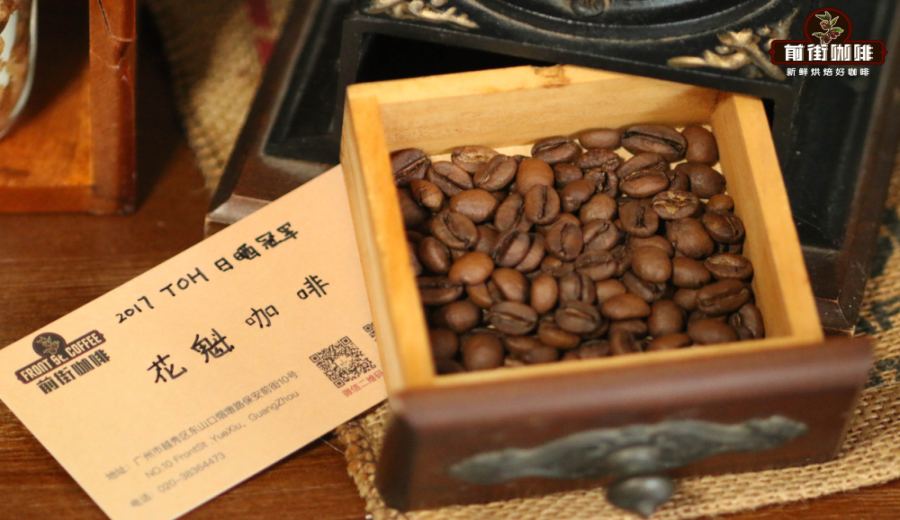
Introduction:This article provides a comprehensive breakdown of the Ethiopia Sidamo Guji Hambella Huakui 6.0 Natural coffee, covering everything from the regional geography and award-winning journey to the intricacies of its processing method. It delves into an in-depth analysis of the green bean characteristics and roast curve design, while also offering professional pour over and siphon brewing parameter recommendations. Whether you’re a beginner looking to learn about African beans or a coffee enthusiast pursuing the ultimate natural flavor, you’ll find practical guidance on bean selection and brewing.
Huakui (Hua Kui), a name widely recognized in the specialty coffee world, actually originates from a specific natural-processed coffee lot in the Hambella area of Ethiopia’s Guji region. In 2017, this coffee made its debut as the champion of the TOH (Taste of Harvest) competition, and has since continued to evolve—from Huakui 2.0 all the way to the current 6.0 version. This article will systematically introduce the origin background, competition accolades, processing techniques, green bean essence, roasting strategy, and optimal extraction methods of Huakui, incorporating real-world cupping and brewing experiences to help you fully grasp this highly acclaimed coffee.
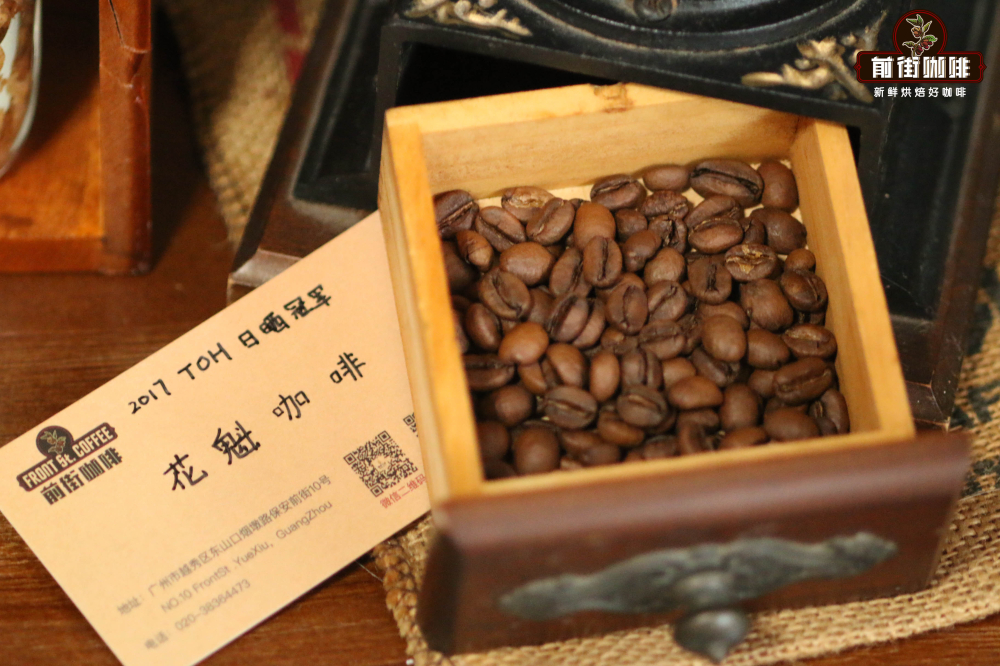
The name Huakui carries a story of glory. In 2017, Ethiopia’s DW Coffee Exporters sent a batch of natural-processed coffee from Hambella to the TOH competition organized by the African Fine Coffees Association. This lot won the Ethiopian regional championship and was promptly given the name “Huakui,” which carries an exotic Eastern charm. Huakui comes from the high-altitude sub-region of Hambella within the Guji zone, geographically located in the Oromia state. To its west, it faces Kochore of Yirgacheffe across the mountains, and to its southeast and north it neighbors Shakisso, Uraga, and Kercha. It’s worth noting that Hambella is not only a core high-altitude area within Guji, but also the cradle of many top-tier natural-processed beans.
In the 2016/2017 harvest season, Huakui won the Ethiopia National Taste of Harvest Competition with its outstanding performance, and subsequently secured second place in the 2017 Regional Africa Taste of Harvest Competition. In the following 2018 harvest season, Huakui 2.0 was introduced—a micro-lot from the core area of Hambella processed at the Shan Shan processing factory—which demonstrated even more refined processing standards and a richer flavor profile.
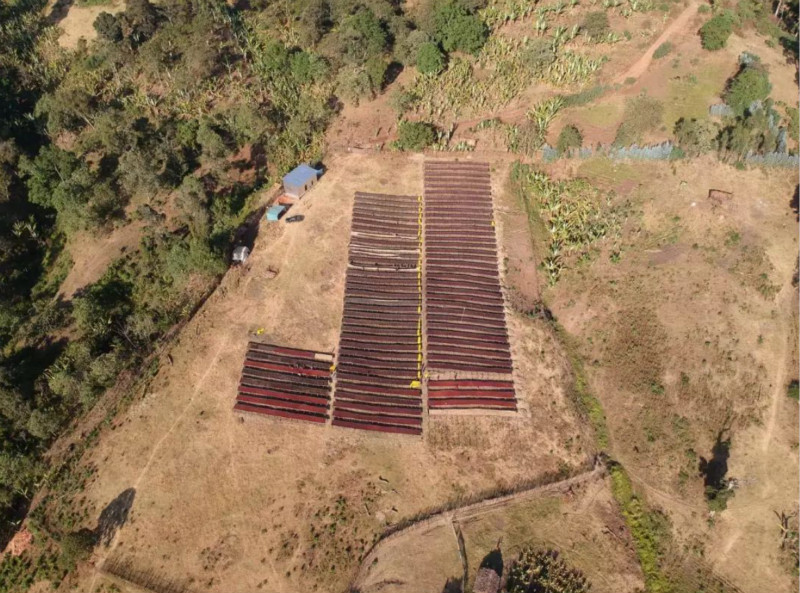
The processing of Huakui is entirely carried out using the natural (sun-dried) method, executed by the Goro Baessa Shan Shan washing station located at an altitude of 2280 meters. The station is surrounded by mountains, and enters the harvest season every December, when the red coffee cherries gradually transform on African raised beds. The coffee farmers here only select fully ripe red cherries and insist on handpicking to ensure quality. During the drying process, the thickness of the cherry layers is strictly controlled, and the cherries are turned every 24 hours. They undergo prolonged fermentation in a naturally cool environment. Notably, nighttime temperatures can drop to around 12°C, which helps slow down the fermentation rate and avoid over-development of flavors, while daytime shading is applied as needed to prevent sunburn on the cherries.
In 2018, Huakui 2.0 went a step further by requiring the red cherries to have a sugar content of 21 or above before starting the sun-drying process, and extending the low-temperature fermentation period to 21 days (whereas typical natural processing lasts only about 10 days) to ensure even and thorough fermentation. This meticulous management not only preserved the intense floral notes and wine-like tones, but also brought out tropical fruit flavors, a juice-like sweet and sour balance, and a bright aftertaste. Additionally, although the processing method follows tradition, scientific instruments were used to more precisely control temperature, humidity, and fermentation progress. As a result, the final green bean moisture content was stably maintained at around 13%, and the beans underwent approximately 50 days of resting to further stabilize the flavors.
When it comes to Ethiopian coffee, one cannot overlook the characteristic of inconsistent bean size. With nearly 2000 coffee varieties in Ethiopia—1927 of which are heirloom varieties—these unselected beans vary significantly in appearance, particle size, color, and even density, and are often mistaken for defective beans. However, this “imperfection” is precisely the key to the rich and varied flavors of Ethiopian coffee. The green beans of Huakui are small-sized heirloom varieties, mostly between 14–15 mesh, with a round shape but slightly smaller compared to the common longberry beans. The bean color is slightly yellowish-green, and there is lower uniformity between batches. These characteristics require special attention during pour over or roasting.
When roasting Huakui, roasters need to adjust the roast curve based on its high density and unique moisture content. Since Huakui green beans possess intense coffee flower fermentation and wine-like aromas—not the typical grassy notes of regular green beans—it is recommended to extend the initial drying phase and control the heating rate before first crack to preserve delicate aromatic compounds. In actual roasting tests, the charge temperature was set at 190°C, and the optimal flavor balance point was sought by adjusting the drop temperature and development time. After multiple rounds of cupping, the optimal roast curve was determined as follows: 190°C charge temperature, yellowing point around 150–153°C, first crack beginning around 9’50”, with development time after first crack controlled between 1 minute and 1 minute 30 seconds. The beans are dropped at around 193°C when the aroma of strawberry jam is detected, with the entire process kept within 11 minutes, presenting the fullest strawberry aftertaste and premium perfume-like character.
As for extraction, both pour over and siphon are excellent methods to highlight the flavors of Huakui. It is recommended to use a resin V60 filter cone, which enhances aroma expression and extends the acidity transition from hot to cold. The grind size is suggested to be medium-fine (e.g., EK43s setting 10), with water temperature around 91°C. Begin with a 30-second bloom using 25g of water, then proceed with multiple pours to reach a total of 226g, with a total brew time of about 2 minutes and 5 seconds. These parameters bring out Huakui’s melon, strawberry jam, and jackfruit sweetness and acidity, with distinct layers and a long-lasting aftertaste—perfect for coffee enthusiasts seeking refined natural flavors.
The above content is compiled by CoffeeHunters, a coffee news website.


