







Introduction:Rwanda, this small African nation hailed as the "Land of a Thousand Hills," is not only blessed with breathtaking mountain scenery but also nurtures specialty coffee with bright acidity and rich aftertaste. This article will delve into Rwanda’s coffee growing background, major varieties, and washed processing methods, while analyzing its journey from post-war recovery to international certification. Whether you’re looking to explore the stories behind coffee origins or seeking brewing tips for high-quality washed Red Bourbon, you’ll find practical information here.
Although Rwanda is relatively small in both size and population among African nations, it has become an emerging force in the global specialty coffee landscape thanks to its highly concentrated volcanic soils and suitable altitudes. The country is home to around 430,000 smallholder farmers, each managing coffee farms averaging less than one hectare in size, with most growing fewer than 200 coffee trees — a classic smallholder economic model. While such a micro-production system presents challenges, it also fosters highly refined field management and processing workflows.
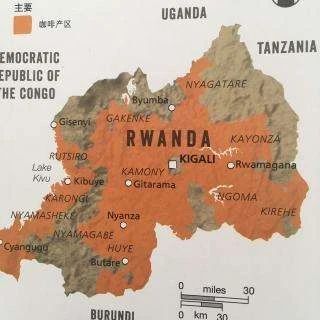
Located near the equator and inland in East Africa, Rwanda borders Uganda, Tanzania, Burundi, and the Democratic Republic of the Congo. The country’s terrain is predominantly hilly, earning it the reputation of the "Land of a Thousand Hills." Most areas lie between 1,350 and 1,850 meters above sea level, enjoying mild and stable climates. Coupled with naturally nutrient-rich volcanic soils, these conditions provide nearly ideal environments for Arabica coffee cultivation. It’s worth noting that Rwandan farmers rarely rely on chemical fertilizers or pesticides, instead maintaining soil vitality through organic mulching and traditional methods.
Dating back to 1904, German missionaries first introduced coffee to Rwanda. However, during the colonial period, local coffee was primarily of commercial bulk quality, mainly supplied to the market of the colonial power, Belgium, with little development toward specialty coffee. It wasn’t until the aftermath of the 1994 genocide, which claimed over a million lives, that the country’s economy and agricultural structure nearly collapsed, dragging the coffee industry into a slump. In the post-war period, with assistance from the government and international organizations, Rwanda gradually rebuilt its coffee industry foundation and moved toward a specialty-focused direction.
In 2001, the National Agricultural Export Development Board of Rwanda (NAEB) was established to enhance coffee quality and export value. Under policy guidance, farmers stopped processing coffee cherries themselves and instead delivered harvested cherry to nearby washed processing stations for standardized fully washed processing. In just over a decade, the number of washing stations nationwide rapidly expanded from just two to 220, most operated by private exporters or farmer cooperatives. Each washing station typically serves 50 to 100 farms, ensuring a stable and controllable supply of raw materials.
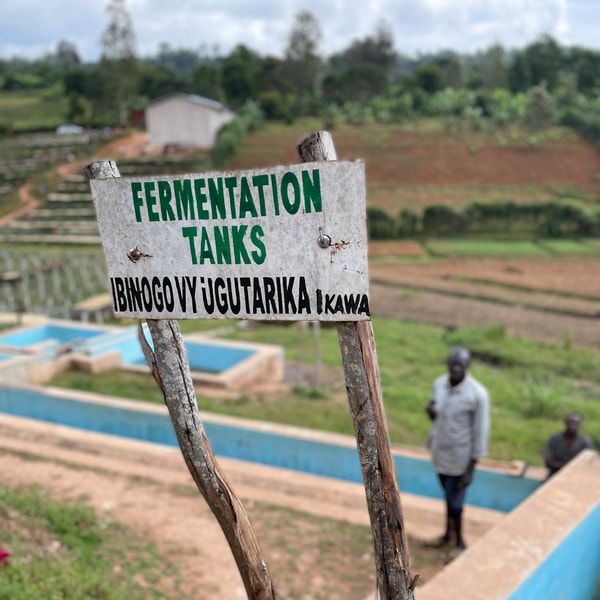
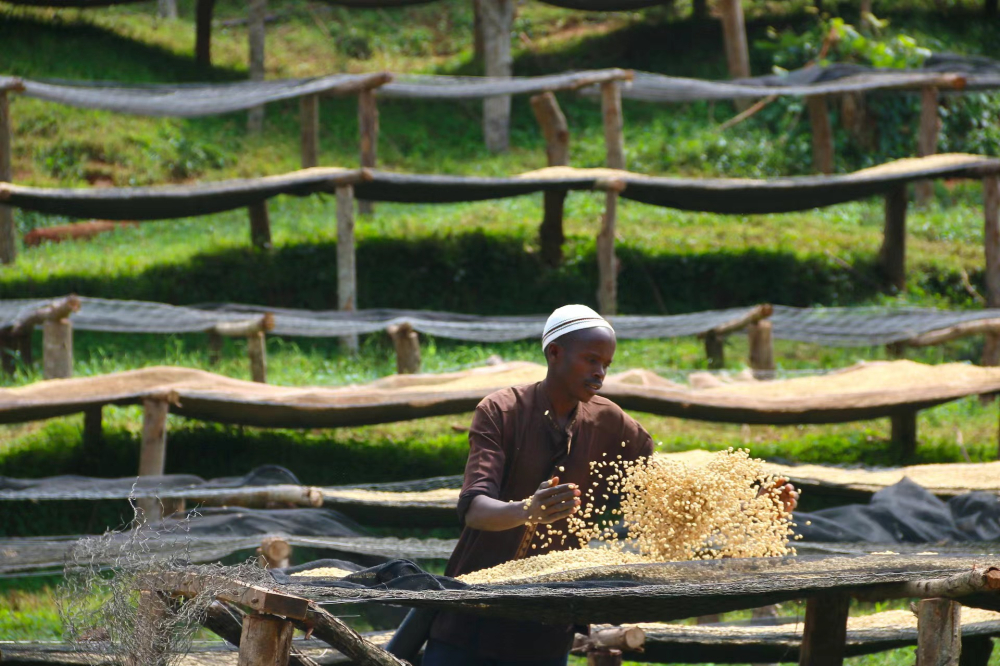
The washed processing procedure for Rwandan coffee is meticulous: harvested coffee cherries are first manually sorted to remove unripe and defective ones; the pulp is then removed, and the beans undergo 12 to 18 hours of fermentation at low temperatures to break down the mucilage layer. Next, the beans are thoroughly washed with clean water, after which the parchment-covered beans are placed on raised beds to undergo slow sun drying. Workers frequently turn the beans to ensure even moisture reduction below 14%. Strict control over the drying rate during this process is key to maintaining balanced flavors.
Currently, the Bourbon variety accounts for over 90% of Rwanda’s coffee production, with a small number of farms also cultivating Bourbon variants such as BM-139 and Jackson. The southern and western mountainous regions, blessed with higher altitudes and well-established washing facilities, produce particularly outstanding coffee. Notable growing regions include Gitesi, Huye Mountain, and Mibirizi. Compared to the common practice of cement-floor drying in other regions, Rwanda often employs African beds paired with shade cloths to precisely control the air-drying speed, stabilizing moisture content at around 11% within approximately 10 to 15 days, helping preserve more organic flavor compounds.
In 2000, with support from the PEARL project (Partnership for Enhancing Agriculture in Rwanda through Linkages project) led by Michigan State University in the United States, Rwanda began its modernization transformation of the coffee industry. This initiative, in collaboration with institutions such as Texas A&M University and the National University of Rwanda, helped improve farmers’ planting and processing techniques and led to the construction of 46 modern washing stations across the country. The project not only boosted coffee exports but is also regarded as one of the most impactful agricultural development programs since Rwanda’s independence. Additionally, Rwanda was the first African country to host the COE (Cup of Excellence) competition, which has been held five times to date, showcasing its unwavering pursuit of quality.
Rwandan coffee is renowned for its pronounced floral and fruity notes, silky tea-like body, and excellent balance of acidity and sweetness, standing out among coffee-producing nations in Africa. For consumers who prefer pour over brewing, Rwandan washed Red Bourbon is an excellent entry choice. Take beans from the high-altitude Southern Province as an example: medium-light roasting can highlight its refreshing citrus acidity and rich nutty, chocolatey finish, making it ideal for coffee enthusiasts who seek layered flavor profiles.
In terms of roasting recommendations, due to the high growing altitude and dense bean density of Rwandan coffee, it is advised to use relatively high dropping temperatures and moderate heating rates to fully unlock their potential. In practice, you can adjust roaster parameters — for instance, for the Yangjia 800N model, it is recommended to load about 550 grams of beans, fine-tuning heat based on bean surface color and first crack sounds to achieve optimal flavor expression.
For brewing, the Kono filter cone is recommended. Its unique rib design and low airflow characteristics extend the contact time between water and coffee grounds, improving extraction uniformity and delivering a richer mouthfeel. Specifically, a staged extraction method can be used: start with a 30-second bloom using 30 grams of water, then pour in a slow circular motion until reaching 125 grams for the first pour; when the water level is about to expose the coffee bed, continue pouring to 225 grams, then stop. Allow all the water to fully drip through the filter before finishing — keeping total brew time around two minutes yields a high-quality Rwandan pour over coffee with balanced flavors and distinct layers.
The above content is compiled by CoffeeHunters, a coffee news website.


