








Introduction:Honey processing is a crucial step that influences the flavor of coffee, with Costa Rica’s raisin honey and black honey being particularly noteworthy. This article delves into the processing mechanisms, drying procedures, and flavor characteristics of both methods, helping readers understand how the amount of mucilage retained affects sweetness and aroma. Through real-world regional examples, it also highlights the unique features and tasting notes of these two special processing methods.
The processing method of green coffee beans is key to determining the final flavor profile of a cup of coffee. Common processing methods include natural (sun-dried), washed, honey-pulped natural (semi-washed), and honey processing, with honey processing further divided into yellow honey, red honey, black honey, and white honey based on the varying levels of mucilage retained. In addition, there is a more unique and increasingly attention-grabbing method—raisin honey processing. This article will start from the basic principles of honey processing, explore the relationship between mucilage retention and sweetness, compare in detail the practical differences between conventional honey processing and raisin honey processing, and analyze the distinctive flavor characteristics of black honey and raisin honey processing through actual case studies from Costa Rica.

In the field of coffee processing, natural (sun-dried), washed, honey-pulped natural (semi-washed), and honey processing form the four foundational processing categories. Naturally processed coffee often exhibits rich tropical fruit notes, distinct layers, and prominent sweetness; washed processing is known for its clean, bright acidity and clarity; honey-pulped natural strikes a balance between the two, offering softer and more harmonious flavors. Honey processing, originating from honey-pulped natural, achieves even more intense sweetness and complexity by retaining mucilage, which is why it is highly favored in the specialty coffee market.
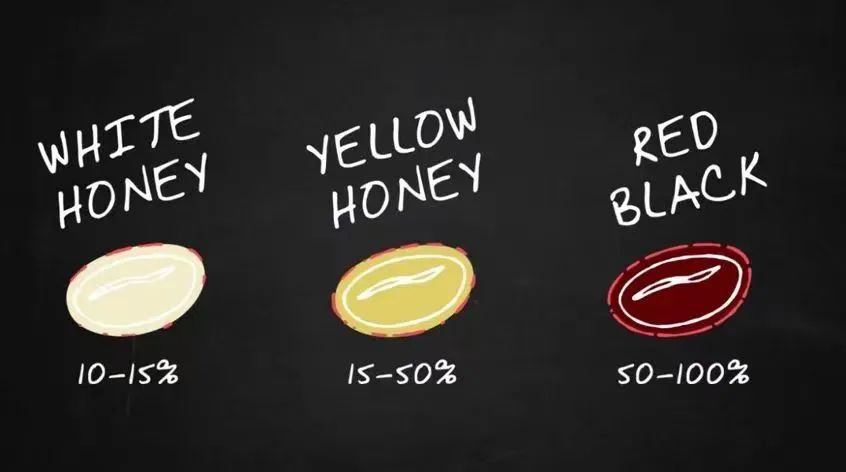
There are many branches of honey processing, categorized into yellow honey, red honey, black honey, and white honey based on the amount of mucilage retained. These names primarily reflect the degree of mucilage left on the beans: the more mucilage retained, the higher the sweetness and the longer the drying time. Among them, black honey retains nearly all the mucilage, resulting in the most intense sweetness, but due to higher risks and greater processing difficulty, it generally commands a higher price. However, beyond these traditional classifications, there is a particularly distinctive variation—raisin honey processing.
Raisin honey processing may sound related to honey, but its name actually comes from the viscous texture that the mucilage develops after oxidation during processing, resembling the appearance of honey, hence the name. Contrary to the common misconception that honey is added, no honey is involved in honey processing at all—the flavor is influenced solely by the natural sugars in the mucilage. Similarly, the name raisin honey processing can easily lead to associations with raisins, but its key feature is not the addition of raisins, but rather a special pre-drying step before processing.

The conventional honey processing procedure typically begins with the flotation stage, where unripe or defective beans are removed. Next, the coffee cherry’s skin and pulp are mechanically removed, but the sugar-rich mucilage layer is retained, followed by sun drying. The drying time is adjusted according to the amount of mucilage retained—the more mucilage, the longer the drying period. For example, black honey usually requires the longest drying time, followed by red honey, yellow honey, and white honey. This process not only affects sweetness but also directly shapes the intensity and complexity of the final flavor.
In contrast, raisin honey processing differs significantly in the initial stage. After the coffee cherries are harvested, farmers directly sun-dry the whole intact coffee fruits for at least three days until they shrink and take on a raisin-like withered appearance. This pre-treatment method requires almost no water and can fully preserve the mucilage, avoiding potential mucilage loss caused by mechanical handling in conventional honey processing. Only after this sun-drying phase is the skin removed and the subsequent honey processing steps carried out. As a result, the contribution of the mucilage’s sugars is maximized, enhancing the coffee’s body and flavor richness.
Costa Rica, as one of the pioneer regions in honey processing innovation, is renowned for its black honey processing, which is famous for its high sweetness and intense tropical fruit aromas. However, because black honey retains almost all the mucilage, it demands strict drying conditions and processing techniques, with a higher risk of spoilage during the process. This requires more meticulous monitoring by farmers and is reflected in its relatively higher market price. A typical example is Costa Rica’s blackberry-flavored beans, which often showcase layered profiles of floral, berry, winey chocolate, and sweet orange notes, making it a classic representation of black honey processing.
Raisin honey processing, with its unique pre-treatment step, delivers a distinctly different flavor profile. Take the Mozart variety from Costa Rica’s Canet Estate as an example: after raisin honey processing, the coffee emits intense fermentation aromas, similar to those encountered during grape fermentation, which easily evoke associations with raisins. In addition to the common berry and caramel notes, this particular bean also exhibits unique blueberry and lavender flavors, with a finish that carries a deep dark chocolate aftertaste. The overall performance is delicate and truly memorable.
The above content is compiled by CoffeeHunters, a coffee news website.


