








Introduction:Caramel Macchiato is a favorite among many coffee enthusiasts, but do you know how to spell it in English? Is Starbucks’ version worth trying? This article delves into the historical evolution of this classic beverage, compares the differences between a regular caramel macchiato and Starbucks’ version, and takes you step-by-step to make a premium version with a crispy caramel crust. Not only does it elevate the flavor profile, but it also shares tips on bean selection and espresso extraction so you can master everything from basics to advanced techniques.
When it comes to Caramel Macchiato, many coffee lovers are familiar with it, but have you ever wondered what its correct English name is? Also, is the Caramel Macchiato flavor introduced by Starbucks really worth a try? This article will not only introduce you to the origins and evolution of this classic coffee, but also help you understand the differences between a standard caramel macchiato and Starbucks’ version. More importantly, we’ll teach you step-by-step how to make an upgraded Caramel Macchiato with a crispy caramel outer layer and richer layers of flavor.
You might be familiar with the charmingly crisp sugar top of a crème brûlée, beneath which lies a smooth and tender custard. The contrast between these two very different textures creates a delightful surprise. Today, we’re bringing that contrast of “crisp” and “soft” into the world of coffee. A conventional Caramel Macchiato is usually made by drizzling syrup on top—it’s sweet without being cloying, but it lacks that surprising crunch. What we’re going to do is add a layer of caramelized crust to this cup of coffee, giving the overall flavor more dimension.
The origin of the Caramel Macchiato can actually be traced back to the original meaning of the word “Macchiato”—which in Italian means “mark” or “stain.” In the early days, Italy had a strong culture of pure espresso, but some people weren’t used to its intense bitterness, so they asked baristas to add a small amount of milk to mellow it. Since the espresso with added milk looked very similar to the original, to avoid confusion among servers, a bit of milk foam was used to “mark” the coffee on top. This became the prototype of the original Macchiato.
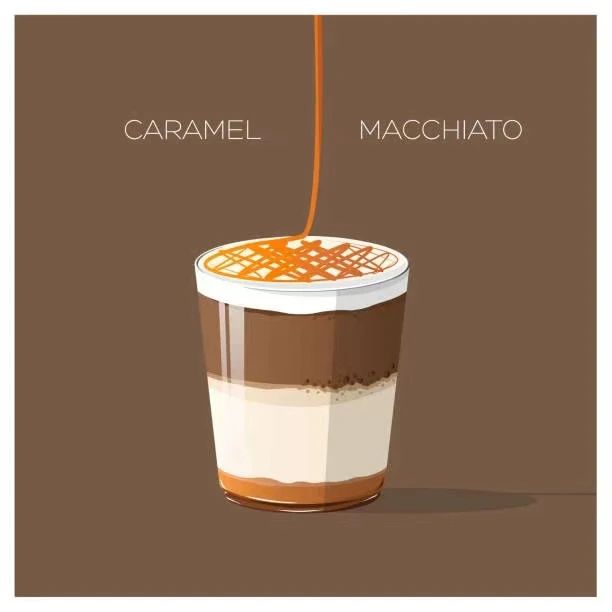
With the advancement of coffee roasting technology, modern espresso is no longer as harsh but instead showcases a rich, mellow, and aromatic profile, thus no longer requiring milk to soften the taste. This led to the gradual decline of the traditional Macchiato. It wasn’t until the 1990s that the “Caramel Macchiato” burst onto the scene, becoming a brand-new type of drink. It not only continued the basic concept of a Macchiato but also added the romantic notion of a “sweet mark.” The common method is to mix vanilla syrup with espresso, add steamed milk and milk foam, and then use caramel syrup to draw decorative patterns on the surface of the foam. The flavor is sweet yet not overly sugary, making it very popular among consumers.
Next, let’s make a “different” kind of Caramel Macchiato—that is, the advanced version with a crispy caramel crust. The process is similar to that of a regular Caramel Macchiato, with the one key difference being: at the end, instead of using a syrup drizzle, we use a blowtorch to caramelize sugar into a crust, giving the drink a unique crunchy texture and rich caramel aroma.

To successfully make this Caramel Macchiato, you’ll need the following materials and tools: about5 grams of fine white sugar, a blowtorch,10 milliliters of vanilla syrup, a shot ofdouble espresso (about 40 milliliters), and milk with thick milk foam. Note: it’s recommended to use aheat-resistant materialfor the cup to prevent it from cracking during the heating process.
If you’re aiming for a better coffee base flavor, it’s recommended to use a blend of beans from Brazil, Indonesia, and Vietnam. These beans are typically dark roasted, offering a rich and mellow aroma that pairs well with milk and syrup. They also yield a generous and delicate coffee crema, adding extra points to the overall drink. When selecting beans, pay attention to roast level and regional flavor characteristics to achieve optimal extraction.
Here are the steps: First, use20 grams of coffee groundsto extract about40 milliliters of espresso, then pour the extracted espresso into the prepared10 milliliters of vanilla syrup, stir well, and set aside. You can adjust the sweetness of the syrup to your personal taste—those who prefer it sweeter can slightly increase the amount.
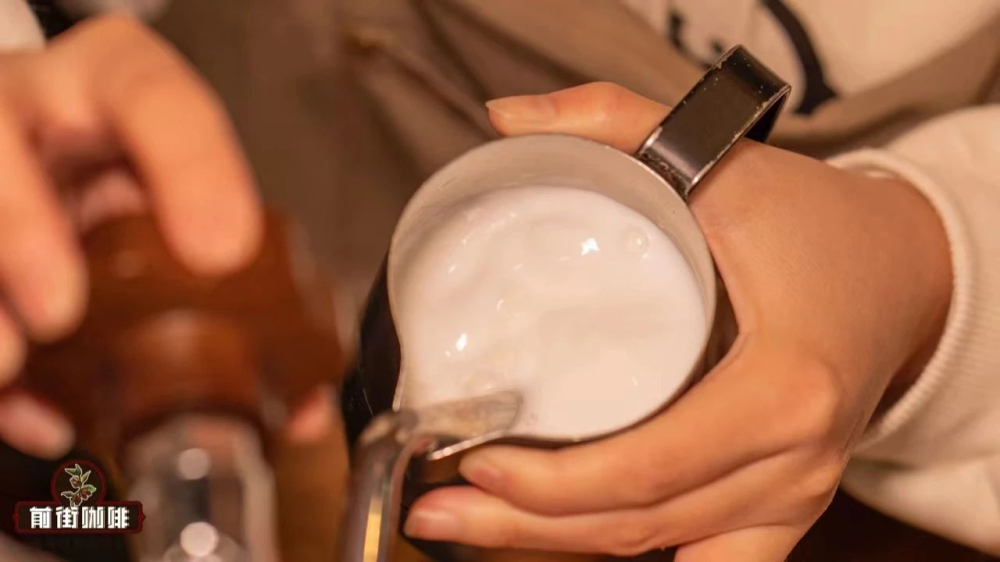
Next, use a milk frother to create medium-to-thick milk foam with a thickness of about0.5 to 1 centimeter, then pour the milk foam into a preheated heat-resistant cup. At this step, be sure to choose ceramic or glassware that can withstand high temperatures to avoid deformation or cracking when heated.
Then, pour the previously prepared espresso (with vanilla syrup) over the milk foam in the cup. There are two pouring methods: one is to pour the milk foam first and then add the espresso for a fresher surface; the other is to pour the espresso first and then cover it with milk foam for a more even blend. Choose whichever you prefer.
Next comes the most crucial “crust” step: place a cloth at the bottom of the cup to catch any spilled sugar. Evenly sprinkle5 grams of fine white sugaron the surface of the milk foam—only the parts touched by the sugar will be caramelized by the flame. Pick up the blowtorch, hold the flame aboutthe width of three fingers(approximately 5 to 7 centimeters) away from the liquid surface, and steadily caramelize the sugar until it turns a beautiful golden color and emits a caramel aroma. Be careful with the heat to avoid burning it too much.


When the sugar turns caramel-colored, it means the white sugar has completed the caramelization reaction, resulting in a crunchy texture and rich sweetness. Now, you can enjoy this specially made Caramel Macchiato. Be cautious of the cup rim temperature when sipping—the first sip will let you experience the interplay of layers between the crispy caramel, the vanilla-flavored coffee, and the milk beneath. Crispy on the outside, soft on the inside, sweet yet not cloying—perfect for coffee lovers who enjoy a touch of sweetness.
Although this method of making Caramel Macchiato with a flame-caramelized crust has long existed, the process is relatively complex and time-consuming, not aligning with the quick-service nature of typical Italian-style coffee shops. As a result, it’s rarely seen in commercial cafes. However, if you enjoy making coffee yourself or want to enjoy a café-quality drink experience at home, give this upgraded Caramel Macchiato a try. It’s sure to bring you an unprecedented flavor surprise.
The above content is compiled by CoffeeHunters, a coffee news website.


