







Introduction:Hawaiian Kona coffee is renowned worldwide for its rarity and unique flavor profile, making it a dream bean for many coffee enthusiasts. This article delves into the growing environment, historical background, and grading system of Kona coffee, while focusing on the Typica variety and washed processing method from the renowned Queen’s Farm. It reveals the secrets behind its sweet and smooth taste, and provides practical flavor descriptions and pour over recommendations to help you fully appreciate the charm of this premium coffee.
Hawaiian Kona coffee is considered one of the world’s top specialty coffees. Not only is its production limited, but its price is also relatively high, yet it remains highly sought after by coffee lovers globally. This coffee from the Kona region of Hawaii’s Big Island is celebrated for its sweet, rich, and smooth mouthfeel, making it a prized choice for many coffee aficionados. This article will comprehensively introduce this highly regarded coffee, covering everything from terroir and historical development to grading standards, as well as the cultivation and processing methods of the famous Queen’s Farm. It also shares actual cupping results and pour over suggestions.
When it comes to Hawaii, many coffee connoisseurs immediately think of Kona coffee. As one of the world’s second most expensive coffees, Kona is not only extremely limited in production, but also boasts extraordinary flavors due to its exceptional growing conditions. However, obtaining authentic Kona coffee beans from the Hawaiian Kona region is not easy, which makes understanding its cultivation conditions and regional characteristics particularly important.
Hawaii is the only island state in the United States, composed of 132 volcanic islands in the central Pacific. These islands not only have fertile soil but also offer a unique climate suitable for coffee cultivation. Hawaii has an island-type climate where, despite occasional tornadoes, there is generally ample rainfall, moderate sunlight, and no threat of frost, providing ideal conditions for coffee growth. Additionally, the clouds that often appear in the afternoon provide natural shading for coffee trees, reducing direct sunlight—another key factor contributing to the delicate flavor of Kona coffee.
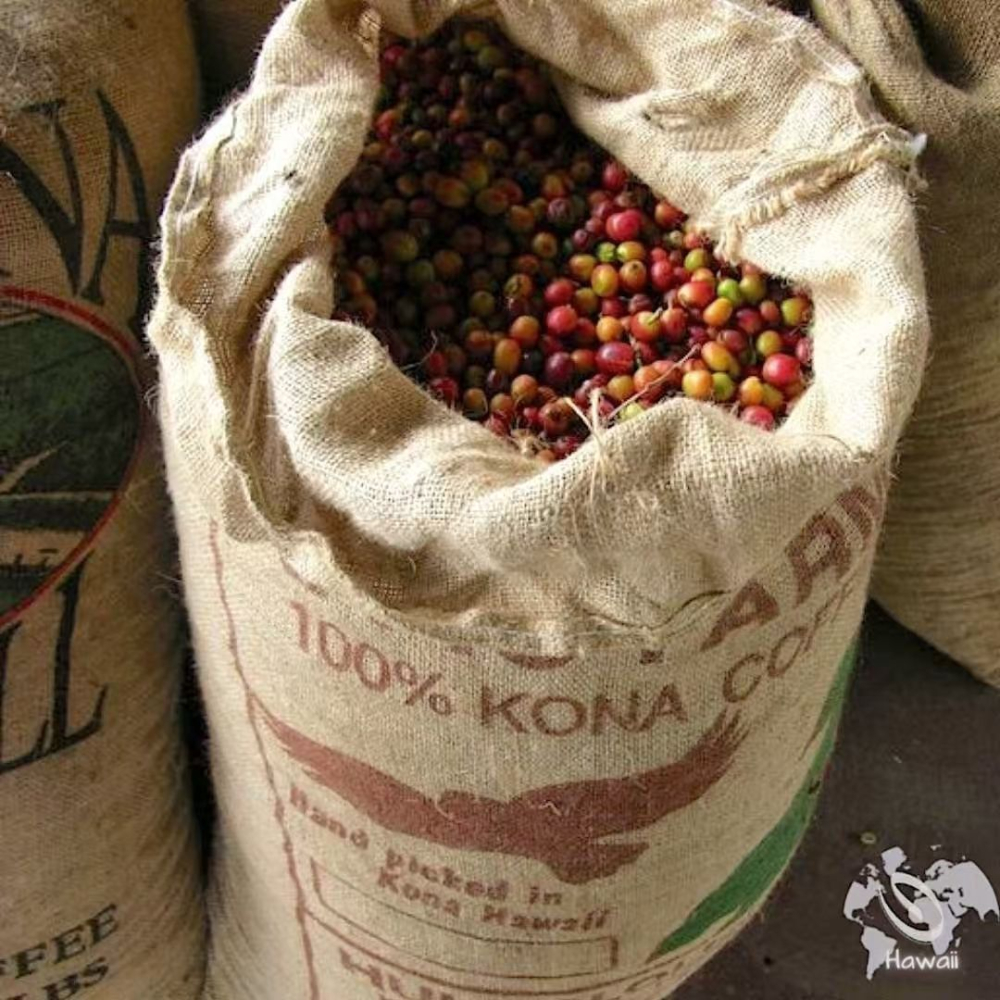
It’s worth noting that Hawaii is the only U.S. state that produces coffee. Although the overall area is limited, only about 1,400 hectares are suitable for coffee cultivation, making Kona coffee production extremely scarce. Due to the high domestic coffee consumption demand in the U.S., Kona coffee is primarily sold domestically, with very little exported, which directly drives up its market price. Moreover, there are many “Kona blends” on the market that contain only small amounts of Kona beans, so consumers should pay special attention when purchasing. Other Hawaiian islands, including Maui, Kauai, and Molokai, have also gradually begun coffee cultivation in recent years, but the Kona region remains the most representative.
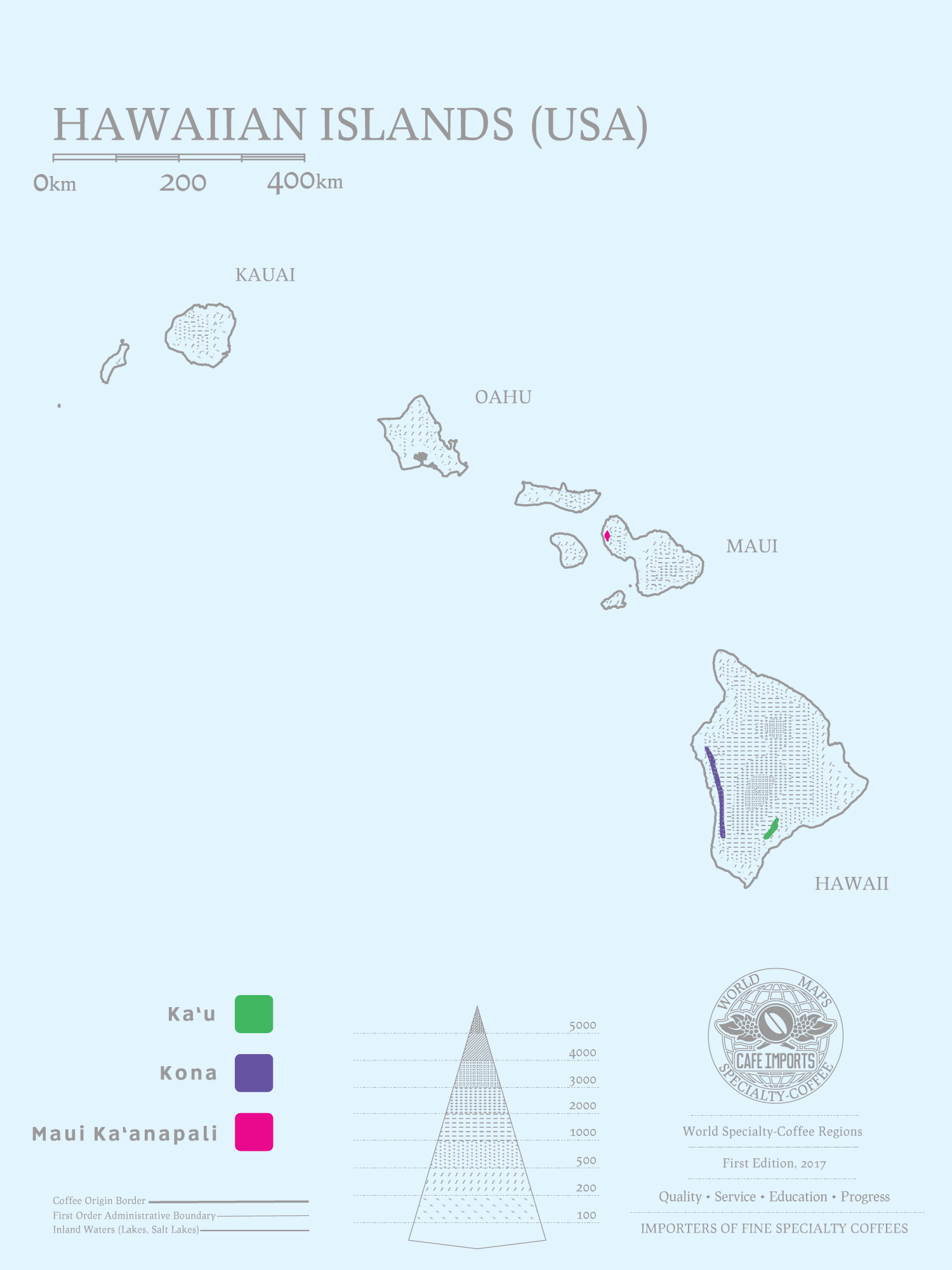
Coffee cultivation in Hawaii is mainly concentrated in the Kona region, covering five primary areas on the southwestern coast of the Big Island, including Waiakea, Hualalai, Kealakekua, Puna, and Hamakua. Each island produces coffee with its own unique flavor characteristics. For example, coffee from Kauai is generally soft and smooth, while that from Molokai is known for its rich body and low acidity, and Maui’s coffee exhibits more pronounced acidity and intense flavor. However, Kona coffee, thanks to its volcanic soil and meticulous cultivation management, is regarded as the flagship of Hawaiian coffee.
The history of Kona coffee dates back to the early 19th century. In 1817, Spanish advisor Don Francisco de Paula Marin first attempted to introduce coffee to Hawaii but was unsuccessful. It wasn’t until 1825, when the then-mayor of Hawaii brought coffee seedlings from Brazil and successfully planted them in the Manoa Valley, that the development of Hawaiian coffee began. Subsequently, in 1828, Bourbon variety coffee was introduced to the Big Island and gradually became the main cultivar. In 1836, large-scale coffee planting began on Kauai, but a pest infestation in 1858 nearly destroyed the local coffee industry. Only the Kona region of the Big Island survived and gradually established its irreplaceable status.
In terms of quality grading, Kona coffee beans are categorized into five grades based on criteria such as size, defect rate, and moisture content. These include Extra Fancy, Fancy, Prime, No.1 Peaberry, and Peaberry Prime. Among these, Extra Fancy is the highest grade, requiring beans larger than 19 mesh, a moisture content of 9%–12%, and fewer than 10 defective beans per 350g of green coffee. The Fancy grade requires beans larger than 18 mesh with no more than 16 defects. Peaberry (round beans), due to their rarity and unique flavor, are also highly favored in the market. Notably, Hawaii hosts an annual Kona coffee cupping competition, where Queen Farm won second place in both 2009 and 2011. Its coffee beans are known for their high quality.
The Hawaiian Kona coffee beans introduced here are from Queen’s Farm in the Kona region, grown at an altitude of about 1,100 meters, and the variety is the ancient Typica. Typica is one of the original coffee varieties from Ethiopia. Although it offers elegant flavors, it is relatively delicate, with poor disease resistance and therefore limited yield, indirectly driving up costs. This coffee is processed using the washed method, which fully highlights the coffee’s clean flavor and delicate acidity. The washed processing steps include removing floaters, stripping the pulp and flesh, fermenting to remove mucilage, multiple washes, and finally drying and hulling. While the entire process requires a significant amount of water, it ensures a clear and crisp taste.
After actual cupping, this Kona coffee demonstrates a distinct sweet aroma, a smooth mouthfeel, and a rich flavor profile that includes osmanthus, mulberry fruit juiciness, and a hint of malt sweetness, along with complex notes of fruit, wine, and spices. It is a well-balanced premium coffee. For coffee enthusiasts who enjoy exploring different flavor profiles, Kona coffee is definitely worth a try.
In summary, Hawaiian Kona coffee owes its unique market position to its exceptional growing environment, rigorous grading system, and producers like Queen’s Farm who focus on quality. If you’re interested in specialty coffee, take the time to explore the flavor characteristics and brewing recommendations of Kona coffee to appreciate the allure of this world-class brew.
The above content is compiled by CoffeeHunters, a coffee news website.


