








Introduction:Many coffee enthusiasts, faced with a large amount of unused coffee beans, often consider whether to freeze them to extend their freshness. Freezing can indeed slow down the loss of aroma, but improper handling may lead to moisture absorption or the absorption of odors. This article delves into the three key aspects of freezing coffee: strict sealing, avoiding condensation, and portioning to reduce repeated access. It also provides practical steps and precautions to help you effectively maintain the freshness of your coffee, enhancing its flavor during pour over or extraction.
After roasting, the aromatic compounds and carbon dioxide in coffee beans are gradually released over time. These substances are the main sources of coffee flavor and the key to creating layers in every sip. However, these precious volatile components can be lost more quickly when exposed to air, light, or moisture. Therefore, how to delay the loss of aroma and keep coffee at its best during its prime is a topic every coffee lover should pay attention to.
Generally speaking, good sealing and light avoidance can already effectively prolong the vitality of coffee beans. But if you purchase more than you can consume in a short period, many coffee enthusiasts choose to freeze their beans, hoping that the low-temperature environment will further lock in the flavor. However, while freezing can to some extent slow down the decline in aroma, improper methods can backfire, causing the beans to become damp, alter in taste, or even absorb other odors from the fridge.

The principle behind freezing is that low temperatures can significantly slow down chemical reactions and the evaporation of aromas, thus helping to preserve the freshness of the beans for a certain period. However, freezing is not a cure-all; it can only delay the loss of flavor, not completely prevent it. In addition, due to the large temperature difference between the frozen environment and everyday use, if proper measures aren’t taken, the beans may absorb moisture due to condensation or pick up odors from other foods, affecting the final extraction and flavor. Therefore, there are three key points to keep in mind when freezing coffee: sealing, avoiding condensation, and minimizing repeated access.
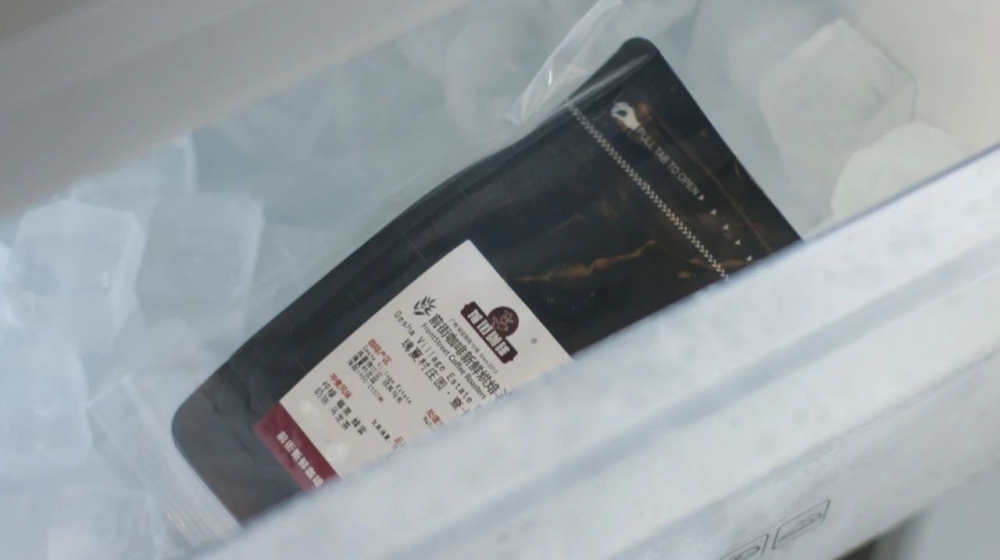
First, let’s talk about sealing. Many households do not have a dedicated refrigerator for coffee beans, so the beans are often stored together with other foods. If the seal is not airtight, not only will it fail to effectively lock in the aroma, but it can also cause the beans to absorb odors from surrounding food items, leading to what is commonly known as "fridge smell," which can severely damage the original flavor profile. Therefore, before placing coffee beans in the freezer, be sure to use professional airtight containers, vacuum bags, or containers with multi-layer gas and moisture barriers to ensure complete closure, preventing the infiltration of air and foreign odors.
Secondly, condensation is another aspect of frozen storage that is often overlooked.When coffee beans are taken out of the cold frozen environment and directly exposed to room-temperature air, moisture can quickly condense on the surface of the beans due to the temperature difference.This is what is called the condensation phenomenon. This surface moisture can not only alter the moisture content of the beans, leading to uneven grinding, but may also interfere with the extraction process, resulting in a flat-tasting coffee or even off-flavors. To avoid this issue, it is recommended to grind and brew the beans as soon as they are taken out, or allow them to return to room temperature before opening the package. If you are not using them immediately, do not open the frozen sealed package—letting the beans return to room temperature while still sealed can effectively prevent condensation.
Finally, repeated access is another common mistake. Many people who freeze their coffee tend to take out a larger quantity at once, then put any leftovers back in the freezer. Such repeated temperature changes can not only accelerate the loss of aroma but also increase the risk of moisture absorption. Therefore, it is recommended to pre-portion your coffee beans before freezing,dividing them into individual servings based on your usual brewing amounts.Seal each portion separately before placing them in the freezer. This way, you only need to take out one portion at a time, avoiding repeated opening and closing of the freezer, and also better maintaining the freshness of the remaining beans.
In summary, freezing coffee beans can indeed help delay the decline in aroma to a certain extent, especially in situations where you’ve purchased a large quantity and can’t use them all up in the short term. However, if you want to truly benefit from freezing, it is essential to strictly control airtightness, be mindful of condensation caused by temperature differences, and minimize unnecessary repeated access. Only by doing so can you enjoy the convenience of freezing while still preserving the beans’ most original and captivating aroma and flavor.
Of course, if you prefer a simpler and more worry-free way to enjoy fresh coffee, it’s advisable to buy in moderate amounts to ensure that every brew uses beans at their best. After all, the most captivating flavors of coffee are often found at the peak of their freshness.
The above content is compiled by CoffeeHunters, a coffee news website.


