








Introduction:Kenyan coffee holds an unshakable position in the global specialty coffee scene. Among them, Starbucks Kenya AA is renowned for its elephant packaging design, evoking the wildness and purity of the African savannah. This article delves into the distribution of Kenyan coffee-growing regions, the characteristics of classic varieties such as SL28 and SL34, the rigorous green bean grading system, and the most representative K72 washed processing method. It also shares practical brewing suggestions and flavor profiles to help you fully understand this classic African bean with its distinctive cherry tomato acidity.
Kenyan coffee has always maintained a strong presence in the global specialty coffee market. Among them, Starbucks' Kenya AA coffee beans feature an elephant as the main visual on the packaging, instantly bringing to mind the majestic landscapes of Africa’s vast plains and wildlife. This design not only enhances brand recognition but also resonates with Kenya’s natural backdrop as a major coffee-producing nation in East Africa. This article will deeply explore the multiple charms of Kenyan coffee—from the growing environment and varietal genetics, to processing techniques and grading classifications—offering you a comprehensive understanding of this uniquely flavored specialty bean.
Although the history of Kenyan coffee is not as long as that of neighboring Ethiopia, its development is closely tied to colonial-era Britain. Coffee was officially introduced to Kenya in the early 20th century, but the region quickly established a systematic approach to cultivation and management. As a result, Kenya once led other producing countries in varietal development, green bean grading, and processing technology. This foundation remains a key reason for the consistent quality of Kenyan coffee today.

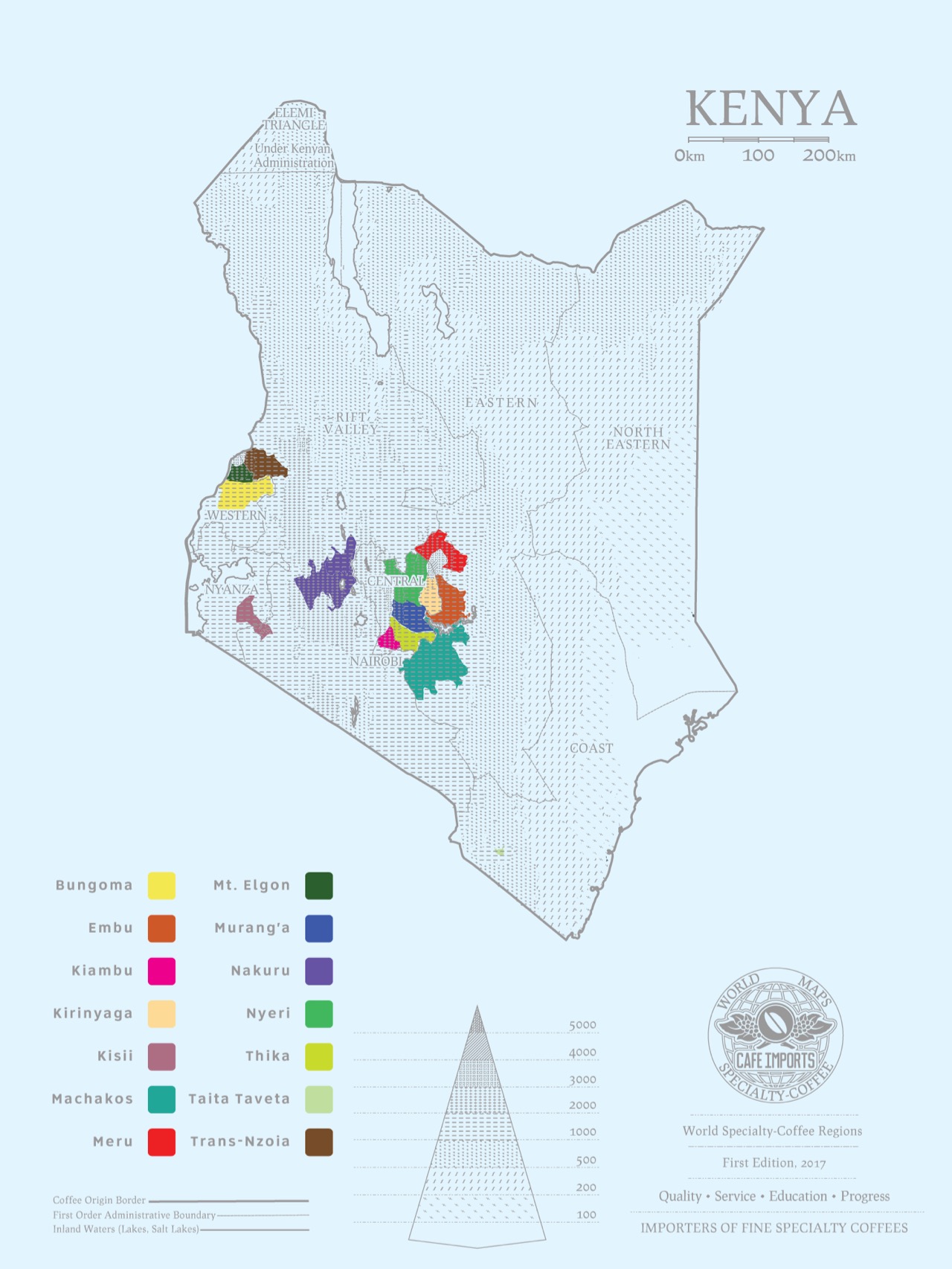
Located in East Africa and straddling the equator, Kenya is predominantly highland terrain, with an average altitude exceeding 1,500 meters. The climate is tropical savanna, but due to the elevation, it experiences significant day-night temperature variations and distinct wet and dry seasons, providing an ideal environment for Arabica coffee. The main coffee-growing regions are concentrated around Mount Kenya, including six primary areas: Thika, Kirinyaga, Mt. Kenya West, Nyeri, Kiambu, and Muranga. Coffee from these regions is primarily harvested during the main season from October to December and the secondary season from June to August.
Although Thika is close to the capital Nairobi, its surrounding environment retains an agricultural character and is home to many coffee farmers. The area mainly grows varieties such as SL28, SL34, Bourbon, and Typica, with SL34 and SL28 being the most prevalent. These coffees are known for their bright fruit acidity, rich berry notes, and honey-like sweetness, grown at altitudes of approximately 1,550 to 1,750 meters.Generally, the higher the altitude, the more complex the flavors, which is one of the reasons Thika coffee is so highly regarded.
Kirinyaga is located at the foot of Mount Kenya, adjacent to Nyeri, and is known for its rich and layered flavor profile. The region is largely made up of smallholder farmers organized into cooperatives that use unified professional washed processing facilities to ensure consistent quality. Its coffee often features bright acidity, delicate sweetness, and moderate body, making it suitable for coffee lovers who enjoy fuller-bodied flavors. The altitude ranges from about 1,300 to 1,900 meters, with main varieties including SL28, SL34, Ruiru11, and Batian.
The western side of Mount Kenya includes the regions of Kisii and Bungoma. The coffee flavor profile in this area differs significantly from the central regions, characterized by softer fruit acidity and roasted nut tones, making it suitable for consumers who prefer lower-acidity coffees. The altitude is about 1,450 to 1,800 meters, with a diverse range of planted varieties including SL28, SL34, and K7.
Nyeri is hailed as the golden coffee-growing region of Kenya. It boasts not only fertile red soil but also the natural resources of Mount Kenya, an active volcano. Coffee here is primarily managed by small cooperatives and is harvested twice a year, with the main season yield being particularly outstanding. The coffee often exhibits berry, citrus, and subtle floral notes, making it one of the key origins that have put Kenyan coffee on the map worldwide. Altitudes here range from 1,200 to 2,300 meters.
Kiambu and Muranga are located in the central inland areas of Kenya. The former has some regions at higher altitudes where, despite threats like leaf rust disease, high-quality coffee can still be produced. The latter is home to many smallholder farmers with volcanic soils, and its coffee is known for its bright acidity and rich juicy body. The altitude ranges from about 1,350 to 1,950 meters, with variety selections similar to other major regions.
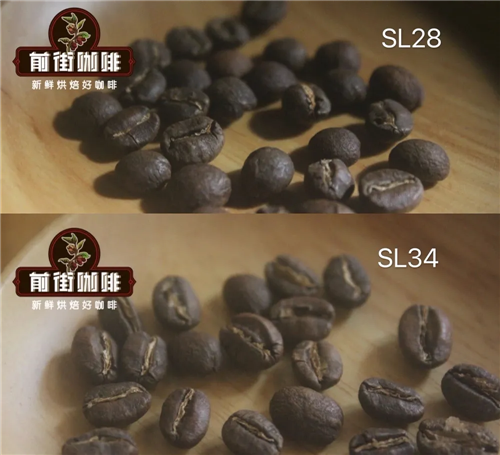
The variety characteristics of Kenyan coffee are also noteworthy. SL28, SL34, Ruiru11, and Batian were all developed by the Kenyan Coffee Research Institute to adapt to local climates and disease resistance needs. SL28 is known for its complex acidity and excellent sweetness, genetically belonging to the Bourbon family, with round and thick beans. SL34 is similar to Typica, with slightly more elongated and flat beans, and also offers an outstanding balance of acidity and sweetness. Ruiru11 is a high-yield, disease-resistant variety developed in the 1970s, while Batian is a further improvement that eliminates Robusta genetic interference to enhance cup quality.
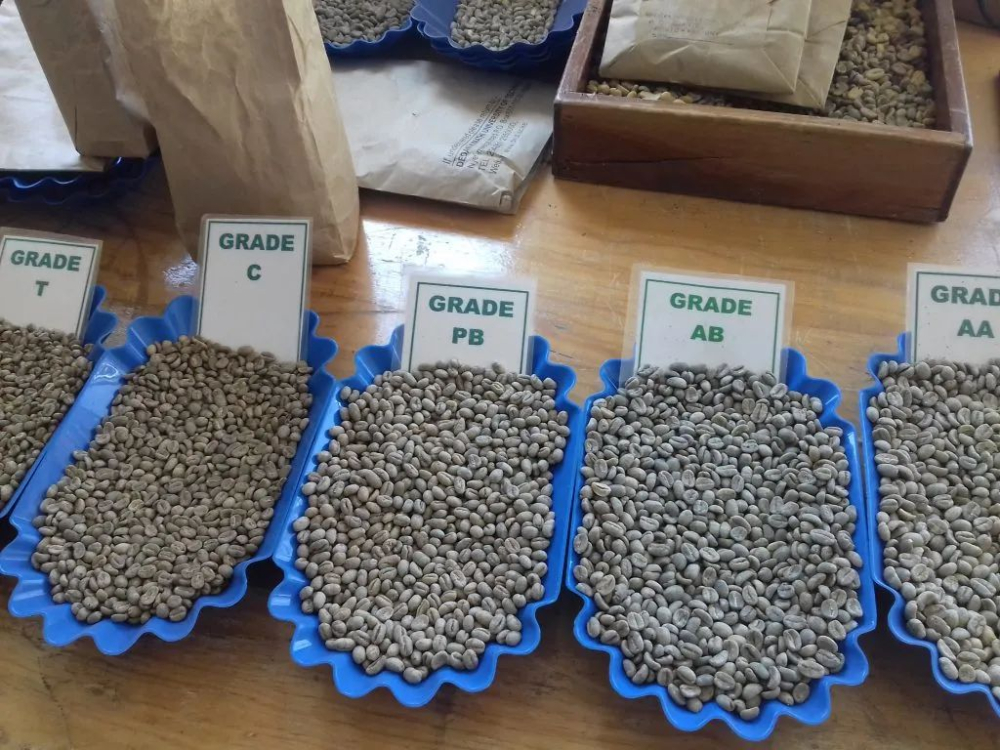
Kenya’s green bean grading system has traditionally focused on bean size, and although common grades like AA, AB, and PB are often mistakenly thought to indicate flavor, they actually reflect screening size. AA grade beans are sized between 17 and 18 screens, AB between 15 and 16 screens, and PB refers to peaberry beans, which make up about 10% of total production. Interestingly, many cupping results show that both AA and AB grade Kenyan beans deliver excellent flavor performance, with key factors still lying in the region, altitude, and processing method.It’s worth noting that Kenya’s grading system dates back to 1938, nearly four decades before the concept of “specialty coffee” emerged.
In addition to the traditional size-based grading, there is now a more comprehensive quality evaluation system that takes into account the appearance of green beans, the condition of roasted beans, and cupping performance. This system classifies coffee beans from level 1 to 10, with level 1 being the highest quality.
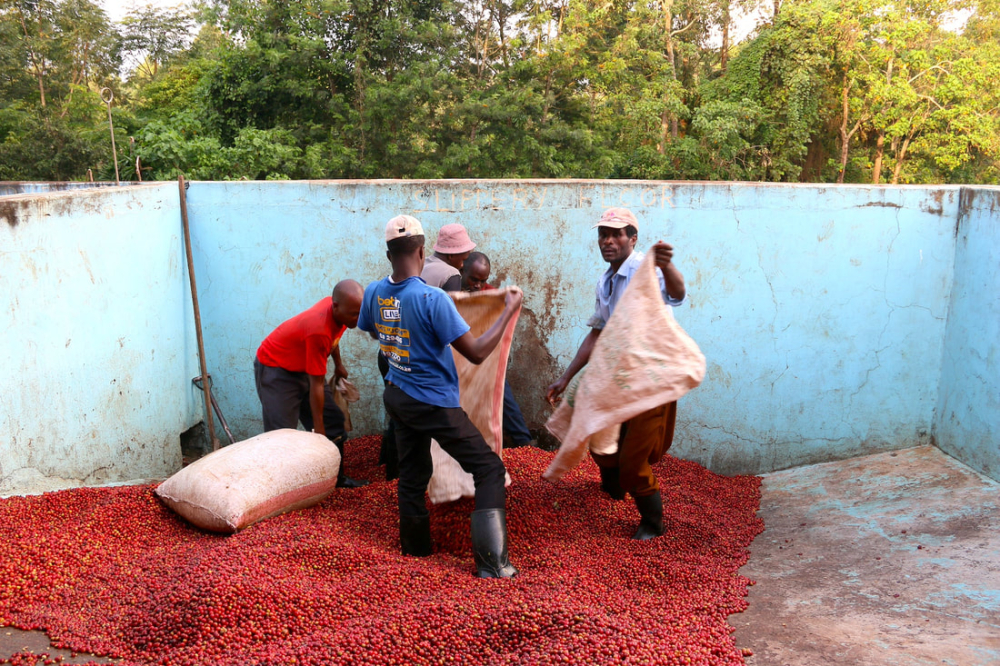
When discussing Kenyan coffee, one cannot overlook its iconic K72 washed processing method. This technique involves prolonged fermentation: after harvesting, the coffee cherries are depulped and then undergo three separate 24-hour dry fermentations, followed by washing and an overnight soak, before finally being dried in the sun for an extended period. The entire fermentation process lasts 72 hours, hence the name K72. This method effectively highlights the coffee’s cleanliness, bright acidity, and rich complexity, which are key factors behind the standout quality of Kenyan specialty coffee.
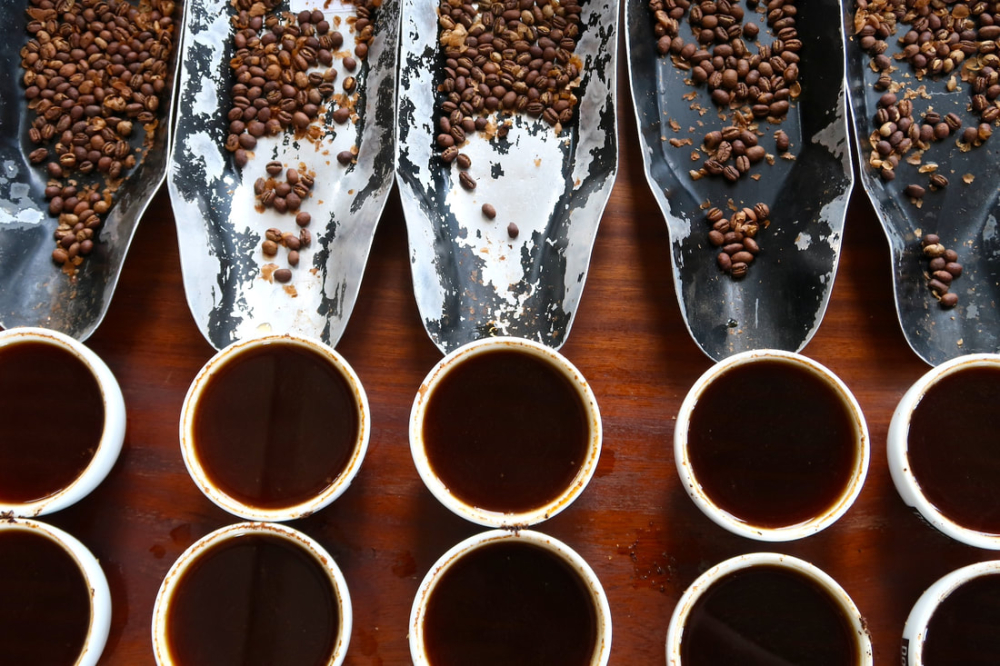
Take the Kenyan cherry tomato coffee bean as an example. This AA TOP grade bean from the Asali processing factory, grown at an altitude of 1,550 to 1,750 meters and using the SL28 and SL34 varieties, undergoes 72-hour washed processing to present complex flavors such as cherry tomato, dark plum, brown sugar, and plum. It is recommended to use a light roast to highlight its bright acidity. For pour over brewing, you can use a V60 or Kalita Wave, with water temperature controlled at 90–91°C, a brew ratio of 1:15, and grind size around 80% passing through a Chinese No. 20 sieve. A step extraction method can better release its layered flavors. Precise control is needed from the blooming phase to the development time after first crack, ensuring the classic Kenyan bean’s flavors are perfectly expressed.
The above content is compiled by CoffeeHunters, a coffee news website.


