







Introduction:Espresso serves as the base for many coffee beverages, but did you know that although Americano, Long Black, and Lungo all originate from espresso, they exhibit vastly different flavor profiles due to variations in how water is added, the ratio of water to espresso, and extraction methods? This article explains the brewing principles, standard ratios, and taste differences of these four classic Italian-style black coffees, and also includes key points on selecting blend beans to help you make the most suitable choice based on your flavor preferences.
Among the many coffee drinks, Espresso, Americano, Long Black, and Lungo are all variations based on espresso, yet their brewing logic, the order and proportion of water addition differ significantly, resulting in a diverse range of taste experiences from intense to refreshing, and from rich to light. Understanding these differences not only helps you choose the coffee that best suits your taste more accurately, but also enables you to make more professional decisions when ordering or making coffee at home.
Espresso: The Starting Point
Espresso is a concentrated coffee liquid extracted by forcing nearly boiling hot water through finely ground coffee powder under high pressure, typically yielding about 30ml with an extraction time of around 20 to 30 seconds. This method gives Espresso its intense flavor, rich crema (coffee foam), and highly concentrated taste and caffeine content. A standard shot of Espresso contains approximately 80mg of caffeine. Although the caffeine concentration per unit volume is relatively high, the total intake remains lower than that of regular drip coffee due to the small serving size.
Americano: The Diluted Version of Espresso
Americano (Americano) is the most common derivative of Espresso. It is made by adding hot water to one or two shots of Espresso, usually in a ratio between 1:5 and 1:8, with a total volume ranging from 150 to 250 milliliters. This brewing method originated during World War II, when American soldiers diluted Espresso with water to suit their preference for a milder coffee taste. Today, Americano has become one of the most widely consumed black coffees globally, suitable for those who enjoy a lighter coffee flavor but still want to experience the layered taste of Espresso.
When brewing an Americano, it’s recommended to pay attention to water temperature and pouring method. Typically, water at 90°C to 96°C is used, and you can choose to pour the water first and then add the Espresso, or vice versa, depending on whether you wish to preserve the crema.
Long Black: Australia’s Bold Black Coffee
Long Black is a distinctive black coffee originating from Australia. It is made by first pouring about 100 to 120 milliliters of hot water into the cup, followed by adding one or two shots of Espresso (approximately 30 to 60 milliliters). This order helps preserve the crema on the surface of the Espresso, resulting in a smoother and more layered taste. The total volume of Long Black is usually less than that of an Americano, with a ratio of about 1:3, offering a higher concentration and more intense flavor, making it ideal for consumers who enjoy a strong taste without milk.
In Australia, Long Black is also considered a more 'authentic' choice of black coffee compared to Americano. Some cafes even use a double shot of Espresso (about 40 grams of coffee grounds extracted) to enhance the richness of the flavor. When brewing, it is recommended to use freshly roasted blend beans to showcase a stable, full-bodied foundation along with a moderate fruity acidity.
Lungo: An Espresso Variation with Extended Extraction
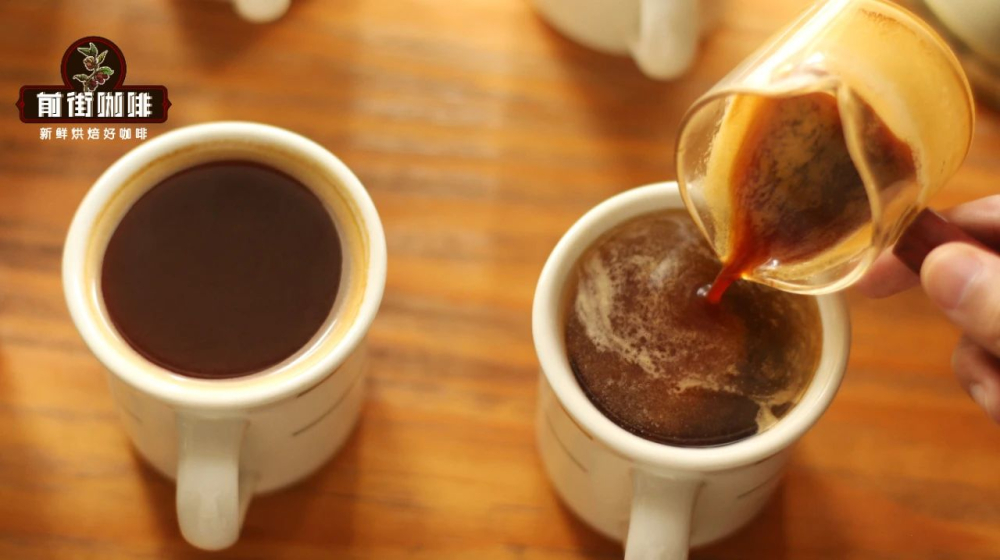
Lungo (Italian for 'long') is a variation of Espresso created by extending the extraction time (typically to 56 to 60 seconds), resulting in a coffee liquid volume of 50 to 100 milliliters or more. Compared to the standard 30 milliliters of Espresso, Lungo has a noticeably larger volume, but the flavor also changes. Due to the extended extraction, not only are more flavor compounds extracted, but more woody fibers and impurities are also released, resulting in a taste that leans toward bitterness, yet also carries a unique wine-like aroma and deep character.
Although the total caffeine content in Lungo is relatively higher, the unit concentration actually decreases due to the increased liquid volume. It is recommended to use 18 to 20 grams of coffee grounds when brewing, and adjust the extraction time and flow rate according to the characteristics of the beans to avoid over-extraction, which can lead to flavor imbalance. For coffee enthusiasts who enjoy exploring the different facets of Espresso, Lungo offers a rich yet varied option.
Why Are Most Espresso Beans Blends? The Triangular Balance of Stability, Price, and Flavor
The vast majority of coffee beans used to make Espresso and its derivative drinks are blends, primarily considering the balance between stability, cost, and flavor performance. Blends typically combine beans from different regions—for example, the balanced body of Brazilian beans, the nutty notes of Colombian beans, or a small amount of Robusta to enhance crema and intensity. This combination not only ensures flavor consistency across different harvest seasons but also achieves the best compromise between price and quality.
Common blending strategies include: commercial blends focused on stability (such as those incorporating Vietnamese Robusta), entry-level blends oriented toward cost-performance (like combinations of Yunnan and Brazilian beans), and specialty blends emphasizing flavor layers (such as pairings of Yirgacheffe and sherry cask-aged beans). Selection can be based on intended use—whether for making Americano, lattes, or for pure sipping—to choose the most suitable blend style.

In summary, Espresso, Americano, Long Black, and Lungo each have their unique brewing logic and flavor characteristics. Whether you prefer the bold richness of Long Black or the light and refreshing taste of Americano, understanding their differences will help you better appreciate the unique charm of each cup of black coffee. Remember, choosing the right beans and appropriate brewing parameters is the key to truly bringing out the potential of each type of coffee.
The above content is compiled by CoffeeHunters, a coffee news website.


