







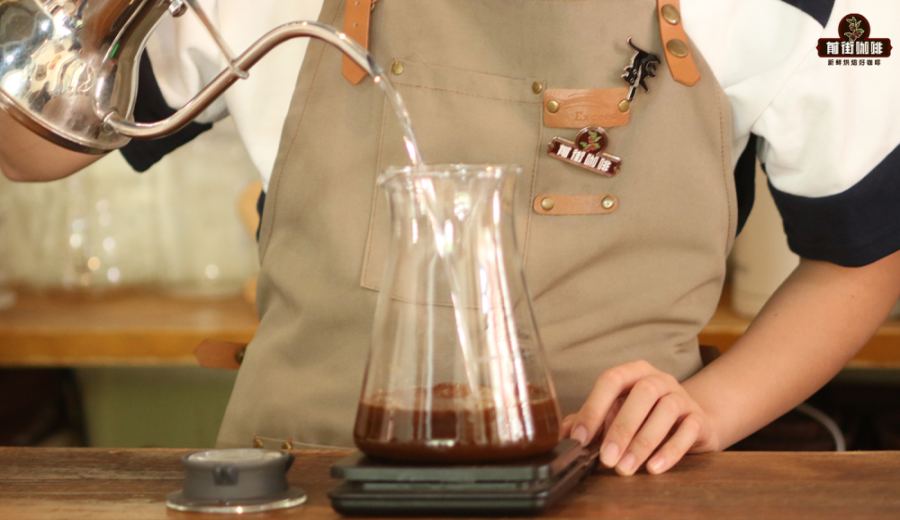
Introduction:Although both ice drip coffee and cold brew coffee belong to the category of low-temperature extraction, they differ greatly in brewing methods, equipment, and flavor profiles. This article delves into the differences between the two, covering everything from principles and device structures to extraction times and coffee bean selection, offering you a comprehensive understanding of the mysteries of ice drip and cold brew. It also includes practical, flavor-oriented parameter suggestions, such as Tiamo three-layer ice drip kettle settings, the use of Hua Hudie beans, as well as cold brew grind-to-water ratios and refrigeration processes—allowing you to easily make refreshing and layered summer coffee at home.
Both ice drip coffee and cold brew coffee are techniques that utilize low-temperature environments to extract coffee, yet they each have unique characteristics in terms of preparation methods, equipment requirements, and final flavor expressions. Cold brew mainly involves steeping coffee grounds in cold water for an extended period before filtering, making it low-barrier and beginner-friendly; whereas ice drip requires a specially designed dripping apparatus, where melted ice water slowly drips through a bed of coffee grounds, extracting a clear and clean coffee liquid drop by drop. It is a more detail-oriented and patient brewing method.
The charm of ice drip coffee lies in its dynamic extraction process: melted ice water seeps drop by drop through the coffee grounds, fully contacting the coffee bed to release flavors, and then slowly drips into the lower chamber under gravity. This extraction method reduces the release of impurities, resulting in a purer, cleaner coffee with distinct layers. To try making ice drip coffee, one first needs to understand the basic structure and operational principles of the equipment.
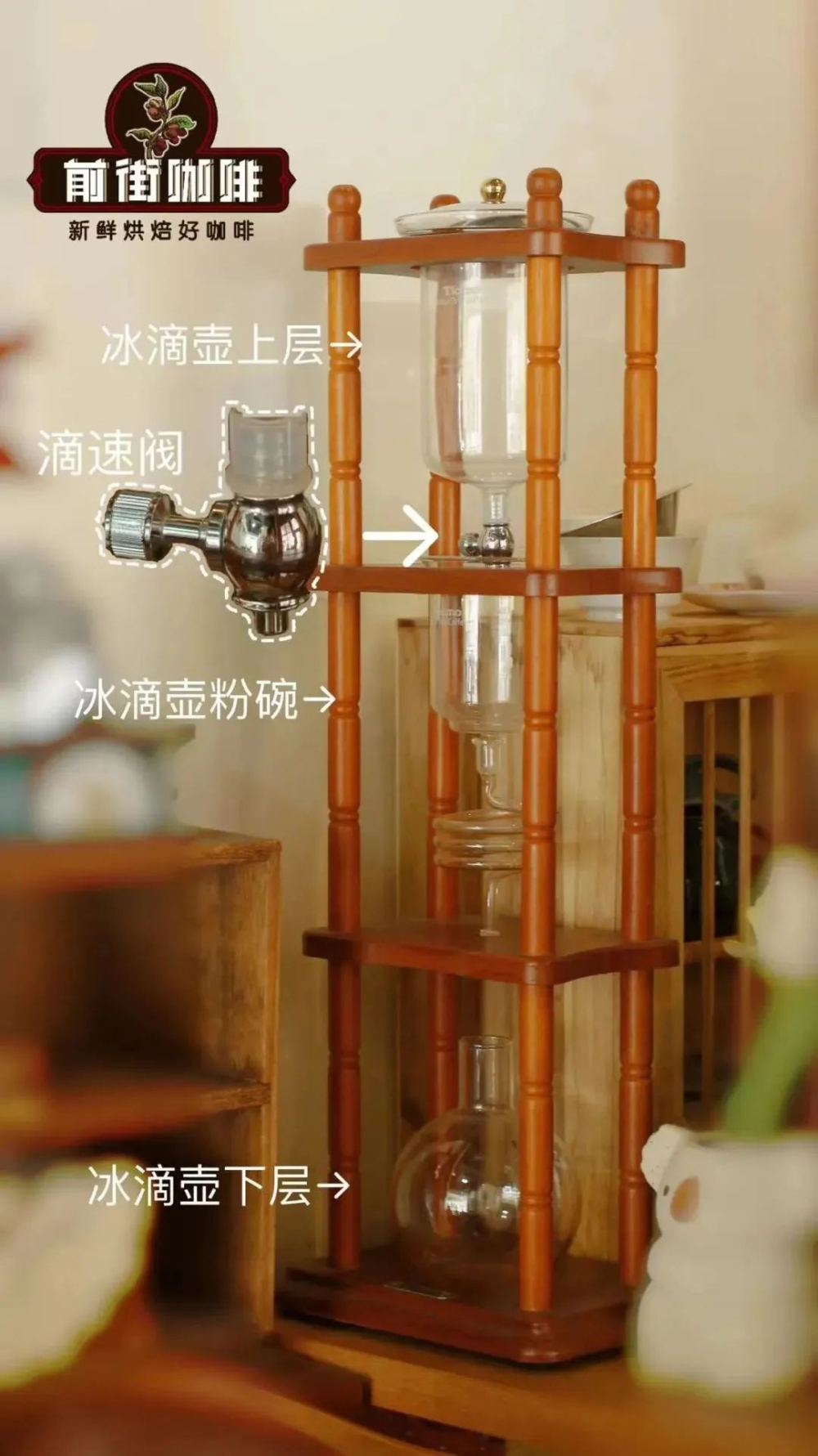
The core of an ice drip setup typically consists of five main parts: a water reservoir for holding the ice-water mixture, an adjustment valve to control the dripping speed, a coffee grounds container to hold the coffee powder, a liquid collection chamber for gathering the final coffee liquid, and a coffee stand that supports all the components. These elements work together to ensure that the melted ice water drips at an extremely slow rate (about 1–2 drops per second), steadily filtering through the coffee for several hours to produce a concentrated yet refreshing coffee liquid.
Taking the practically used Tiamo HG2713 three-layer ice drip kettle as an example, it is recommended to use a 1:10 coffee-to-water ratio, meaning 60 grams of coffee grounds to extract 600 milliliters of coffee liquid. The grind size can be similar to that of fine sugar, and the dripping frequency of the melted ice water should be adjusted to about 7–8 drops every 10 seconds. This process takes approximately 5–8 hours, depending on the amount of coffee grounds and the dripping speed. Additionally, since the low-temperature environment may cause the dripper to clog, it is advisable to continuously monitor and adjust the setup during brewing to ensure a stable flow rate.
Compared to the static steeping method of cold brew, ice drip is a dynamic extraction process where dripping and filtering occur simultaneously. The coffee grounds are not fully immersed in water for a long time, thus reducing the risk of over-extraction, resulting in a final coffee that has a clearer, brighter taste with fewer off-flavors.This difference means that even when using the same type of beans, ice drip coffee often exhibits more delicate flavor expressions and higher purity compared to its cold brew counterpart.
If you wish to further highlight the layered and full-bodied characteristics of ice drip coffee, it is recommended to choose high-quality single-origin beans with rich fruity notes and bright acidity. For instance, the Hua Hudie beans, which blend Panamanian Geisha, Caturra, and Catuai varieties, deliver a refreshing profile of green tea, citrus, melon, and grapefruit. When brewed as ice drip, they present a light yet lingering finish, making them especially suitable for serving over ice to enjoy a touch of coolness and complexity during hot summer days.
In contrast, cold brew coffee has a simpler and more approachable brewing method, making it the preferred choice for many coffee enthusiasts just starting out. Taking the practical recommendation from [Gafei Coffee] as an example, it is advised to use 50 grams of coffee grounds (reduced to 20 grams for a single serving), with the coffee ground to a coarseness where 85% passes through a No. 20 sieve, similar in texture to superfine sugar. Place the coffee grounds in a glass container, then add 400 milliliters of room temperature water and 200 grams of ice cubes (a total of about 600 grams) to form an ice-water mixture, achieving a 1:12 coffee-to-water ratio.
Next, use a stirring stick to evenly mix the coffee grounds and water, ensuring that every coffee particle is fully in contact with the water. Then seal the container and place it in the refrigerator. The steeping time is recommended to be 8 to 16 hours, adjustable based on individual taste preferences. Once extraction is complete, filter out the coffee grounds using filter paper, pour the coffee liquid into a clean, airtight container, and refrigerate for another 4 hours to allow the flavors to concentrate further before serving. If you prefer an even cooler taste, you can adjust by adding ice cubes according to personal preference.
In summary, although both ice drip and cold brew emphasize low-temperature extraction, they each have their own strengths in terms of equipment, time, technique, and the resulting flavor layers. Whether you are an ice drip enthusiast chasing an ultra-clear taste or a cold brew user who prefers simplicity while enjoying cool coffee, as long as you master the correct parameters and techniques, you can easily make high-quality iced coffee tailored to your taste at home.
The above content is compiled by CoffeeHunters, a coffee news website.


