








Introduction:Highland hard-bean coffee from Colombia has long been sought after by single-origin coffee enthusiasts. This article focuses on two Colombian coffees—Rose Valley and Moonlit Blossom—both using the Caturra variety but sourced from different regions and processed with distinct methods. From growing environments and varietal characteristics to anaerobic and natural sun-dried processing differences, we’ll take you deep into their unique flavor profiles and provide practical pour-over brewing parameters to help you discover your preferred flavor preferences.
Colombia is renowned for its high-altitude mountain-grown coffee. These regions feature large diurnal temperature variations and fertile volcanic soils, yielding coffee beans with high density and rich flavor layers—perfect for single-origin brewing. Among the many Colombian regional and processing method combinations, these two Caturra coffees—Rose Valley and Moonlit Blossom—stand out as classic benchmarks for coffee drinkers to compare and evaluate, thanks to the distinctly different sensory experiences brought by their processing methods.

Both coffees exhibit prominent floral and berry notes, yet express them in vastly different ways. Rose Valley is driven by bold and layered floral aromas paired with bright and lively acidity, offering a sip reminiscent of a fruit tea with balanced sweet-tart flavors, followed by refreshing aftertastes of grape, strawberry, and green plum. In contrast, Moonlit Blossom showcases a richer strawberry jam aroma along with distinct fermentation notes. While it also has floral elements, the overall profile leans toward a dense sweetness, with faint undertones of dark cocoa and buttery cream in the finish.

Geographically, Rose Valley comes from the Santander region in northern Colombia, specifically Finca El Granada. This area is known for its high altitude, excellent air circulation, and significant day-night temperature shifts, resulting in coffee often characterized by distinct herbal freshness and clear acidity. Moonlit Blossom, on the other hand, hails from the Huila region in southern Colombia, produced by Finca El Verjón. The elevation and microclimate conditions of Huila endow the coffee with a richer and more complex base flavor, while also enabling greater fermentation potential during processing.
Both coffees use the widely grown Caturra variety in Colombia, a Bourbon mutation known for its shorter plant stature, strong disease resistance, and stable yield per unit area. It’s worth mentioning that Colombia has also actively promoted the Castillo variety in recent years, which delivers more pronounced spice and caramel tones—one brand’s Sakura Coffee is based on this variety.
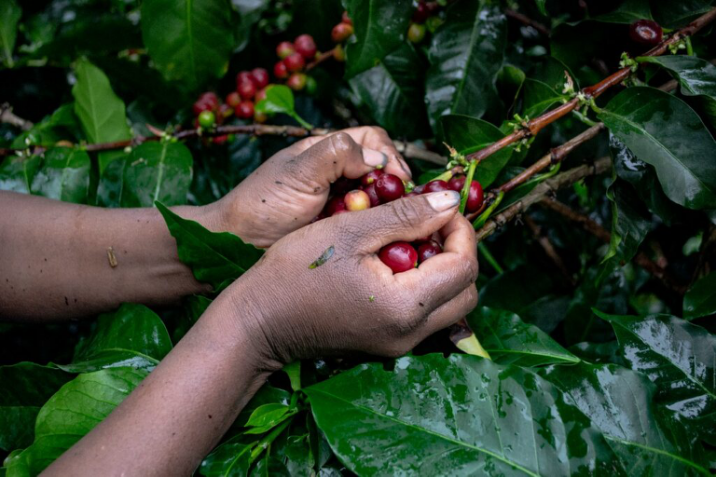
Processing is the most critical factor behind the flavor differences between these two coffees. Rose Valley is crafted using a “double anaerobic enzymatic washed process.” This involves adding special enzymes during the traditional washed process and introducing an anaerobic fermentation stage, which results in brighter acidity and fruitiness while maintaining a clean and clear mouthfeel. This method is commonly employed by specialty coffee producers aiming for fruit-forward and layered profiles. When brewed, the resulting cup is particularly fresh and vibrant, with the balance between sweetness and acidity becoming even more pronounced as the coffee slightly cools.
Moonlit Blossom, on the other hand, opts for the “anaerobic natural sun-dried process”—a less common but increasingly spotlighted method. Fully ripe red cherries are placed in oxygen-controlled stainless steel fermentation tanks and undergo anaerobic fermentation in a low-oxygen environment for a period of time, followed by prolonged sun drying. This technique amplifies fruity and fermented flavors, gradually revealing nutty, dark cocoa, and buttery cream-like aftertastes as the coffee cools. Though it shares berry aromas with Rose Valley, Moonlit Blossom features a more intense strawberry jam character and more noticeable fermentation notes, making it ideal for those who enjoy sweet and complex flavor profiles.
Interestingly, although both Colombia and Brazil are major producers of high-altitude hard-bean coffees, their processing styles differ significantly. Brazil’s commonly used pulped natural method—such as a certain brand’s once-sold Queen Estate coffee—emphasizes nutty and buttery aromas with distinct cane sugar sweetness and wine-like notes, forming a contrast to Colombia’s fresh and bright style. Moonlit Blossom, though also sun-dried, takes on a fruit jam and fermentation-oriented direction due to the anaerobic phase, rather than the traditional nut-and-chocolate profile.

For consumers torn between Rose Valley and Moonlit Blossom, we recommend choosing based on personal preferences for acidity and sweet aroma. Rose Valley suits those who enjoy a juice-like, refreshing taste with bright sweet-tart balance—flavors akin to a blend of grape, strawberry, and green plum. Moonlit Blossom is better suited for those who prefer intense fruit jam aromas and layered fermentation notes, with its unforgettable strawberry jam and creamy aftertaste.
Below are our recommended pour-over brewing parameters for these two coffees, tailored for extraction methods that highlight flavor layers and clarity:
Coffee dose: 15 grams
Water temperature: 91°C
Coffee-to-water ratio: 1:15
Grind size: Coarse sugar-like (approximately 80% passing through a #20 sieve)
Filter: Hario V60 01
Suggested pour-over steps are as follows:
1. First pour: Use 30 grams of water for blooming, for about 30 seconds.
2. Second pour: Add 95 grams of water, taking about 1 minute, reaching approximately 125 grams total.
3. Third pour: Add another 100 grams of water, completing the pour around 1 minute 40 seconds, for a total of about 225 grams.
Total brew time should be kept around 2 minutes, then remove the filter and enjoy.
Please note: To fully experience the coffee’s complete flavor spectrum, we recommend using freshly roasted beans within 5 days post-roast, and brewing them within 4 to 7 days of receipt. During this optimal resting period, the coffee’s flavor performance is at its best.
The above content is compiled by CoffeeHunters, a coffee news website.


