







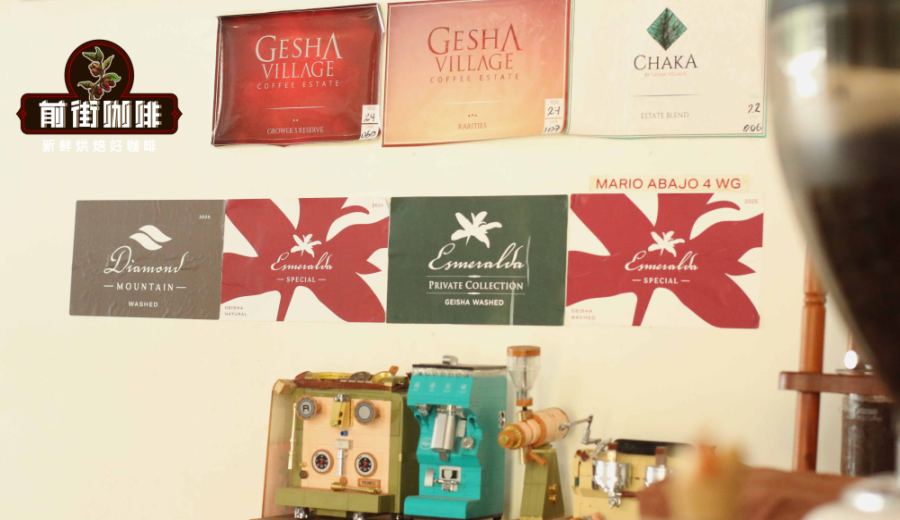
Introduction:Want to understand how Panamanian Geisha coffee is graded and brewed? This article details the grading logic of Emerald Estate’s Red Label, Green Label, and Blue Label, introduces the historical background and unique flavor characteristics of the Geisha variety, and provides practical pour over tips and parameter suggestions to help you brew a layered, fruit-forward Geisha coffee.
Geisha (or Gesha) coffee can be considered the star variety of today’s specialty coffee scene. With its distinctive aroma, delicate acidity, and rich fruity profile, it consistently stands out in international competitions. However, many coffee enthusiasts still have questions about Geisha’s grading system, origin background, and optimal brewing methods. This article will delve into the origins of the Geisha variety, its development in Panama, and offer a comprehensive analysis of the differences among Emerald Estate’s three labels—Red Label, Green Label, and Blue Label—along with practical pour over advice to give you a fuller understanding of this premium coffee.
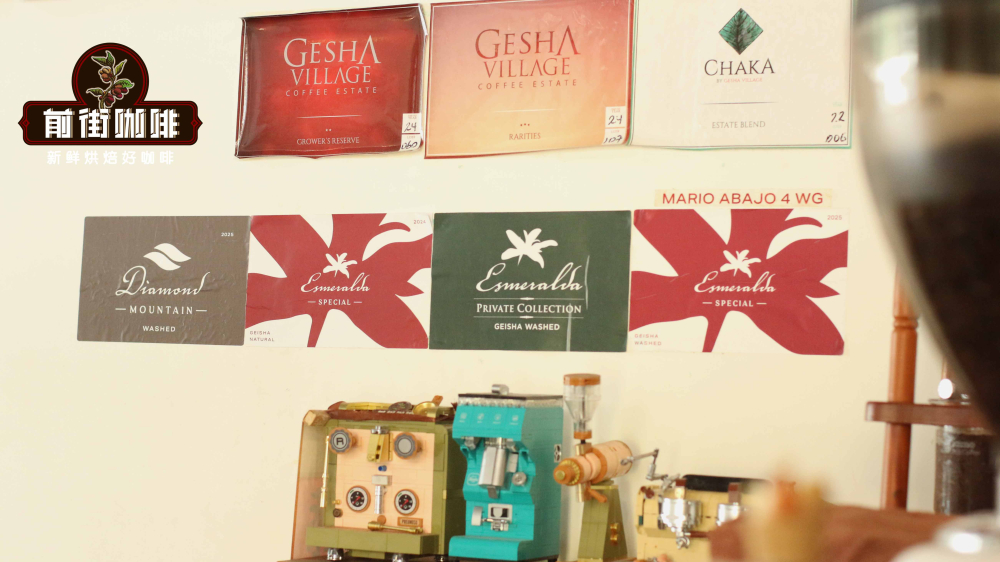
Geisha was originally a wild variety found in Ethiopia’s Gesha Forest. It was first discovered in 1931, then sent to the Kenya Coffee Research Institute, and subsequently introduced to Uganda, Tanzania, and Costa Rica, finally arriving in Panama in 1970. Initially overlooked, it wasn’t until 2003 that Panama’s Emerald Estate (also known as Hacienda La Esmeralda) began cultivating it separately from other varieties. In 2004, it won first place in the BOP (Best of Panama) competition, instantly gaining fame.
It’s worth noting that although the Geisha produced in Ethiopia’s Gesha Village shares the same name as Emerald Estate’s Geisha, they are different varieties. The former is Gori Gesha, while the latter is a Geisha that has undergone years of cultivation and selection. The two show significant differences in flavor, with Emerald Estate’s Geisha generally regarded as more complex and unique.
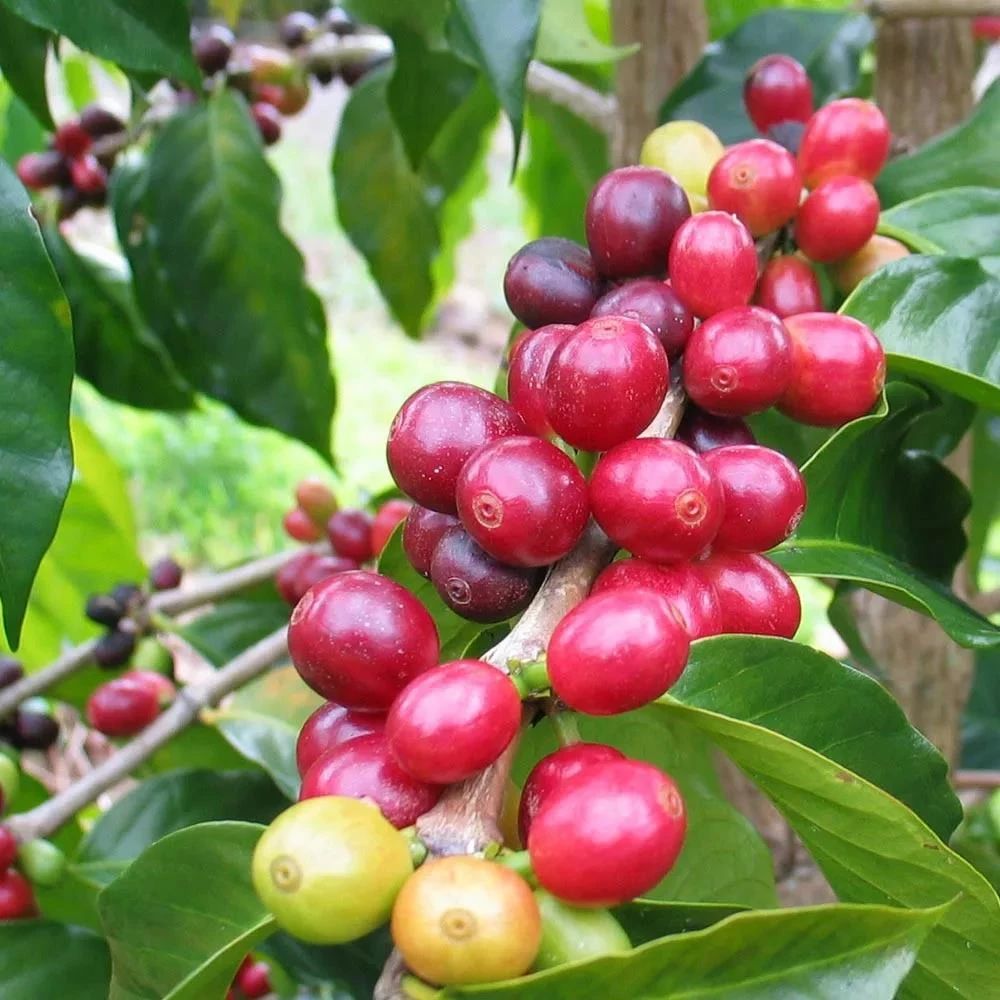
Panama’s geographic and climatic conditions provide an ideal environment for growing Geisha. The country borders Costa Rica and Colombia, and its mountainous terrain features the Central Mountain Range, which traps cool air—resulting in a unique microclimate in the Boquete and Piedra de Candela regions at elevations above 1,900 meters. This area enjoys large diurnal temperature variations, stable rainfall, and fertile volcanic soil, all of which contribute to high-quality coffee with a tight structure and complex flavors.
Emerald Estate initially planted Geisha only on the edges of the farm as windbreaks. After cupping revealed its exceptional flavor, the estate began dividing and evaluating different plots. Today, based on elevation and cupping scores, Emerald Estate categorizes Geisha into three grades: Red Label, Green Label, and Blue Label—with higher elevation and better scoring beans ranked higher.
Red Label Geisha: Auction-grade Premium Flavor
Red Label Geisha is the flagship representation of Emerald Estate, selected from micro-lots grown at elevations between 1,600 and 1,800 meters with cupping scores of 90 or above, primarily sourced from the Jaramillo and Cañas Verdes regions. Typically, only specific lots released during the estate’s internal auctions can be called “Auction Red Label.” These beans undergo the strictest controls in processing, selection, and roasting.
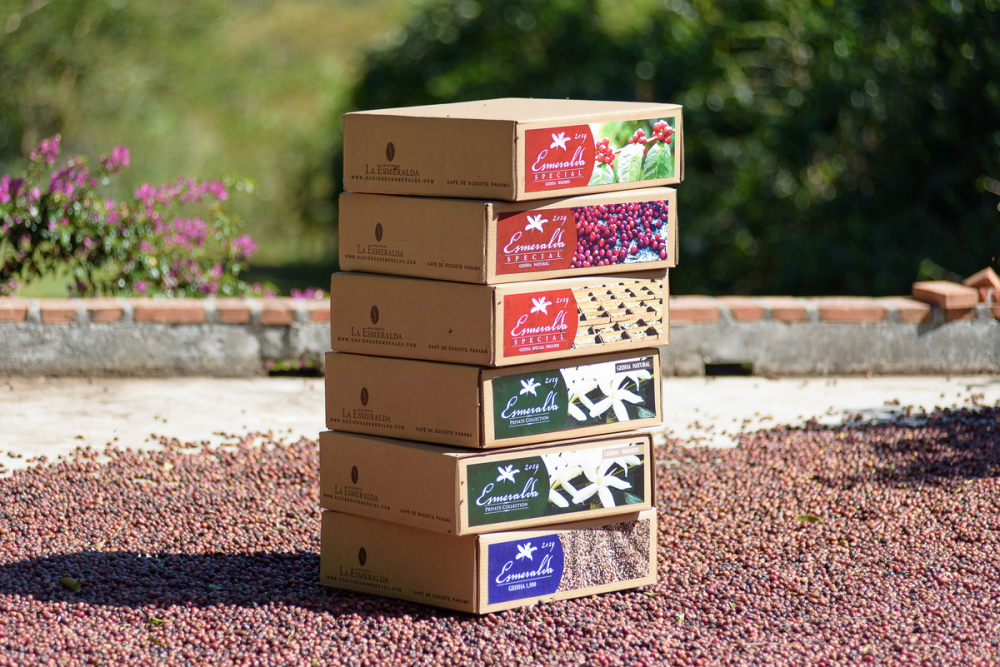
The common processing methods for Red Label Geisha are natural (sun-dried) or washed. The natural process often delivers intense rose floral notes, berry-like acidity, and a rich juicy body, while the washed version is clearer and brighter, with more pronounced fruity acidity. Non-auction Red Label beans are also available on the market. Though also from high-elevation plots, they are not part of auction lots and are relatively more affordable, making them a good choice for those wanting to experience premium Geisha flavors.
Green Label Geisha: High-Value Specialty Option
Green Label Geisha is not part of auction lots but still comes from Emerald Estate’s high-elevation micro-lots. Its growing altitude range is similar to Red Label’s but from different sections, so it is often released as a blend. While not from a single auction plot, these beans maintain excellent cup quality and are a popular entry point for many Geisha enthusiasts.
Green Label beans are also processed using either natural or washed methods. The washed version highlights clear floral notes, citrus tones, and clean acidity—ideal for those who prefer a refreshing taste. The natural process offers more intense fruitiness and a richer, juicier mouthfeel with a bolder flavor profile. The flavor profile of Green Label sometimes closely resembles that of Red Label, though slight variations may occur between batches.
The Grading Logic of Geisha Coffee Beans
Emerald Estate’s grading system is primarily based onaltitudeandcupping scores, supplemented by details of the producing region and processing method. Geisha grown at higher altitudes benefits from larger diurnal temperature variations and slower growth, allowing the coffee cherries more time to accumulate flavor compounds. As a result, they often exhibit richer aromas and brighter acidity.
Blue Label usually consists of beans grown at relatively lower altitudes or with slightly lower cupping scores than Red and Green Labels, but still retains the fundamental characteristics of the Geisha variety. It is suitable for everyday drinking or for consumers with budget constraints. However, note that some “Blue Label” products on the market may come from other estates—be sure to verify the source when purchasing.
Geisha Pour Over Parameters and Techniques
To fully showcase Geisha’s delicate flavors, the brewing process is crucial. It is recommended to use medium-light roasted Geisha beans, with a 4 to 7-day resting period after roasting to allow the flavors to fully develop. Use a V60 dripper, with 15 grams of coffee grounds,a 1:15 coffee-to-water ratio,a grind size of approximately 80% passing through a Chinese No. 20 sieve, and water temperature controlled at around 90°C [temperature placeholder]
. For brewing steps, a multi-pour method is recommended: start with a 30-second bloom using twice the coffee weight in water (about 30 grams) to release gases; then pour in small circles until reaching 125 grams, followed by pouring up to 225 grams before stopping. The total brew time is approximately 2 minutes. After the dripping finishes, gently swirl the coffee to ensure even extraction before pouring it into your cup for a more balanced flavor.
Flavor Profile Differences
Red Label Geisha often presents bright rose floral notes, citrus tones, along with layered fruit aromas such as rice, berries, and apricots. It has a full body and a juicy mouthfeel. Green Label showcases fresh jasmine floral notes, with balanced acidity and sweetness, complemented by citrus, berries, and a creamy smooth texture. Its finish is long-lasting, often accompanied by orange peel and cantaloupe aromas. Both have distinct flavor profiles—choose based on your personal preference.

Besides Emerald Estate, other well-known Panamanian estates such as Elida and Boquete also produce Geisha. Additionally, options like Costa Rica’s Miramar, Colombia’s Hanami, and Panama’s Geisha Flower offer outstanding flavors at relatively more accessible price points. If you’re just beginning to explore the world of Geisha, consider starting with Green Label or blends to gradually appreciate the endless charm of this variety.
The above content is compiled by CoffeeHunters, a coffee news website.


