








Introduction:Kenyan coffee is renowned for its bright acidity and rich fruity aroma, but to fully showcase its unique flavor profile, mastering the correct brewing techniques is essential. This article delves into the geographical conditions, variety characteristics, and grading system of Kenya’s Kiambu region, while also providing professional pour over recommendations—including ideal water temperature, coffee-to-water ratio, grind size, and pulse pouring techniques—to help you scientifically brew a classic Kenyan cup bursting with flavors of cherry tomato, berry, and dark plum.
Kenyan coffee has long held a prominent place in the specialty coffee market due to its vibrant acidity and bold body. However, fully extracting and presenting its complex and layered flavors remains a challenge for many coffee enthusiasts. Taking Kenya’s Kiambu region as an example, this article provides a detailed introduction to the local terroir, coffee variety traits, grading system, and typical flavor profile, along with a set of practical pour over parameters—so you can easily brew a Kenyan-style cup at home featuring signature notes of cherry tomato, dark plum, and berries.
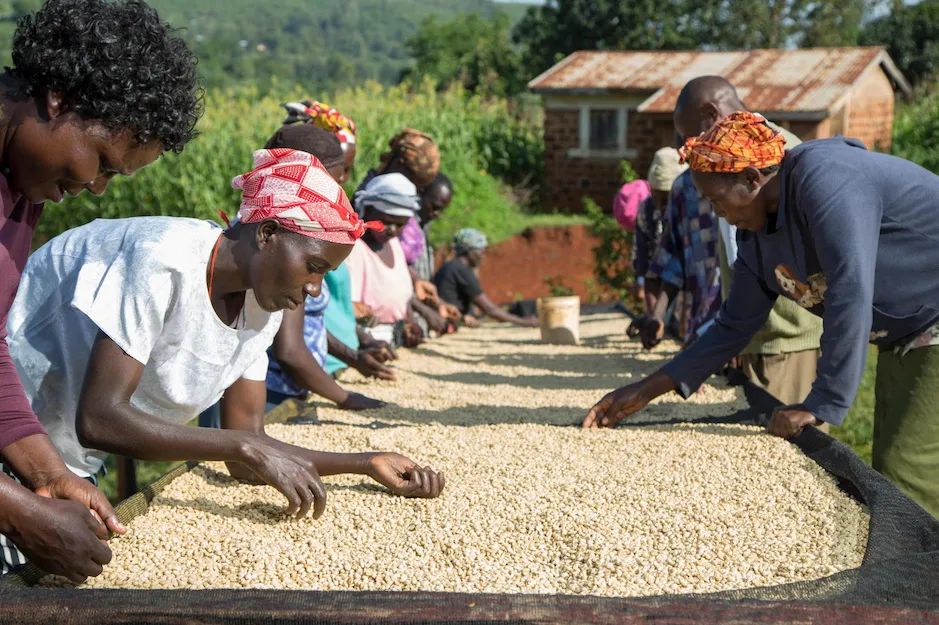
 Coffee cultivation in Kenya is primarily concentrated in highlands ranging from 1,500 to 2,100 meters above sea level, with two harvest seasons per year in spring and autumn. To ensure the collection of only fully ripe coffee cherries, farmers often need to patrol their planting areas up to seven times, carefully hand-selecting each cherry. Most coffee is grown by smallholder farmers, who send their harvested cherries to cooperative wet mills for initial processing. The processed parchment coffee—coffee beans still wrapped in their inner husk, representing the post-processing, pre-hulling stage—is then delivered to cooperatives. This centralized processing and quality-based pricing model ensures a relatively fair and transparent transaction process for both producers and consumers.
Kenya is home to several important coffee-growing regions, each with distinct altitudes, microclimates, and variety distributions that influence the final flavor profiles. Located in central Kenya at the foot of Mount Kenya, the NYERI (Nyeri) region features fertile red soil and is one of the country’s most renowned specialty coffee areas. The region enjoys two main harvest seasons, with the primary season from October to December producing particularly high-quality beans.Altitude range: 1,200–2,300 meters, with main varieties including SL-28, SL-34, Ruiru11, and Batian. The MURANG’A (Murang’a) region, historically settled by missionaries for various reasons, is also known for its volcanic soil,with an altitude of 1,350–1,950 meters, and its main varieties are also SL-28, SL-34, Ruiru11, and Batian. Adjacent to Nyeri on the east side, KIRINYAGA (Kirinyaga) also boasts premium volcanic soils and high-altitude conditions, making it another significant source of specialty coffee.
 Other regions such as EMBU (Embu), MERU (Meru), KIAMBU (Kiambu), KISII (Kisii), as well as western regions like TRANS-NZOIA, KEIYO & MARAKWET (Trans-Nzoia, Keiyo & Marakwet), each have their own unique characteristics. For example, Embu, close to Mount Kenya, sees about 70% of its population engaged in smallholder farming, with tea and coffee as its main cash crops; Meru is located on the Nyambene Hills at the foothills of Mount Kenya and was among the first areas to begin coffee cultivation with policy support. Kiambu features relatively higher-altitude cultivation conditions but also faces challenges such as dieback disease; Kisii, near Lake Victoria, is largely organized by small cooperatives; and the smaller western regions typically adopt diversified planting strategies to mitigate risks associated with single-crop dependency.
When it comes to Kenyan coffee, its representative coffee varieties must be mentioned. The most famous are SL-28 and SL-34, which were developed under the leadership of Guy Gibson at Scott Laboratories. Although susceptible to leaf rust, these varieties are celebrated for their outstanding berry-like acidity and complex flavor profiles, often excelling in specialty coffee cuppings and auctions. Additionally, Ruiru11 is the first disease-resistant variety successfully cultivated by the Kenya Coffee Board, while Batian is a subsequent improved version, offering enhanced quality and disease resistance—gradually gaining attention in the market.
Kenya’s coffee bean grading system is quite rigorous, mainly classifying beans based on size, shape, and hardness, ranging from highest to lowest as AA or AA+, AB, PB (peaberry), C, E, TT, and T. Among them,AA grade consists of beans that pass through a 17–18 mesh sieve, delivering the most exceptional flavor, with AA+ representing those that perform particularly outstandingly within that grade; AB grade (15–16 mesh) is the mainstream in the market; PB refers to peaberries, which are not absolutely linked to flavor quality. This grading system not only aids in quality selection but also serves as a reference for expected flavor profiles.
Kenyan coffee has long been celebrated for its “clean and bright” acidity, with common flavor notes including blackcurrant, dark plum, lime, grapefruit, pineapple, green apple, passion fruit, and various berries. In terms of sweetness, it offers layers of honey, brown sugar, and sweet orange. Its uniqueness lies in maintaining a full body and oily mouthfeel despite its bright acidity, allowing Kenyan coffee to often stand out in professional evaluations.
Taking into account the characteristics of Kenyan coffee—especially the combination of high altitude, volcanic soil, and classic varieties in the Kiambu region—we recommend the following pour over parameters to fully unlock its potential:Recommended water temperature: 93°C, coffee-to-water ratio: 1:16, grind size: 75%–80% passing through a standard 20-mesh sieve, roughly equivalent to the fineness of about 80% for medium-light roasts or 75% for medium-dark roasts. When using a small-sized V60 filter, it is recommended to use at least 15 grams of coffee, or at least 25 grams for a larger-sized filter, to facilitate optimal extraction.
During extraction, to avoid channeling or poor water flow, minimize fine particles and control the pouring path, avoiding wide circular movements. The recommended pouring rhythm is: first pulse 30 ml of water for a 30-second bloom; second pulse 120 ml, pouring in a circular motion from the center outward until a golden foam forms on the surface of the coffee bed, then narrowing back to the center—with the coffee bed height reduced to half of the short ribs of the filter; third pulse 90 ml, pouring in a small coin-sized circular motion. The total extraction time should be controlled around 2 minutes (±10 seconds). This approach effectively highlights the cherry tomato aroma, sweet acidity, and clear dark plum notes of Kenyan coffee, delivering a balanced and layered taste experience.
The above content is compiled by CoffeeHunters, a coffee news website.


