







Introduction:The Long Black (Australian-style black coffee), popular in Australia and New Zealand, is often mistaken for being the same as a Lungo, but in reality, their extraction logic, concentration, and flavor profiles are quite different. This article breaks down the differences among these three types of black coffee—from caffeine content, crema thickness, espresso ratio to suitable brewing methods—providing practical guidance to help you make a choice based on your taste preferences.
In Australia and New Zealand, the Long Black is a very popular pure black coffee, served without milk. Compared to regular espresso, it has a smoother mouthfeel and lower caffeine content than typical Americanos, allowing you to enjoy the aroma of coffee without consuming too much stimulant. However, many coffee enthusiasts often confuse the Long Black with the Lungo in Italian espresso. Although they may look similar in appearance, they actually differ significantly in extraction method, crema presentation, and flavor structure.
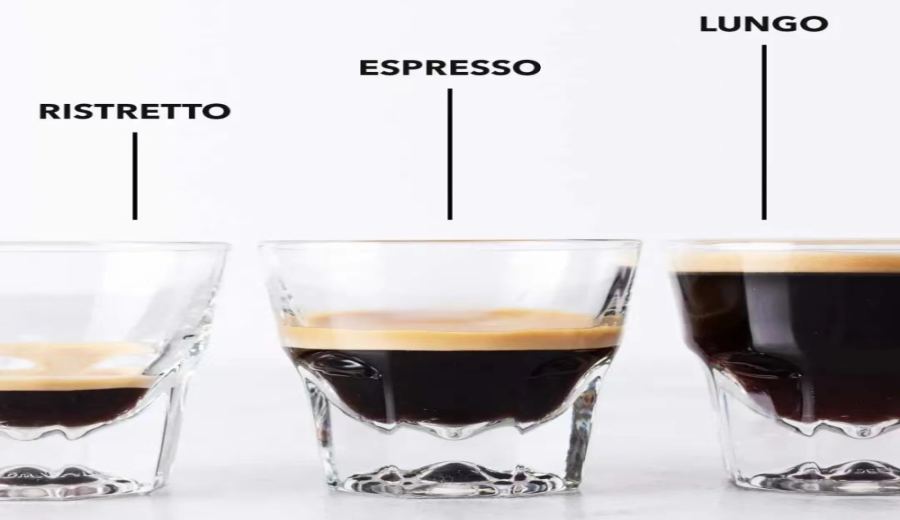
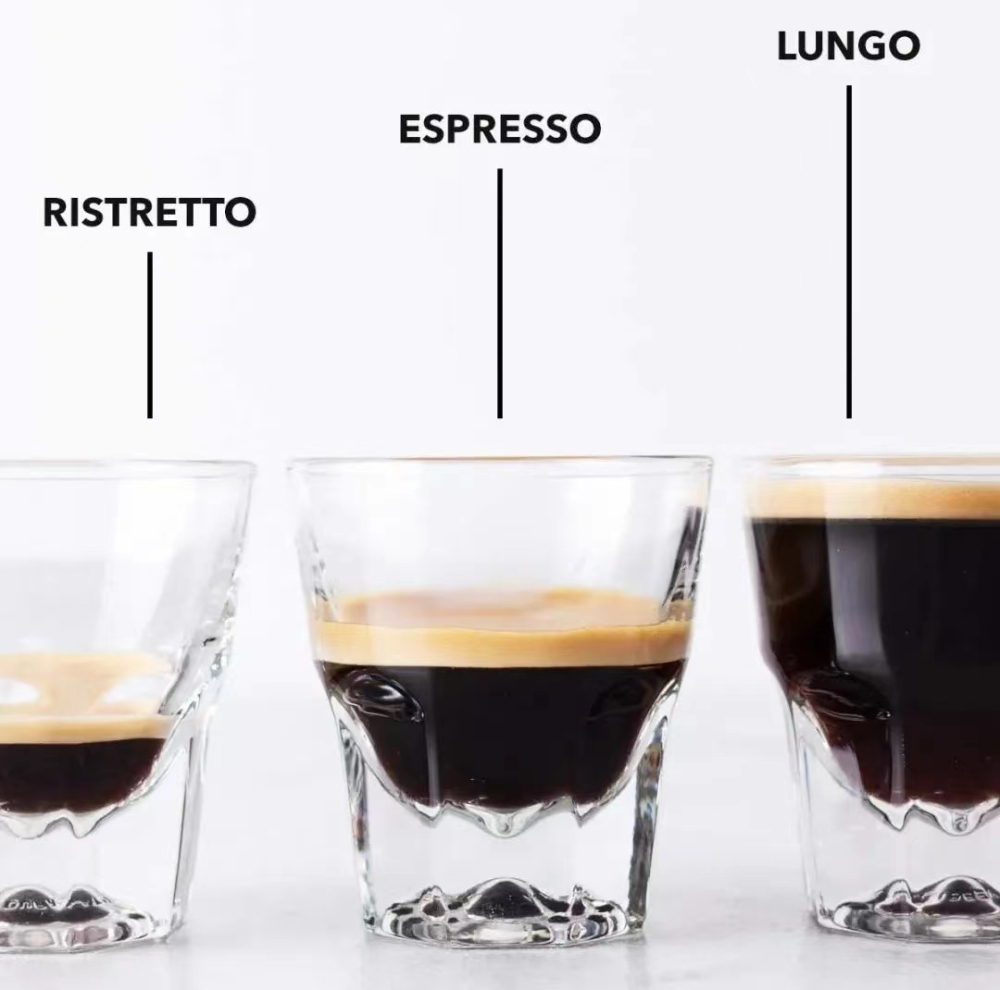
The Lungo is a brewing method derived from Italian espresso. The Italian term literally means "lengthened" or "extended," and its core concept is to extend the extraction time of a normal espresso, allowing more coffee liquid to flow out and thus resulting in a larger volume. Typically, a Lungo will have a significantly greater volume than a standard espresso, but correspondingly, its concentration is lower and its flavor profile less concentrated.
To make a Lungo, the same amount of coffee grounds as used for espresso is generally used, but the extraction time is greatly extended. For example, if 20 grams of coffee grounds are used to produce 40 grams of espresso (with an extraction time of about 28 seconds), then to make a Lungo, the same 20 grams of grounds might be extracted for up to 56 seconds, yielding about 100 grams of coffee liquid, at a ratio of approximately 1:5. This brewing method produces more liquid, but also carries a higher risk of over-extraction due to the extended brewing time.
Comparing the Lungo with the Long Black and Americano, you’ll find subtle but important differences among them. The usual method for making a Long Black is to pour hot water first, then slowly pour a shot of espresso (or similar concentrated coffee) onto the surface of the water. This helps preserve the rich crema (coffee foam) on the top layer of the espresso, forming a dark crema layer and delivering a more intense aroma and mouthfeel. In contrast, the Lungo does not involve this “pouring onto water” step but instead increases the liquid volume by extending the extraction time, so it has less crema on the surface, and the crema is lighter in color.
In terms of flavor profile, the Long Black typically presents a more balanced taste of caramel, chocolate, and mild creaminess, with a clean mouthfeel and bitterness that is not overly strong. It also has a lower caffeine intake compared to an Americano, making it very suitable for those who enjoy black coffee but don’t want something too intense. The Lungo, due to its extended extraction time, often has a more pronounced bitterness and body, and sometimes even a wine-like aftertaste can be detected, but some delicate flavors may be less apparent due to over-extraction. According to actual tests, the extraction yield of a Lungo can be as high as 23.12%, which is close to or exceeds the upper limit recommended by the Golden Cup extraction theory—this is also why some drinkers may find the flavor somewhat one-dimensional or bitter.
Additionally, it’s worth noting that the espresso used in a Long Black is usually directly extracted and then poured onto hot water. This method preserves the crema while also controlling the overall concentration and mouthfeel. On the other hand, an Americano is made by simply diluting espresso with a large amount of hot water. Although the ratio can be adjusted, overall, the flavor tends to be lighter, the crema layer is almost invisible, and the total caffeine content is generally higher.
From the perspective of extraction parameters, the type of coffee grounds, grind size, and water temperature all affect the final flavor when making these three types of coffee. For coffee enthusiasts wanting to try making a Lungo at home, it is recommended to start with a medium-fine grind and control the extraction time within 25–30 seconds to achieve a better balance. If you want to make a Long Black, it is advised to use freshly roasted, high-quality coffee beans, and ensure the water temperature is maintained between 90–96°C to fully bring out the aromas. For those who regularly drink Americanos and wish to reduce caffeine intake without sacrificing taste, you can try reducing the water ratio or opt for the Long Black method instead.
In summary, although the Long Black, Lungo, and Americano all belong to the black coffee family, they each have their own unique characteristics in terms of preparation method, espresso ratio, crema presentation, and flavor structure. Whether you prefer intense aromas, rich body, or want to control your caffeine intake, you can find the black coffee that best suits you based on these differences.
The above content is compiled by CoffeeHunters, a coffee news website.


