







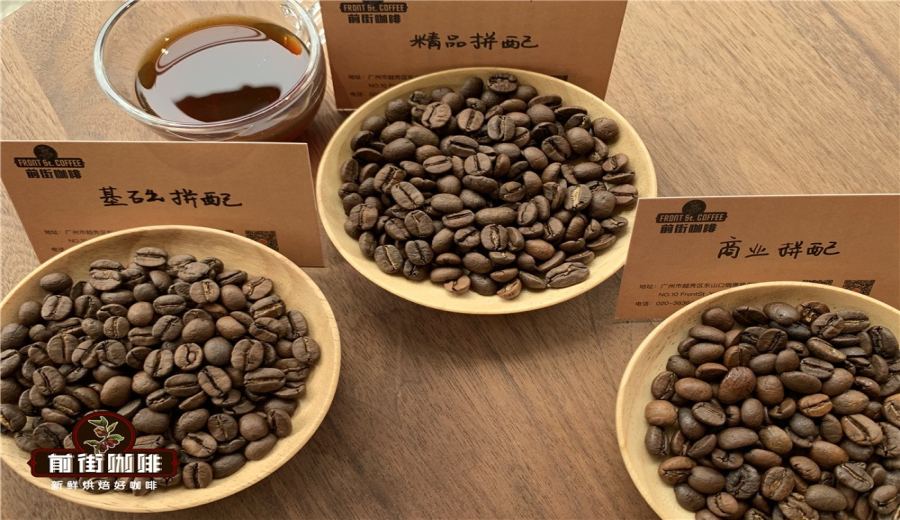
Introduction:As the world’s largest coffee-producing country, Brazil is renowned for its full-bodied, balanced coffees with low acidity, making them a key base for espresso blends. This article delves into Brazil’s coffee cultivation history, major producing regions, rigorous grading system, and how common processing methods influence flavor. It also provides insights into the actual flavor profiles of Cerrado and Fazenda Rainha, along with expert pour-over brewing recommendations to help you better grasp the essence of this South American coffee kingdom.
Brazil consistently ranks as the world’s top coffee producer, and its beans are known for their rich, full body and low, smooth acidity—making them especially suitable as the foundation for espresso blends. These coffees often showcase intense cocoa, nutty, and caramel notes, with stable flavor profiles that are highly favored by roasters and cafés worldwide.
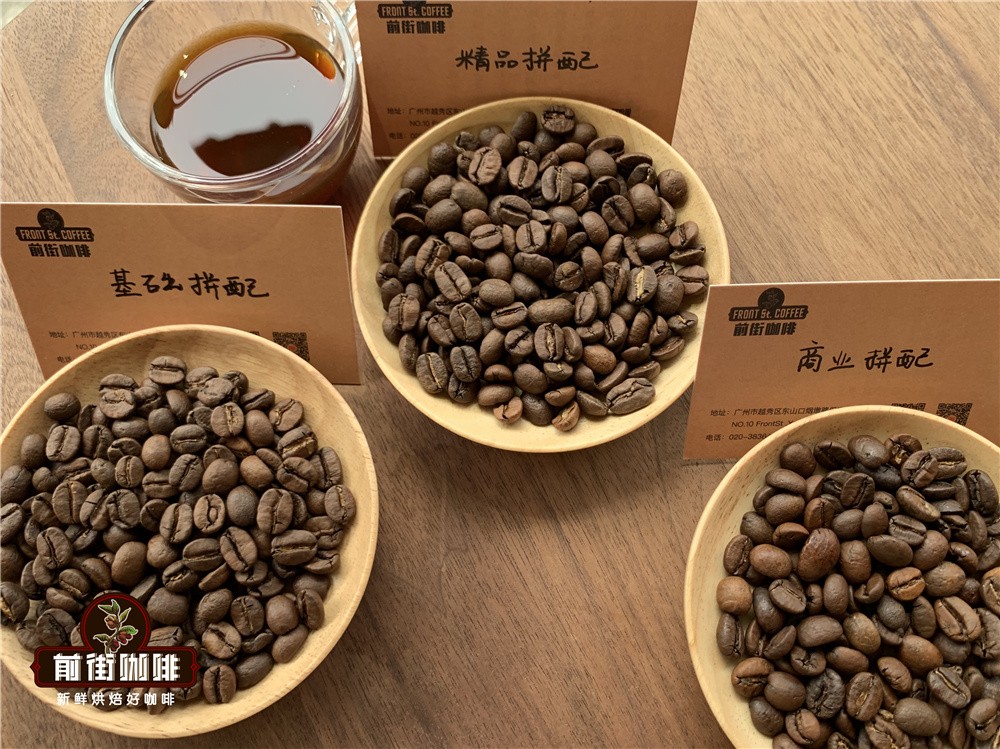
Coffee cultivation in Brazil began in the early 18th century. Legend has it that a Portuguese officer won the favor of the wife of a local governor, successfully bringing coffee seeds from French Guiana into Brazil. From there, coffee farming gradually expanded northward, and by the mid-19th century, Brazil had become a major global coffee supplier, dominating the market for decades.
Since most coffee-growing regions are located in low-altitude plains or gentle slopes, Brazilian coffee cannot exhibit the extremely complex floral and fruity notes found in high-altitude regions (such as Panama Geisha). However, this has led to the development of sun-resistant varieties and large-scale mechanized harvesting methods adapted to flatlands. Low-altitude cultivation allows coffee cherries to ripen faster, resulting in less complex flavor development compared to high-altitude regions but yielding higher production volumes and more consistent quality.
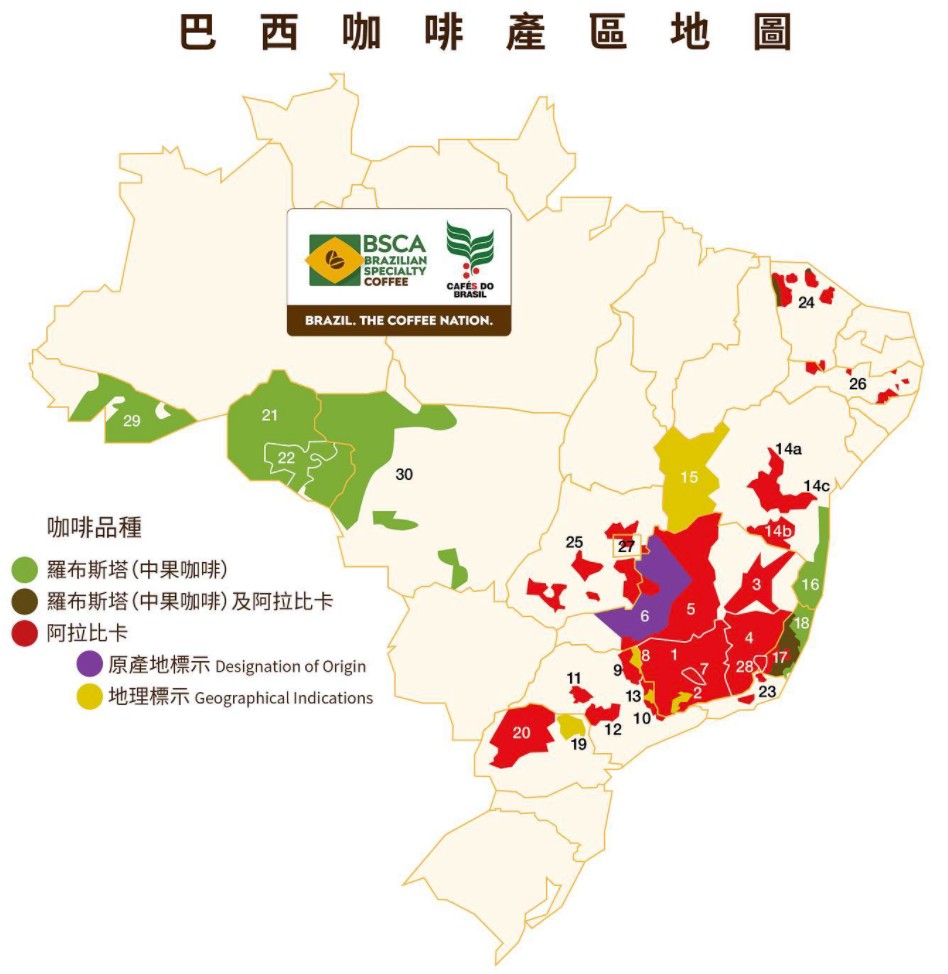
Coffee is grown in as many as 17 states across Brazil, but the output of seven major producing regions accounts for over 98% of the national total, including São Paulo, Paraná, Bahia, Espírito Santo, Minas Gerais, Rondônia, and Rio de Janeiro. Among these, Minas Gerais, São Paulo, Bahia, and Espírito Santo are the primary export hubs, contributing 90% of the total exports.
Over time, Brazil’s specialty coffee regions have gradually focused on Sul de Minas, Cerrado, and Mogiana. Among them, Sul de Minas is located in a hilly area at elevations of 700 to 1,200 meters, with significant day-night temperature variations, distinct wet and dry seasons, and diverse microclimates—making it highly suitable for varieties like Bourbon and Yellow Bourbon, thus becoming an important source of specialty coffee.
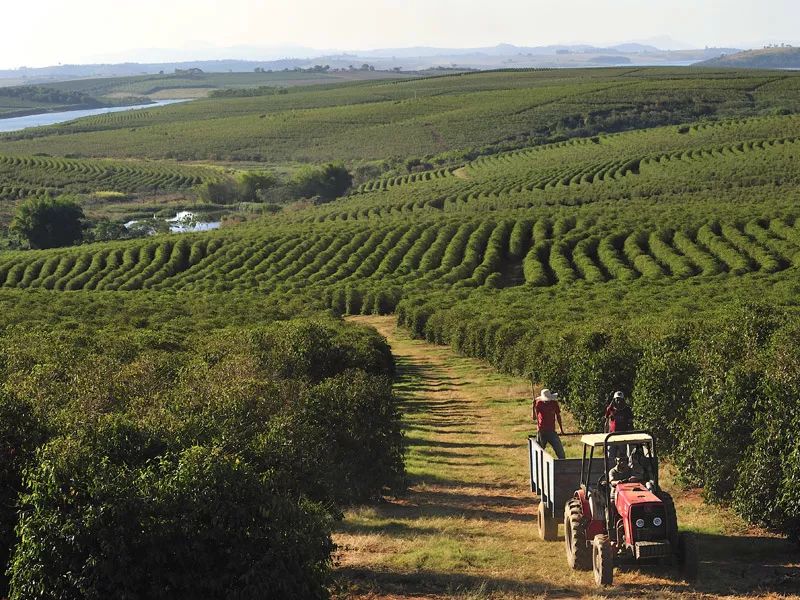
Cerrado is a highland region in the western part of Minas Gerais, spanning elevations of approximately 750 to 1,200 meters. Coffee that can truly be labeled as “Cerrado” must come from the premium zone at elevations of 1,100 to 1,300 meters. The soil here is fertile, and the climate conditions are exceptionally favorable, producing coffee often characterized by pronounced sweetness, high body, and almost no earthy or off-flavors—offering a clean yet layered flavor profile.
The Mogiana region in São Paulo State is also well-known, named after the historic “coffee railway” in the area. This region sits at elevations between 900 and 1,100 meters, with a mild climate (average annual temperature around 20°C) and a hilly terrain, contributing to the beans’ good sweetness and balance. Due to terrain limitations, most harvesting still relies on manual labor, resulting in even more refined beans.
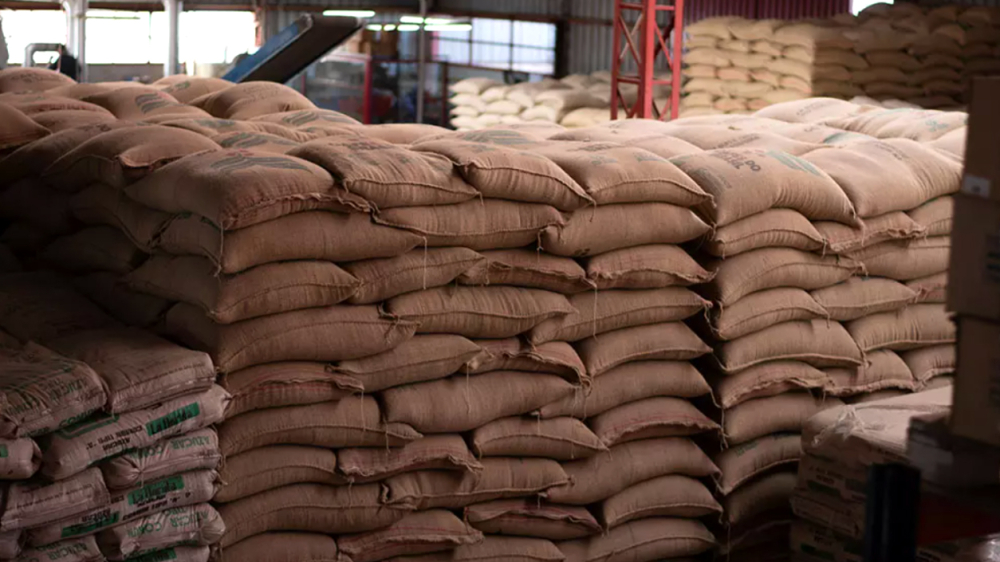
Brazil’s coffee bean grading system differs from other Central and South American countries. Due to its generally lower altitudes, Brazil does not emphasize the notion of “higher altitude = harder beans.” Instead, it comprehensively evaluates factors such as green bean size, defect rate, cupping score, and overall flavor performance. Official inspection agencies take a 300-gram sample and assess it against multiple criteria to determine the grade, with the information displayed on export sacks. For example, “Brazil NY.2 SC – 17/18 FC Cerrado” indicates beans from the Cerrado region, with a bean size of 17 to 18 mesh, excellent cupping flavors (FC), low defect rate (NY.2), and extremely smooth mouthfeel (SC).
Defect grading primarily follows the New York standard (NY), where NY.2 is the highest grade, representing an extremely low proportion of defective beans—the higher the number, the more defects. In terms of flavor, grades are divided into Strictly Soft (extremely smooth), Soft, Softish, Hard, and Rioy, with SC (Strictly Soft) being the best. Cupping flavors are categorized as Fine Cup (excellent), Good Cup, Fair Cup, Poor Cup, and Bad Cup, with Fine Cup naturally representing the highest quality.
Brazil primarily cultivates two types of coffee beans: Arabica and Robusta. Specialty-grade Arabica is concentrated in Minas Gerais and São Paulo, while Robusta is mostly found in Espírito Santo, Bahia, and Rondônia. Common Arabica varieties include Red Bourbon, Yellow Bourbon, Mundo Novo, and Catuaí. Bourbon is an ancient, high-quality variety with dense, compact fruits and prominent sweetness but requires higher growing conditions, typically needing shade cultivation. Yellow Bourbon is a hybrid of Bourbon and a yellow-fruited Typica variant, with rare yellow-colored fruits when ripe, offering delicate flavors and having won multiple awards in Brazil’s Cup of Excellence (CoE) competitions.
Catuaí is a dwarf coffee tree hybrid developed in the 1950s from Yellow Caturra and Mundo Novo, adaptable to various altitudes but performing better above 800 meters, with both red and yellow fruit types. Mundo Novo is a natural hybrid of Bourbon and Sumatra, with strong environmental adaptability and disease resistance. Although its tall stature (over 3 meters) makes mechanical harvesting difficult, it offers a good balance of acidity and bitterness, with larger bean size.
Common processing methods in Brazil include semi-washed (pulped natural), which involves removing the coffee cherry’s skin and pulp while retaining some mucilage before sun-drying, allowing precise control over fermentation levels. This method falls between traditional sun-drying and washed processing but skips the water rinsing step of washed processing, resulting in distinctly different flavors from traditional sun-dried coffee. Premium Brazilian beans often exhibit low acidity and high body, with roasted notes of nuts, cocoa, chocolate, and toast, along with a smooth and balanced mouthfeel—making them highly suitable for espresso blends to enhance overall richness and stability.
To fully experience the unique flavors of Brazilian coffee, drip pour-over brewing is recommended. Suggested parameters: use a Kono dripper, water temperature around 88°C, 15 grams of coffee, a 1:15 coffee-to-water ratio, and medium-fine grind (approximately 75% extraction through a Chinese standard No. 20 sieve). Brewing with these parameters highlights the rich, balanced characteristics of Brazilian beans, with flavor notes centered on nuts, caramel, and peanuts, low acidity, and a pronounced chocolate aftertaste.
Taking Cerrado as an example, its flavor profile is clear, often featuring notes of nuts, caramel, and peanuts, with a smooth mouthfeel and extremely low acidity, and a rich chocolate finish. Fazenda Rainha coffee showcases light lemon aromas that transition into a dominant nutty profile, with prominent dark chocolate notes in the mid-to-late stages, offering a round and clean overall mouthfeel—a perfect choice for savoring premium Brazilian coffee.
The above content is compiled by CoffeeHunters, a coffee news website.


