







Introduction:An in-depth exploration of Brazil — the world’s largest coffee-producing country — covering its regional distribution, key variety characteristics, and unique grading system. From Minas Gerais to São Paulo, discover the flavor profiles of classic varieties such as Yellow Bourbon. Practical pour over parameters and roasting flavor characteristics are also provided. Whether you’re new to Brazilian beans or a barista looking to refine your blending techniques, you’ll gain valuable insights.
As the world’s top coffee producer for multiple consecutive years, Brazil’s coffee cultivation spans 14 administrative states, with seven major producing regions — including Minas Gerais and São Paulo — contributing nearly 90% of total output. This South American giant, dominated by flat terrain, has fostered an agricultural model distinct from traditional high-altitude cultivation. From the mechanized large farms of Minas Gerais to the hand-picking traditions preserved in Mogiana, each region carves out its own unique flavor map.
[Core Region Analysis]
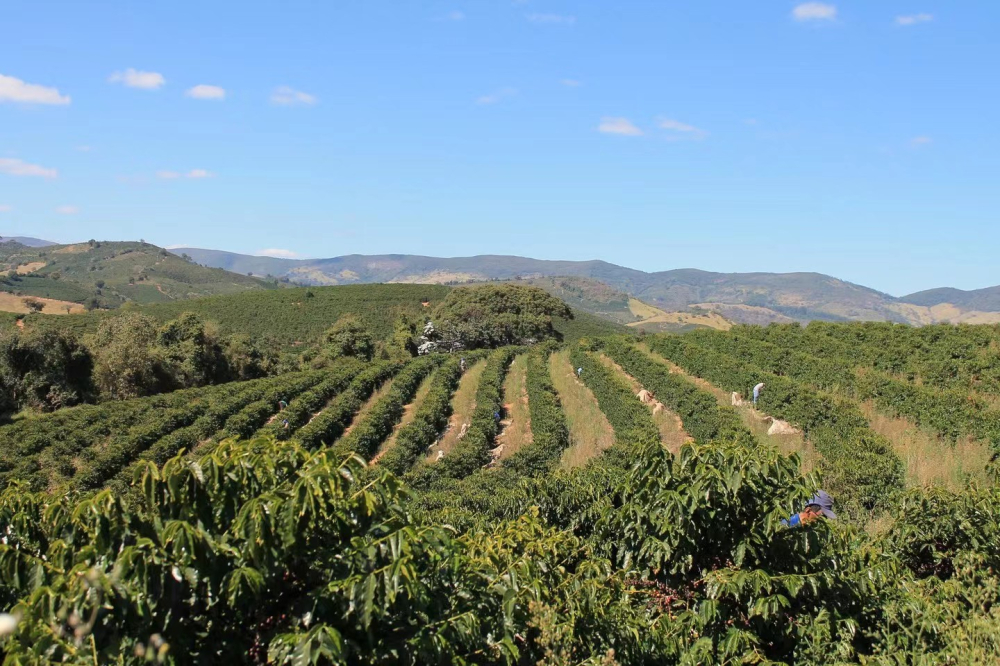
With nearly half of the nation’s production, Minas Gerais consistently wears the crown of Brazil’s coffee king. Its four sub-regions each boast distinctive traits: Cerrado, blessed with flat terrain and a concentrated harvest period, serves as the base for major exporters, typically featuring farms exceeding 10 hectares; meanwhile, Sul de Minas, Chapada de Minas, and Matas de Minas, marked by rolling hills, retain more smallholder-driven, meticulous farming practices. The Mogiana region in São Paulo is a symbol of history and quality. The “Coffee Railway,” built in 1883, revolutionized transportation conditions. With elevations between 900 and 1100 meters and an average annual temperature of 20°C, the beans here exhibit bright sweetness and excellent balance. The Yellow Bourbon from Fazenda Rainha (Queen Estate) is a flagship representation of this region.
[Varietal Genealogy Map]
The most common coffee varieties in Brazilian fields — Red Bourbon, Yellow Bourbon, Mundo Novo, and Catuai — each carry their own flavor codes. The Bourbon family, known for its round, compact fruit and high bean density, can showcase outstanding sweetness and clear acidity in high-altitude environments.Yellow BourbonAs a rare variety, its fruits turn a distinctive yellow upon ripening. Its delicate flavor profile has repeatedly earned praise in Brazil’s Cup of Excellence competitions, making it particularly appealing to those who seek a sweet aftertaste. It’s worth noting that traditional Bourbon cultivars (including both red and yellow variants) require shaded growing conditions to fully develop their flavors — an interesting contrast to Brazil’s mainstream sun-exposed cultivation practices.
[Decoding the Unique Grading System]
To tackle the challenge of quality management amid the world’s largest coffee output, Brazil has developed a grading logic centered ondefect rate. Inspectors carefully select a 300g sample of green beans, comprehensively evaluating the proportion of defects, bean size, and cupping performance. The common NY.2 grade allows fewer than 4 defective beans per 300g sample (with deductions ≤4). This industry-standard “highest practical grade” reflects Brazil’s balance between stable supply and quality.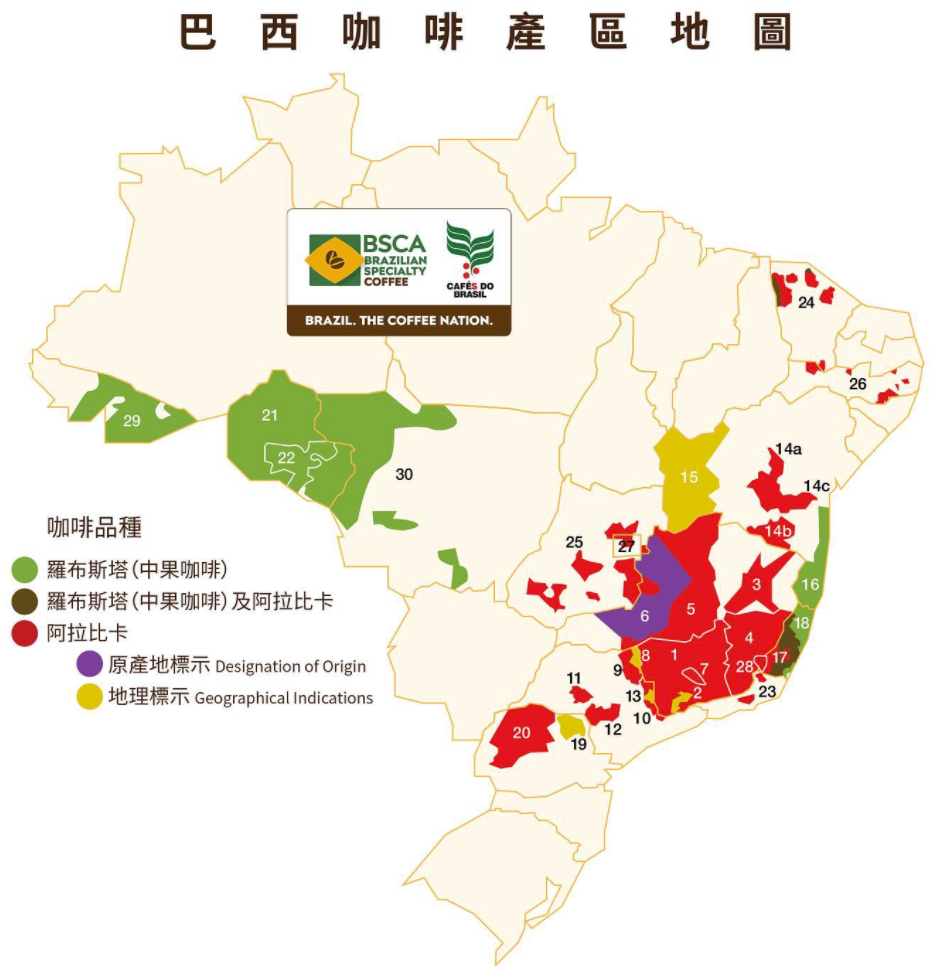 In addition to defect grading (NY2/NY3...), bean size specifications (e.g., 17/18 mesh), cupping taste (SC for strictly soft as top-tier), and regional flavor characteristics are also indicated. A complete code such as Brazil NY.2 SC – 17/18 FC Cerrado reveals key information about origin, quality, and processing style.
[Flavor Profile & Application Scenarios]
The most well-known trait of Brazilian coffee is its full body and low acidity. With proper roasting, it releases nutty, cocoa, and even caramel-like aftertastes, making it the golden base for espresso blends. From the toasty notes of dark roasts to the bold chocolate tones of medium roasts, it provides structural support for blend beans. Several popular espresso recipes (such as Premium Blend and Dark Cocoa Blend) use Brazilian beans as the core, delivering a golden Crema and intense roasted flavors. Pour over enthusiasts can try medium grind (70% passing through a Chinese No. 20 sieve), 87–88°C water temperature, and a three-stage pouring method (first 30-second bloom → 125g pour → 225g completion) to highlight its natural layers of sweetness.
[Practical Notes]
• Mechanized harvesting in Minas Gerais lowers costs but may result in a small number of overripe beans slipping through during sorting
• The unique flavors of Yellow Bourbon rely on precise washed or honey processing to be fully expressed
• For Americano, choose medium-dark roasted Brazilian beans; for Latte, pair with fresh milk featuring creamy foam to balance the body
• When pour over brewing, using a KONO filter enhances body, and keeping brew time under 2 minutes is ideal
The above content is compiled by CoffeeHunters, a coffee news website.


