







Introduction:Espresso is beloved for its intense aroma and rich crema, but brewing it at home with consistently ideal flavor is no easy feat. Beyond the equipment, understanding the relationship between key parameters such as dose, grind size, yield, and extraction time is even more critical. This article will delve into how these variables affect extraction, using practical adjustments as examples to guide readers in mastering the art of stable extraction and developing a personalized coffee tuning approach.
Brewing an ideal shot of espresso at home requires not only a suitable espresso machine, but also a deep understanding of the underlying extraction principles. Unlike the immersion-style brewing of pour over coffee, espresso relies on high-pressure steam to force hot water through a finely ground coffee puck in a very short time, extracting a concentrated coffee liquid. In this process, parameters such as dose, grind fineness, extraction time, and yield interact with each other—slight adjustments can significantly alter the final flavor.
Looking back at history, early coffee brewing primarily used the immersion method, which not only required a finer grind but also involved a long wait. To improve efficiency, Italians introduced high-pressure steam technology, allowing hot water to quickly penetrate the coffee bed and release the oils, aromas, and rich body of the coffee, gradually evolving into the espresso we know today. Modern commercial machines can generally provide pressures of over nine atmospheres and water temperatures exceeding 90°C, making extraction more focused and efficient.
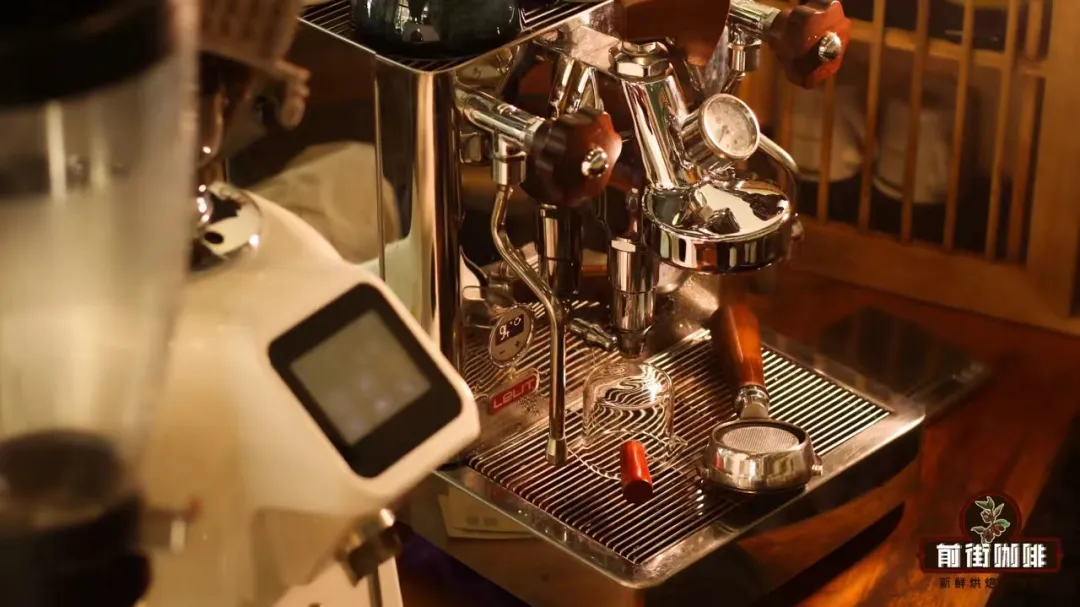
To extract an espresso that is both balanced in flavor and rich in body, multiple variables need to be controlled comprehensively, including grind size, boiler pressure, water temperature, distribution and tamping techniques, dose, extraction time, and yield. Among these, the pressure and water temperature of the espresso machine are usually fixed, while distribution and tamping vary by individual. In actual adjustments, the four most frequently tweaked elements are dose, time, yield, and grind size.
Among them,Grind fineness and uniformityare key factors affecting flow rate and extraction efficiency. Just a 1-gram difference in dose can result in a variation of several seconds in extraction time. If the coffee particles are uneven in size, the density after tamping will be inconsistent, leading to varying resistance to water flow, which causes uneven extraction and ultimately affects overall flavor. Therefore, a stable and fine grind is the first step toward consistent extraction.
Another important concept isthe coffee-to-water ratio,which refers to the ratio of the weight of coffee grounds used to the weight of the final extracted liquid. For a double basket, many cafés use 20 grams of coffee to 40 grams of yield as a baseline—that is, the commonly seen 1:2 ratio. While this ratio is not absolute, it serves as a useful reference point for initial adjustments. It’s important to note that the capacity of the basket will limit the maximum amount of coffee you can use, so selecting an appropriate basket and the right amount of coffee is an essential starting point.
As for extraction time, it usually falls between 25 and 30 seconds. Under the same coffee-to-water ratio, a shorter extraction time means fewer flavor compounds are released, while a longer time means more. If you wish to lengthen or shorten the extraction time, this is mainly achieved by adjusting grind fineness and dose, rather than directly altering the water flow time.
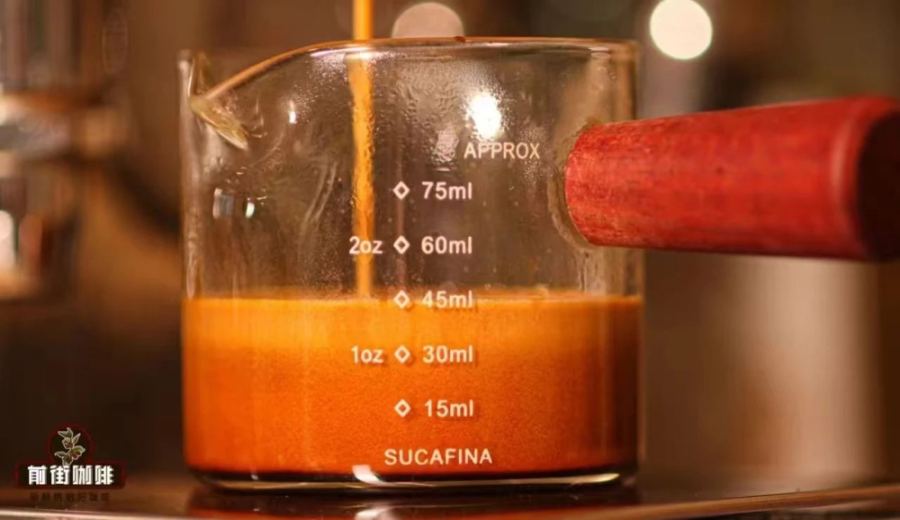
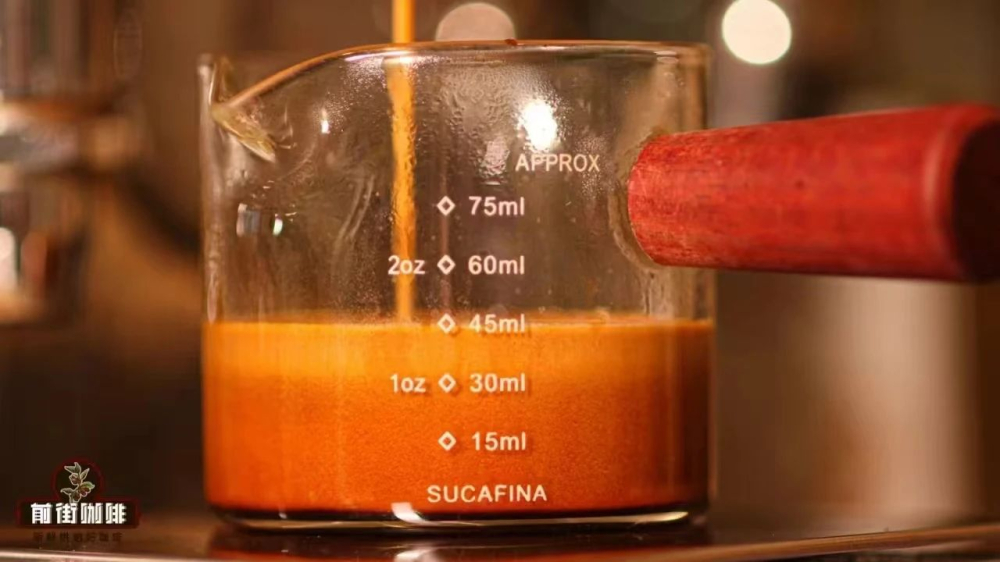
In practice, we can make fine-tuned adjustments based on changes in the color of the coffee liquid and feedback on taste. At the beginning of extraction, the liquid is usually dark brown and flows relatively quickly. As time progresses, the color gradually turns golden and may eventually become lighter. In the past, baristas often judged when to stop extraction by observing changes in the color of the crema, but today, a more balanced approach combining data and experience is typically used.
For example, if your espresso has a fast flow rate, a thin body, lacks wine-like and fruity acidity layers, or even has a dry, astringent finish, this usually indicates under-extraction or over-extraction in the latter phase. In such cases, you might try increasing the dose and reducing the yield, or adjusting to a finer grind to extend the extraction time and create a more cohesive flavor. Conversely, if the flow rate is too slow, the taste is overly bitter, or the acidity is too sharp, it may suggest over-extraction. In this case, consider reducing the dose or adjusting to a coarser grind to increase the yield and improve overall balance.
Once you’ve mastered the interplay of these variables, you can flexibly adjust based on actual extraction results and your flavor preferences. However, it’s worth noting that most home espresso machines are less stable than commercial ones, leaving less room for adjustment. Therefore, it’s recommended to meticulously record each adjustment’s parameters and the corresponding flavor outcomes. Over time, accumulating experience will help you more quickly identify the best extraction settings for you or your home setup.
The above content is compiled by CoffeeHunters, a coffee news website.


