







Introduction:Want to understand how roast levels of coffee beans relate to flavor profiles? This article uses the eight-level roast color chart jointly developed by the SCAA and Agtron to guide you through the key turning points from light to espresso roast—including Agtron values at each stage, drop timing, and flavor characteristics. We also provide real-world examples to show how to adjust pour over parameters based on different roast degrees, helping you feel more confident in both bean selection and extraction.
Have you ever been confused by terms like “light roast,” “medium roast,” “dark roast,” or even “cinnamon,” “city,” and “French” printed on coffee packaging? Behind these roast classifications lies a set of professional standards that help us understand how darkly the beans have been roasted—and thus predict the flavor profile they’re likely to exhibit.
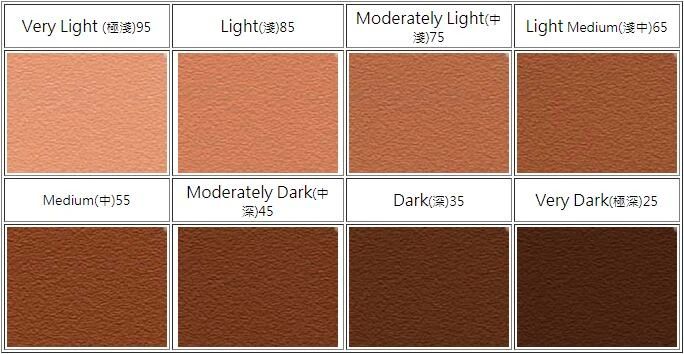
The Specialty Coffee Association of America (SCAA) once collaborated with Agtron to develop a roast color chart based on infrared caramelization measurement technology. This system divides the roast degree of coffee beans into eight levels from light to dark, using specific Agtron values and drop timing as judgment criteria—creating a common language for the industry to discuss roast status.
These eight roast levels can generally be grouped into four main categories: light roast, medium roast, medium-dark roast, and dark roast. Each category has its unique flavor direction and offers important reference value when choosing pour over or extraction styles. Below, we’ll go through each of the eight roast levels and their corresponding flavor expressions.
First, Agtron value #95 representsLight Roast, typically dropped just before the end of the first crack. At this stage, the coffee retains the most of its origin flavors, with bright acidity and a clean taste—common among specialty coffees that emphasize fruity and floral notes. Next isCinnamon Roast (Agtron #85), dropped around the end of the first crack. The acidic brightness is still evident, but slight signs of caramelization begin to appear.
Moving intoMedium Roast (Agtron #75), the drop point falls after the first crack ends. At this stage, the coffee achieves a balanced acidity and sweetness, with a gradually rounder mouthfeel—making it suitable for many single-origin beans. Then,High Roast (Agtron #65)is dropped during the quiet period between the first and second cracks. Acidity decreases further, body increases, and deeper caramel and nutty aromas begin to emerge.
When enteringCity Roast (Agtron #55), the drop timing is around the start of the second crack. Almost no noticeable acidity remains, and the overall profile becomes richer. Then comesFull City Roast (Agtron #45), dropped just before the second crack becomes intense. The bean surface gradually darkens, balancing bitterness and sweetness—this range is preferred by many coffee lovers who enjoy a balanced taste.
Going further toFrench Roast (Agtron #35), the drop occurs during the intense phase of the second crack. The flavor is dominated by intense smokiness and charred notes, with almost no acidity—suitable for those who prefer bold flavors. Finally, there’sItalian Roast (Agtron #25), where oils begin to emerge on the bean surface. This roast is typically used for making espresso, offering an extremely intense flavor with strong body and a bitter-sweet taste.
To help readers more intuitively grasp the concepts, we’ve simplified these eight roast levels into four main categories: light (including light and cinnamon roasts), medium (including medium and high roasts), medium-dark (city and full city roasts), and dark (French and Italian roasts). Each category has its typical flavor traits—for example, light roasts highlight floral and fruity aromas with high acidity, while dark roasts showcase rich smokiness and a full-bodied mouthfeel.
Next, we’ll use two actual roast cases as examples: one is alight roast (cinnamon level) washed Yirgacheffe Guji Dingding Cooperative bean, and the other is amedium roast Indonesian PWN Golden Mandheling wet-hulled bean. These two beans represent different origins and processing methods, and also demonstrate their respective suitable roast and extraction strategies.
Take the Yirgacheffe Guji Dingding as an example. This Ethiopian Gedeo Zone native variety washed bean, grown at 1900–2300 meters altitude, is roasted with a small flame to extend the drying phase. The roaster loads the drum at 175°C, with the air damper at 3 and heat at 120. The first crack begins at 9’38”, continues developing for 1’30”, and the beans are dropped at 193.5°C. This roast strategy highlights its bright acidity and fruity-floral character.
For extraction, it’s recommended to use a V60 filter, with water temperature controlled at 91–92°C, 15g of coffee, a 1:15 coffee-to-water ratio, and medium-fine grind (80% passing through a #20 sieve). Use a pulse pouring method: start with a 30-second bloom of 30g water, then pour 125g water in small circles around the center, and finally add 225g. Total brew time is about 2 minutes and 1 second. These parameters fully express its citrus and black tea base, along with creamy, caramel, and almond notes in the finish.
As for the Indonesian PWN Golden Mandheling, belonging to the slightly higher-moisture Ateng variety and processed via wet hulling, it’s recommended to apply amedium roast, dropped at around 204.5°C just before the second crack becomes intense. The drum is loaded at 200°C, with the air damper and heat adjusted according to the bean’s drying condition. The first crack starts at 9’54”, and the beans are dropped quickly to preserve appropriate body.
For brewing, the KONO filter is suggested, with water temperature at 86–88°C, 15g of coffee, a 1:15 ratio, and medium-coarse grind (65% passing through a #20 sieve). Use a three-stage pouring strategy: start with a 30-second bloom of 30g water, then pour 125g, and finally top up to 225g. Total time is about 2 minutes. This approach highlights its rich, aromatic complexity with sweet herbal, spicy, and creamy walnut-chocolate layers.
In summary, understanding the SCAA eight-level roast color chart—along with its corresponding Agtron values, drop timing, and flavor traits—can help you select and roast coffee beans more precisely. It also allows you to adjust extraction parameters based on roast degree, ensuring each cup of coffee showcases its optimal flavor profile.
The above content is compiled by CoffeeHunters, a coffee news website.


