







Introduction:If you want to easily make a standard Americano at home, choosing an easy-to-operate and cost-effective drip coffee maker is a great option. This article will provide a detailed introduction to the types, capacity specifications, standard coffee-to-water ratios, and operation procedures of such coffee makers. It breaks down everything from purchasing advice to brewing steps, and also offers practical suggestions on common questions such as iced Americano preparation, grind size settings, and coffee bean pairing, helping coffee beginners get started quickly.
Many coffee enthusiasts often ask, if you want to prepare a simple and reasonably priced coffee machine at home, which type should you choose? A drip coffee maker is the ideal choice. These machines have a straightforward structure, making them suitable for both home and office use. The standardized brewing process can complete a pot of coffee in about five to eight minutes, making it very user-friendly for those new to pour over or coffee machines. This article will take you in-depth into the types, capacities, and usage parameters of drip coffee makers, step by step demonstrating the standard operation process, while also answering common questions such as how to make iced Americanos, setting the coffee-to-water ratio, and matching coffee beans, so you can easily recreate a well-balanced Americano.
 When many people buy a home coffee machine, they hope to find one that doesn’t require complicated settings but can still consistently produce good coffee. The drip coffee maker (Drip Coffee Maker) is the mainstream choice that meets this need and is very popular in the market. Compared to the small drip devices popular in American households in the past, today’s models are more stable in function and larger in capacity, suitable for both home and workplace environments. Its operation logic is simple, and the brewing process is standardized, usually taking only five to eight minutes to complete extraction, making it a great helper for users who seek a balance between efficiency and quality. So, what’s the difference between the “Americano” produced by this and traditional espresso-based Americanos? We’ll explain one by one next.
From the perspective of extraction principles, coffee machines can generally be divided into two main types: drip and espresso. Before World War II, American households commonly used small drip coffee makers, which were not only compact and intuitive to operate but also very popular at the time. The “Americano” served in modern cafés is actually mostly made by extracting espresso with an espresso machine and then diluting it with hot water. This practice originated from American soldiers stationed in Europe during World War II, who, not accustomed to the strong taste of Italian Espresso, diluted it with water themselves, inadvertently creating a beverage with a taste similar to drip coffee, but was thus jokingly referred to by Europeans as “American coffee.” After understanding this background, let’s further explore the common types of drip coffee makers and their usage guidelines.
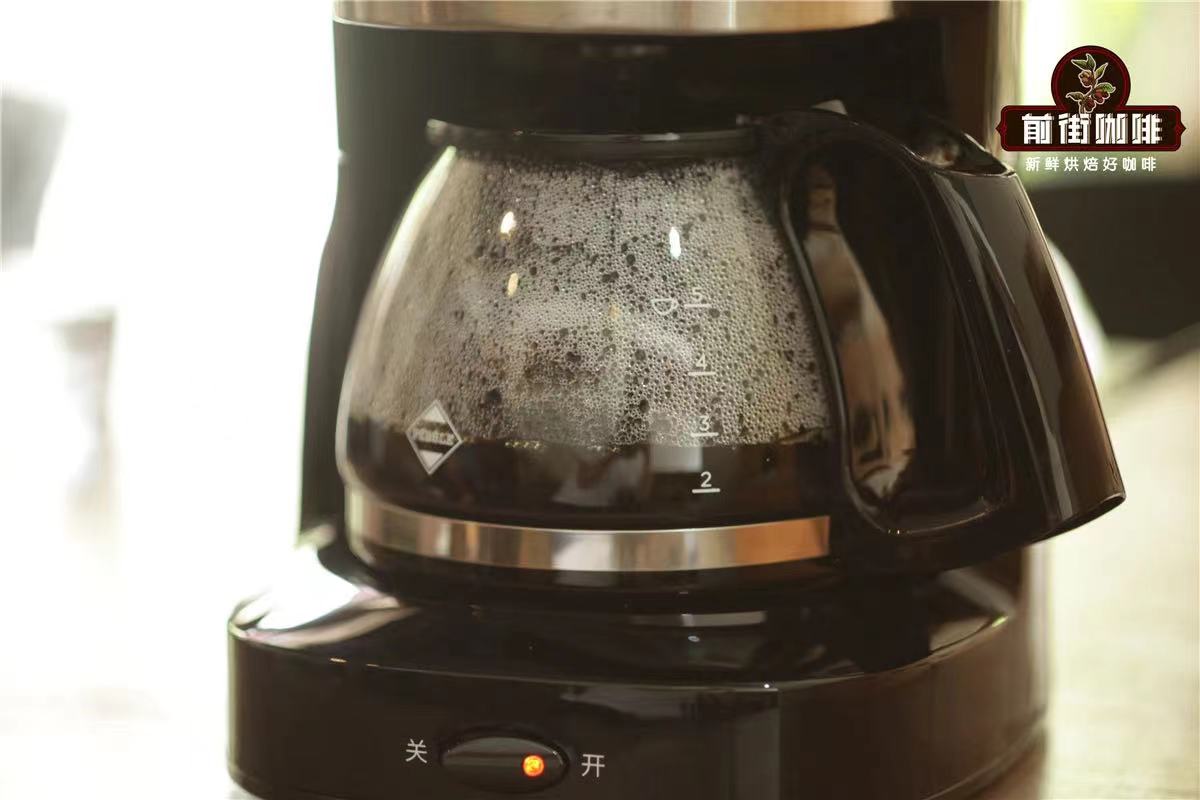 Commercially available drip coffee makers mainly come in two capacity specifications: 5 cups and 12 cups, meaning they can brew a maximum of 5 or 12 cups of coffee in a single run. Generally speaking, the water tank and glass carafe capacity of a 5-cup model is about 550ml to 650ml, while a 12-cup model usually has a capacity of 1.2L to 1.3L, which is sufficient to meet the needs of a small family or a multi-person office environment.
The so-called “standard cup” capacity is mostly between 100 and 120ml, so the amount of water per cup is also set within this range. It is recommended to brew at least two cups or more each time you use the coffee maker to ensure stable extraction and temperature performance. As for the coffee dosage, making a 100–120ml Americano typically requires 5 to 7 grams of coffee powder. Most machines come with a dedicated coffee scoop, where one scoop is roughly the amount needed for one cup, and you can adjust according to the number of cups. Regardless of the origin or roast level of the coffee beans, as long as they are ground into powder, they are suitable for this type of coffee maker.
In terms of coffee-to-water ratio, the standard recommendation is one flat scoop (about 6 grams) of coffee powder per cup (approximately 100–120ml) of water. In actual operation, you can slightly increase or decrease based on personal taste, but it’s recommended to start with the standard ratio and then fine-tune the strength according to your preference. When adding water, refer to the water level markings on the coffee maker or use the glass carafe to assist in measurement to ensure the water volume matches the expected number of cups. Some models’ glass carafes also have their own markings, which can help you more accurately control the overall water volume.
 The basic operation process of a drip coffee maker is as follows: First, grind the coffee beans into powder. If you already have pre-ground coffee, you can skip this step. Determine the grind amount based on the number of cups you plan to make, and it’s recommended to follow the principle of “grind right before brewing” to preserve the best aroma. Generally, one cup requires about 6 grams of coffee powder, increasing proportionally with the number of cups. Most included coffee scoops are designed for 6 grams and can be used as a measuring benchmark.
Next, take out the glass carafe and open the filter basket of the coffee maker, then place the appropriate amount of coffee powder into the filter. It is recommended to control the coffee powder amount per cup between 5 and 7 grams. The scoop specifications may vary slightly depending on the model, with common sizes being 5g, 6g, 7g, or 10g. Please confirm your machine’s standard specifications before use. This demonstration uses 6 grams per cup as the benchmark. After placing the coffee powder, close the filter basket, open the water tank lid, and pour the corresponding amount of water according to the planned number of cups. When adding water, it’s recommended to adjust based on the standard of about 100ml per serving (i.e., one cup), and refer to the body markings or glass carafe markings to ensure the water volume is accurate. Once done, place the glass carafe back in position, connect to power, and turn on the switch.
Wait for about five to eight minutes. When no more coffee liquid drips from the top of the glass carafe, it means the extraction is complete. You can then turn off the power and pour out the coffee to enjoy. Depending on your personal taste, you can also add sugar or fresh milk for flavoring. It’s important to note that the coffee produced by a drip coffee maker is all hot. If you want to try an iced Americano, there are two common methods: one is to reduce the brewing water volume, and after the coffee is done, directly add ice cubes—but this may overly dilute the flavor; the other is to use a more concentrated coffee liquid and then mix it with cold water or crushed ice in proportion, usually recommended at a 1:1 ratio to maintain the flavor layers.
Additionally, the grind size required for drip coffee makers is significantly different from that of espresso machines. Since drip extraction relies on relatively slow water flow through the coffee grounds, it is recommended to use a coarser grind, similar to the grind setting for pour over coffee. If you don’t have a grinder at home, it’s recommended to ask the shop to grind the beans for you when purchasing, to ensure particle uniformity and extraction consistency.
Finally, regarding the choice of coffee beans, actually, beans of various roast styles can be used in a drip coffee maker—the key lies in personal taste preference. Light roast beans usually have bright fruit acidity and rich juiciness, such as washed Gedi Diding or natural Huakui, suitable for users who enjoy fresh flavors; medium roast beans are known for their nutty character and overall balance, such as Queen Estate or Bird of Paradise, with mild and clear flavor layers; dark roast beans have a richer flavor, often with caramel and chocolate aftertastes, such as Golden Mandheling or Colombian Huila, suitable for consumers who prefer a stronger taste. No matter which bean you choose, as long as you master the coffee-to-water ratio and grind size, you can easily brew a satisfying and delicious cup of coffee using a drip coffee maker.
The above content is compiled by CoffeeHunters, a coffee news website.


